
I had two big goals for the year: I wanted to watch all of Star Trek, and I wanted to bake my own bread. Neither of which I had any experience in.
With the exception of the 3D animated show Star Trek: Prodigy, I have accomplished the first through a year of binge watching. But the second is not one of those things you just do once and check off the list.
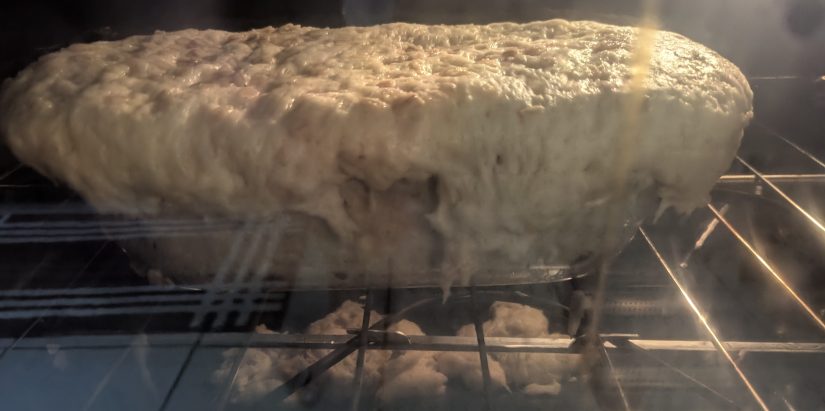
It started out rough, as I was warned it might. The dough overwhelmed the pan and dripped all over the oven because I didn’t know to put a baking sheet underneath. The dough was messy and sticky, and so much got on my hands that I wondered if it would affect the size of the loaf. I didn’t have a stand mixer, and this was far beyond the capabilities of my hand mixer, so I tried using a wooden spoon to knead instead, which was much harder and not very effective.
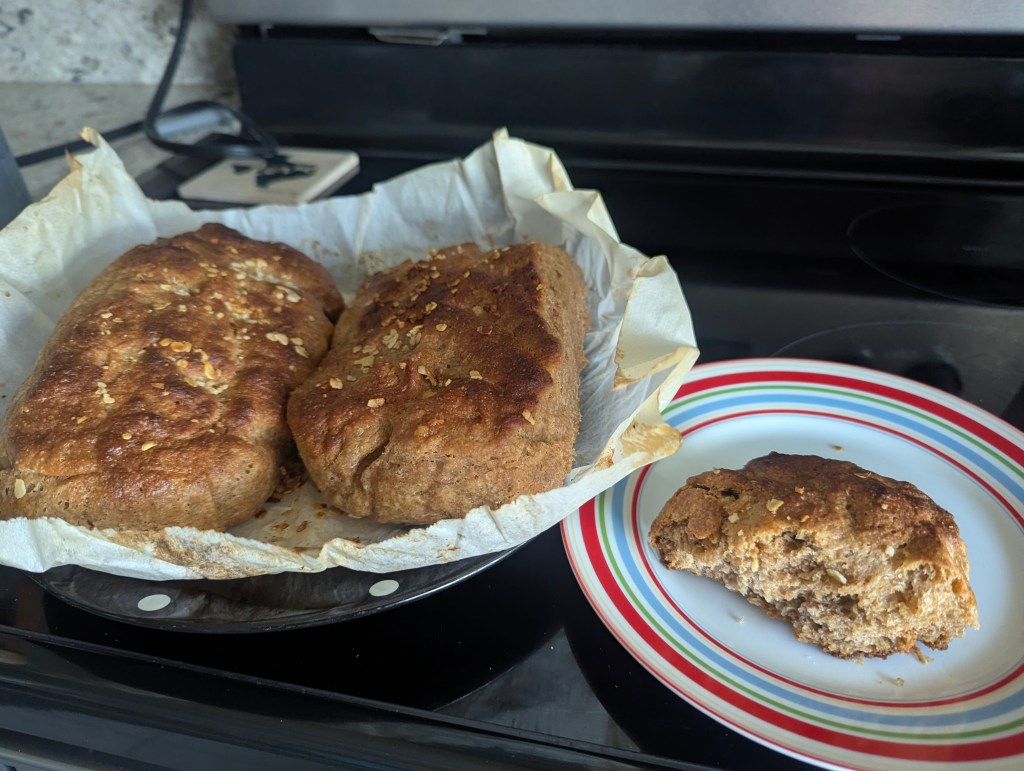
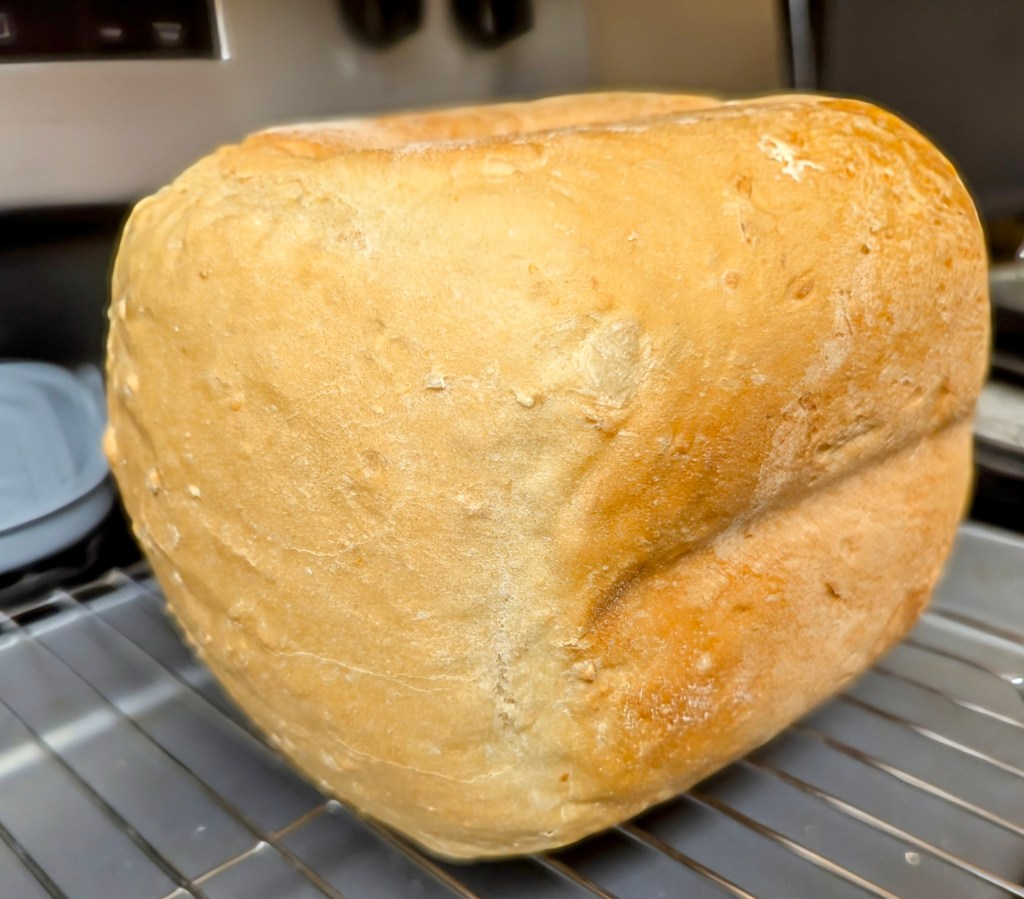
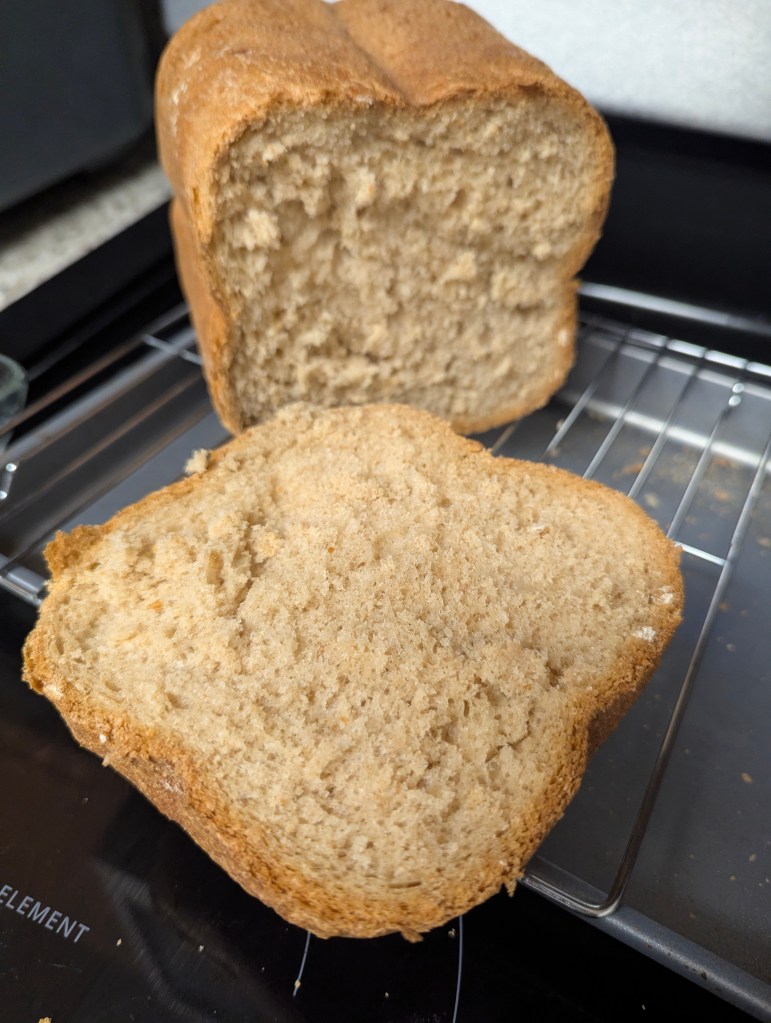
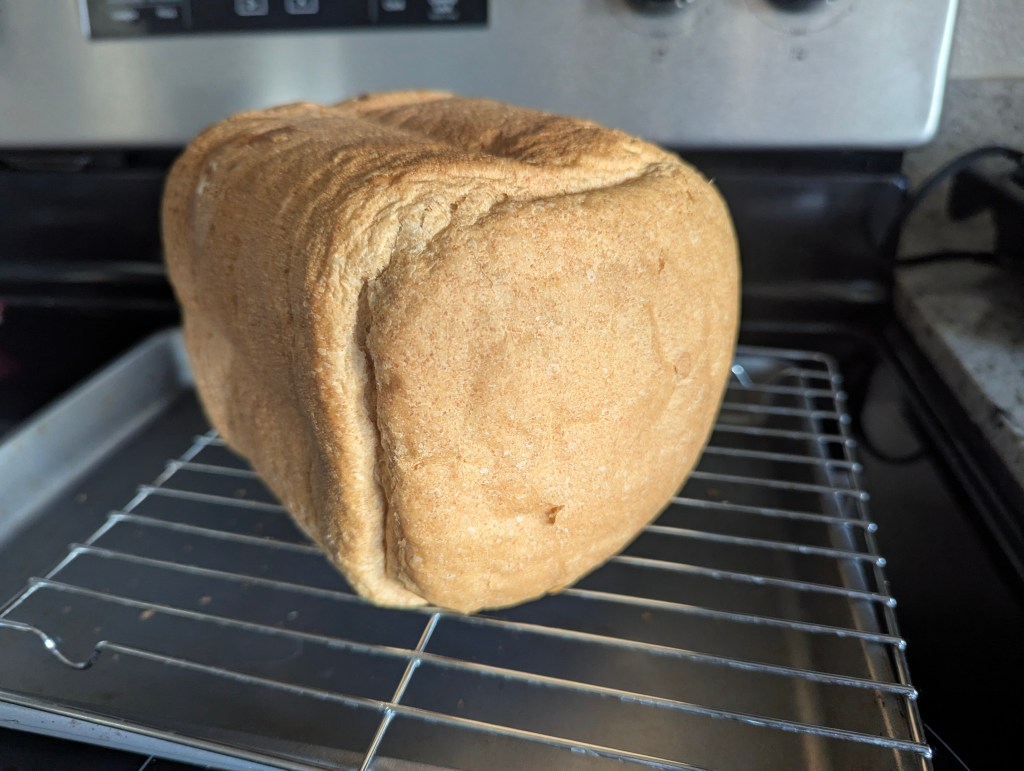
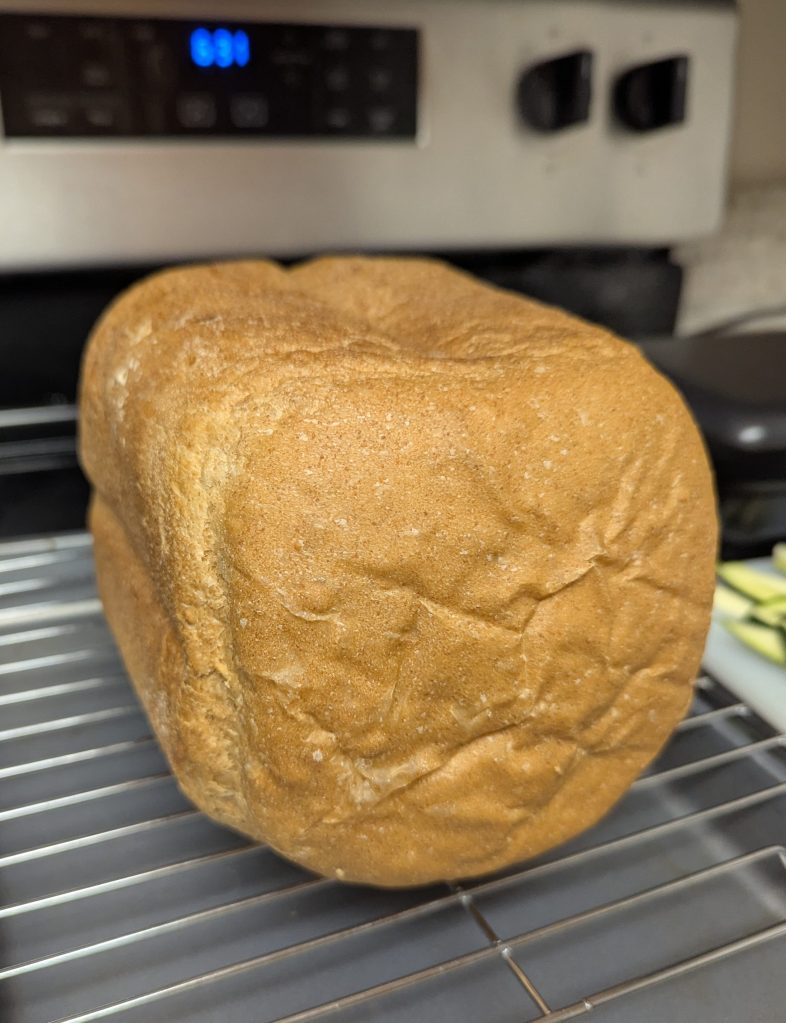
I finally got there: a perfectly risen, golden loaf.
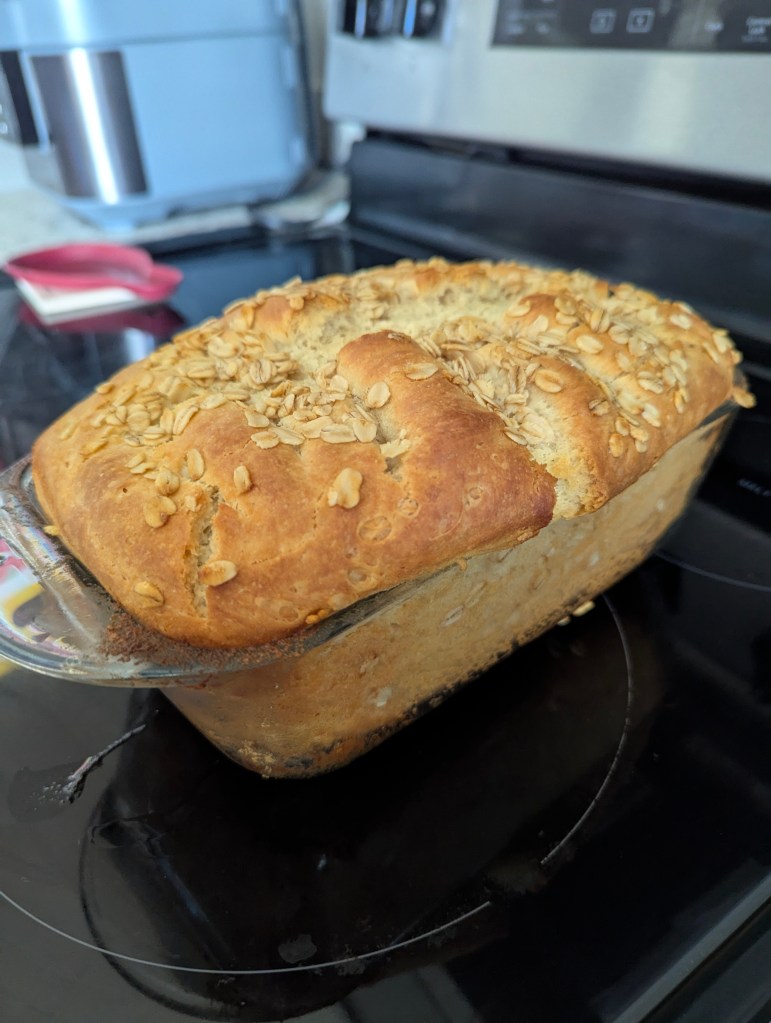
But as you might know from experience, bread making is a lot of work. Luckily, there are machines that can do this work for us. I did my obsessive research as I tend to do. I landed on the Cuisinart, which is not only coincidentally the one my dad has but also the one for sale at a good price on Facebook Marketplace. Another woman my age had taken up bread making during the sourdough craze, but she’d found she preferred baking by hand and oven, so she never actually used the bread maker she had acquired. I happily gave it a new home and set it to work.
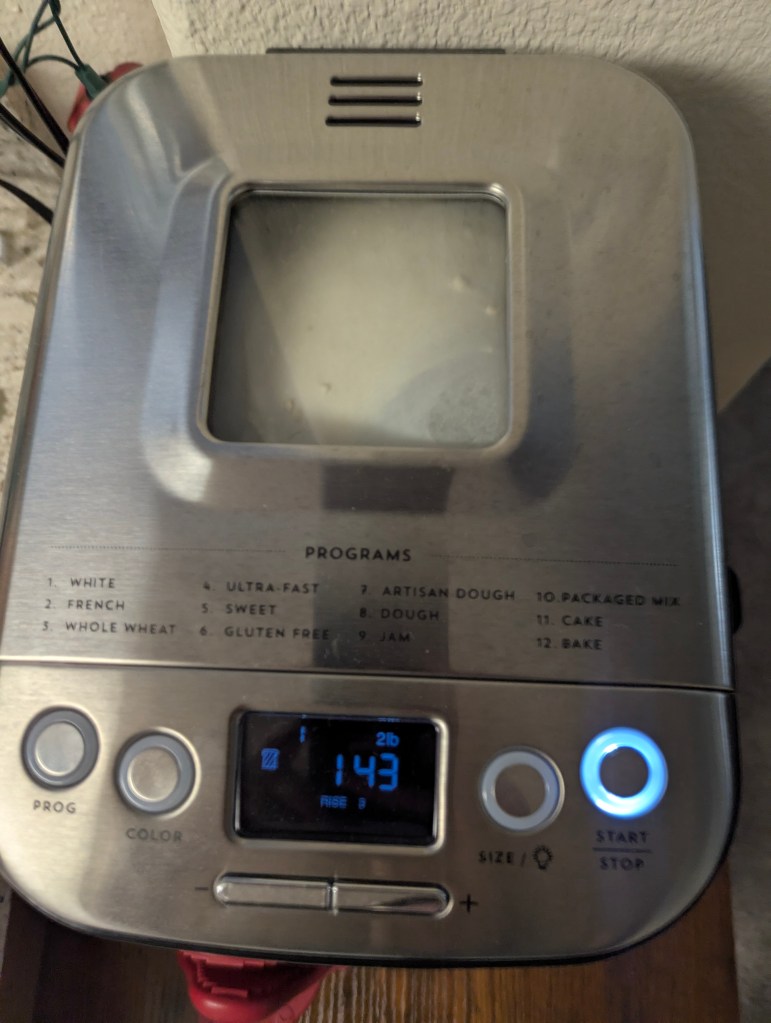
Once again, the result was bread dough everywhere. I had to clean every crevice of that machine, including taking apart the lid to get to the little vent holes. Another loaf was too small, another too doughy, another collapsed, another dense as a brick, another nearly repeated the breadsplosion of the first attempt… I had the brainwave to add parchment paper on top to prevent the disaster. This way, I reasoned, the loaf could rise as tall as it wanted and I would have minimal cleanup of the lid and its many vent holes. However, as you may have figured out months quicker than I did, the vent holes are there for a reason. With the parchment paper, I just wasn’t getting good results.
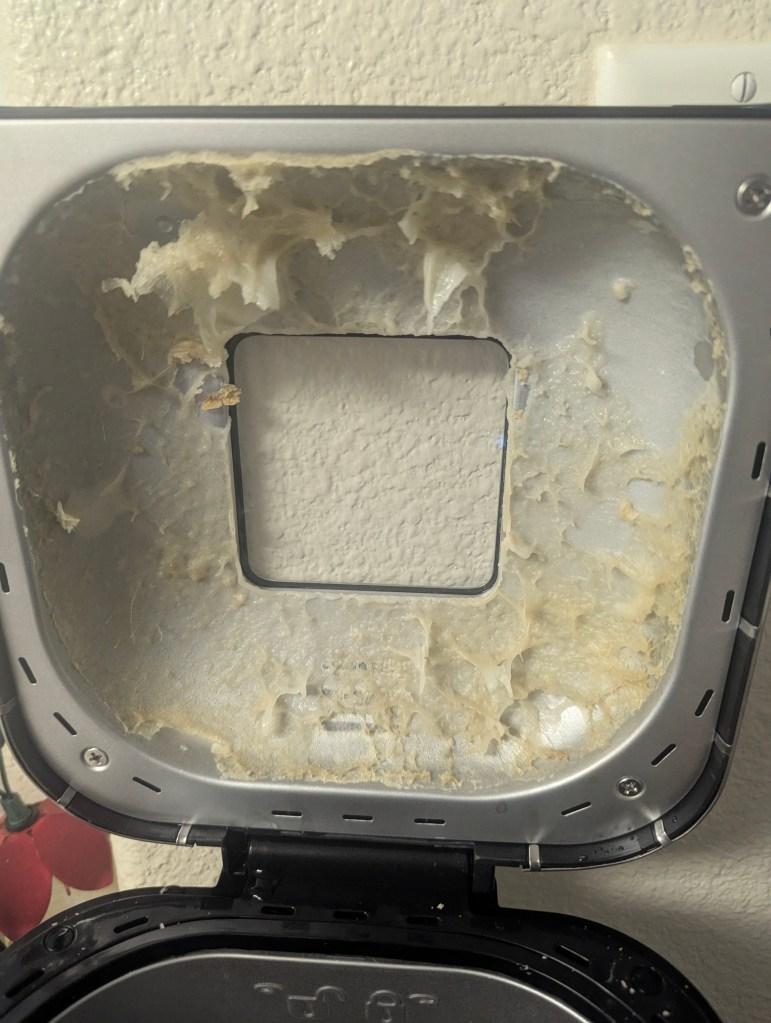
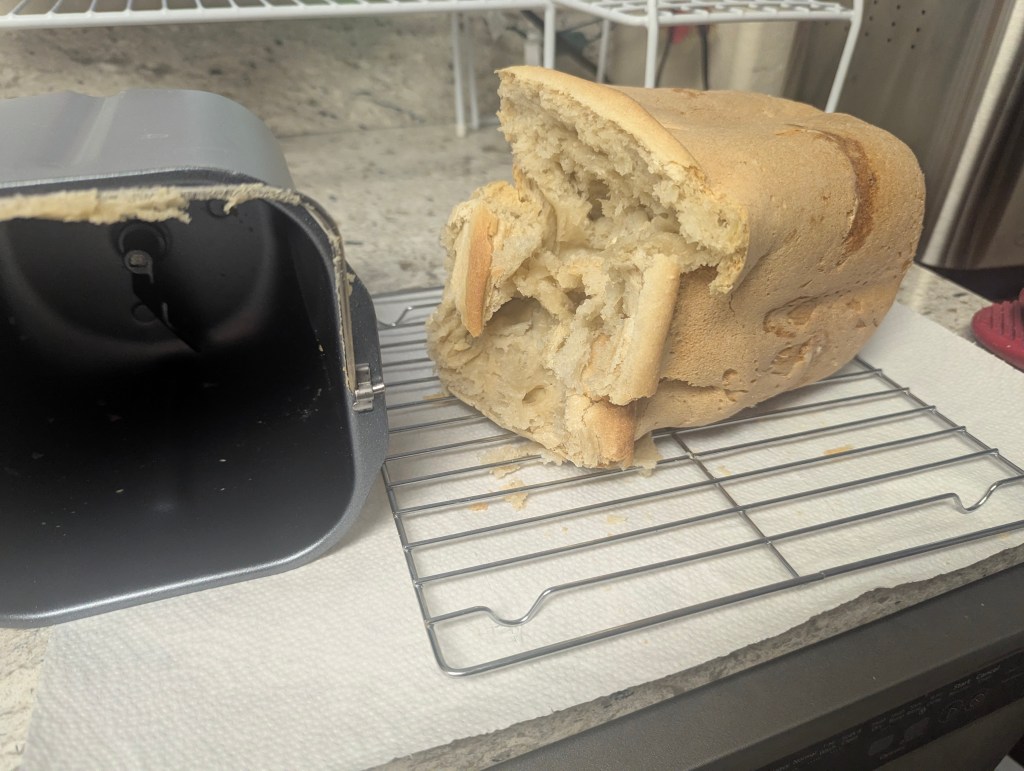
I decided it was time to do my research beyond simply reading the instructions the machine came with and googling bread maker recipes. At the suggestion of a friend on social media, I read the Bread Machine Magic series and a few others that were minimally helpful. The Bread Machine Magic series, however, is the classic beginner text. Written in the 1990s and 2000s, these books have adorable era-specific asides like explaining the internet’s wonders, such as looking up their website. They do not sugarcoat the baking process, though. It’s clear they know what they are doing and have made their fair share of mistakes and mishaps, which leads to trustworthiness when they tell you not to do something.
You can imagine that parchment paper on top was not one of their suggestions.
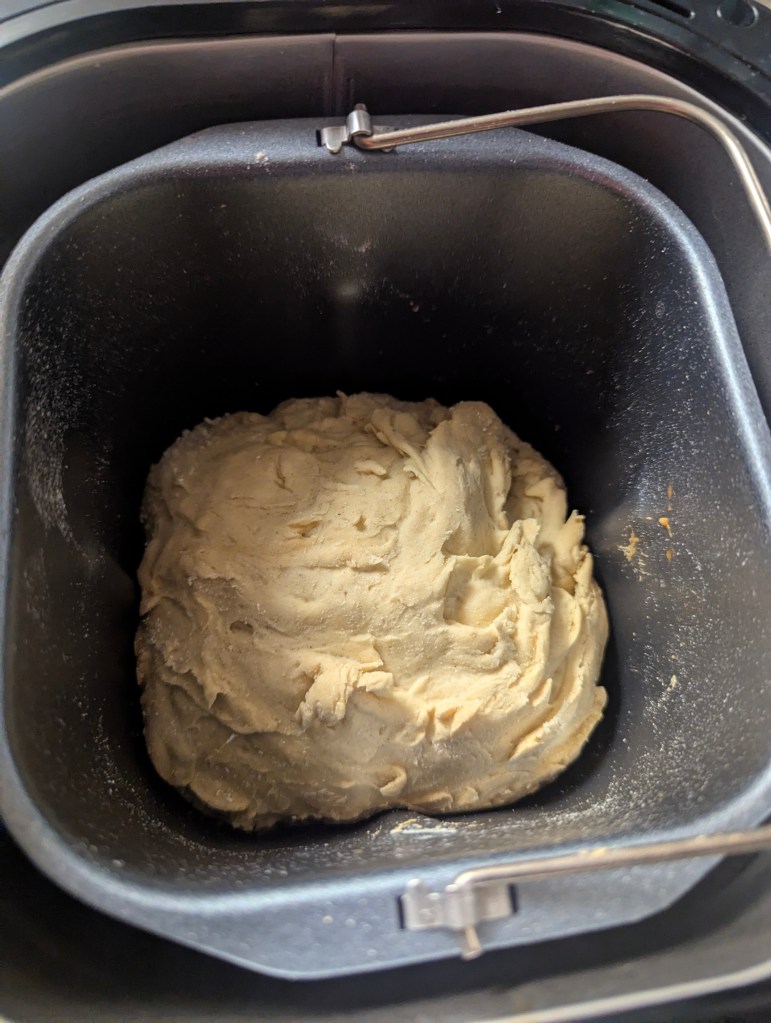
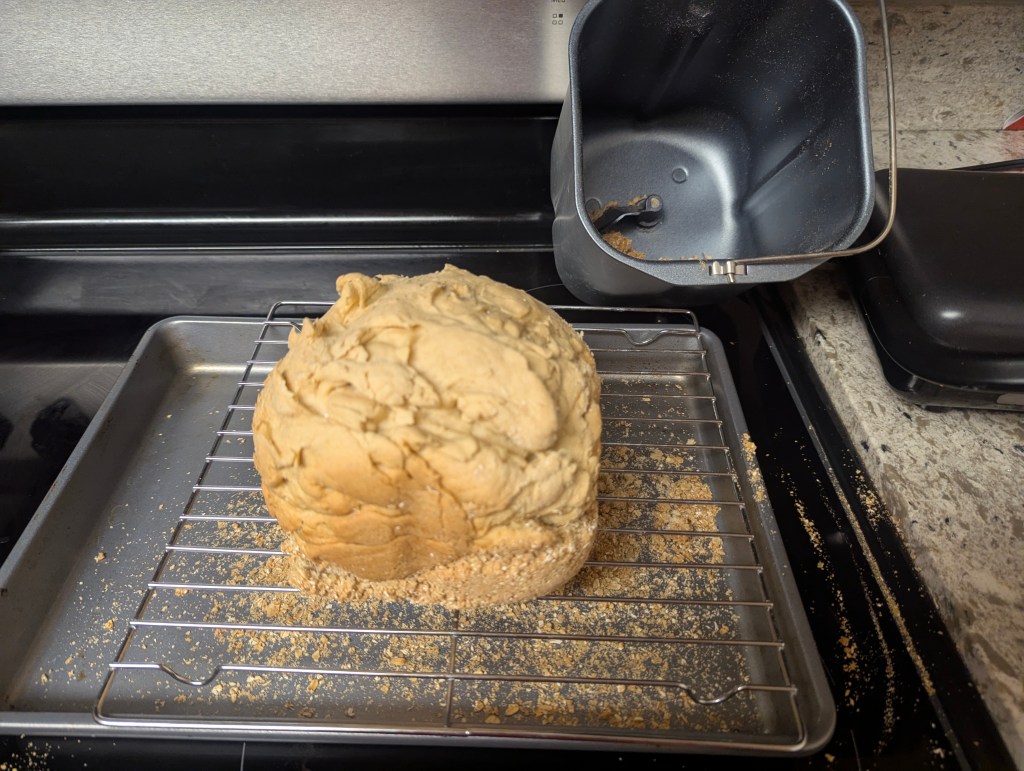
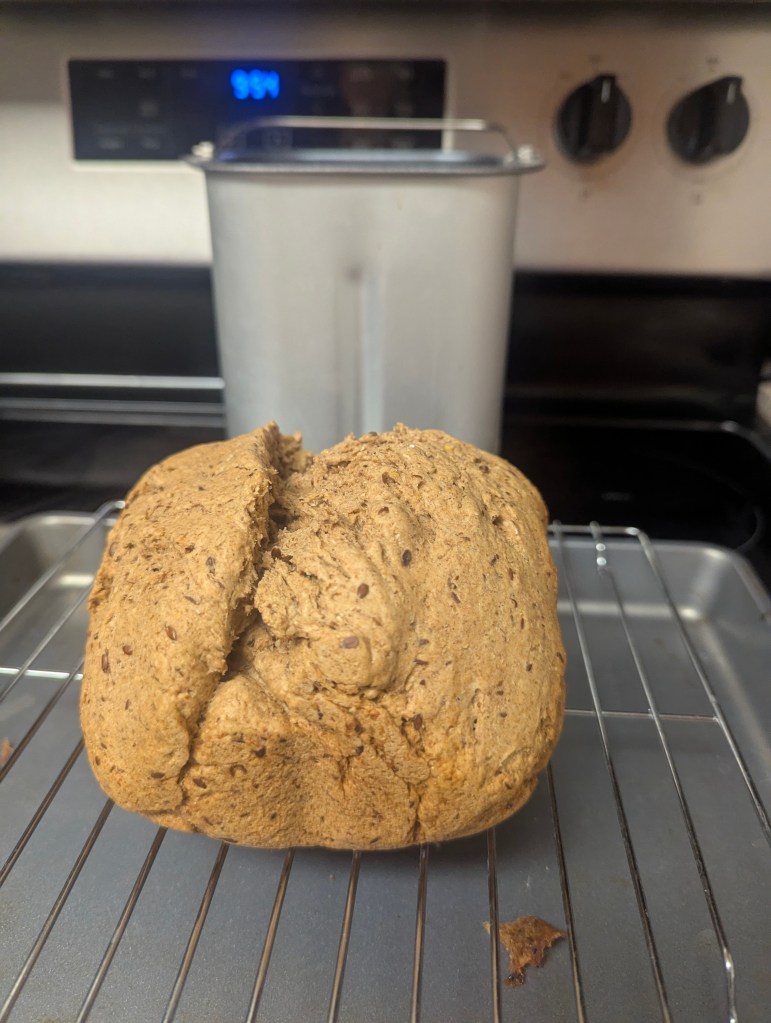
In fact, they happened to mention another issue. My bread was collapsing in the middle, and somewhere in one of these ebooks, a writer listed unstable support for the machine as a potential issue. Only someone who had a lived experience would have thought to include it, as most people would simply assume a bread-maker machine would live on the solid kitchen countertop.
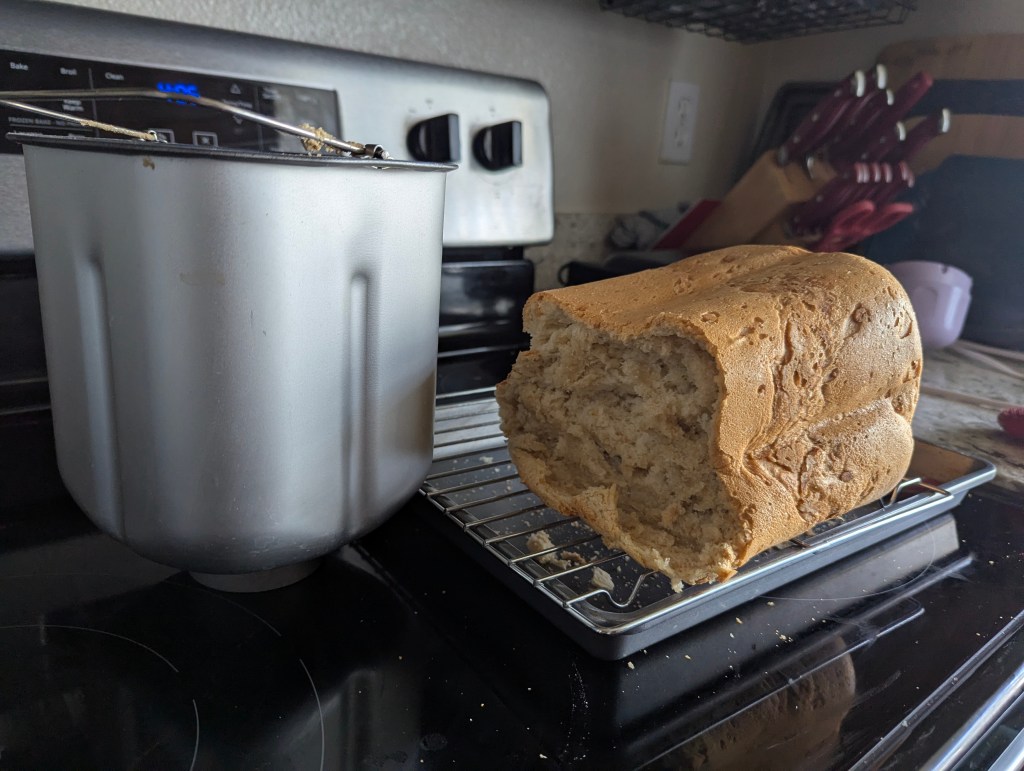
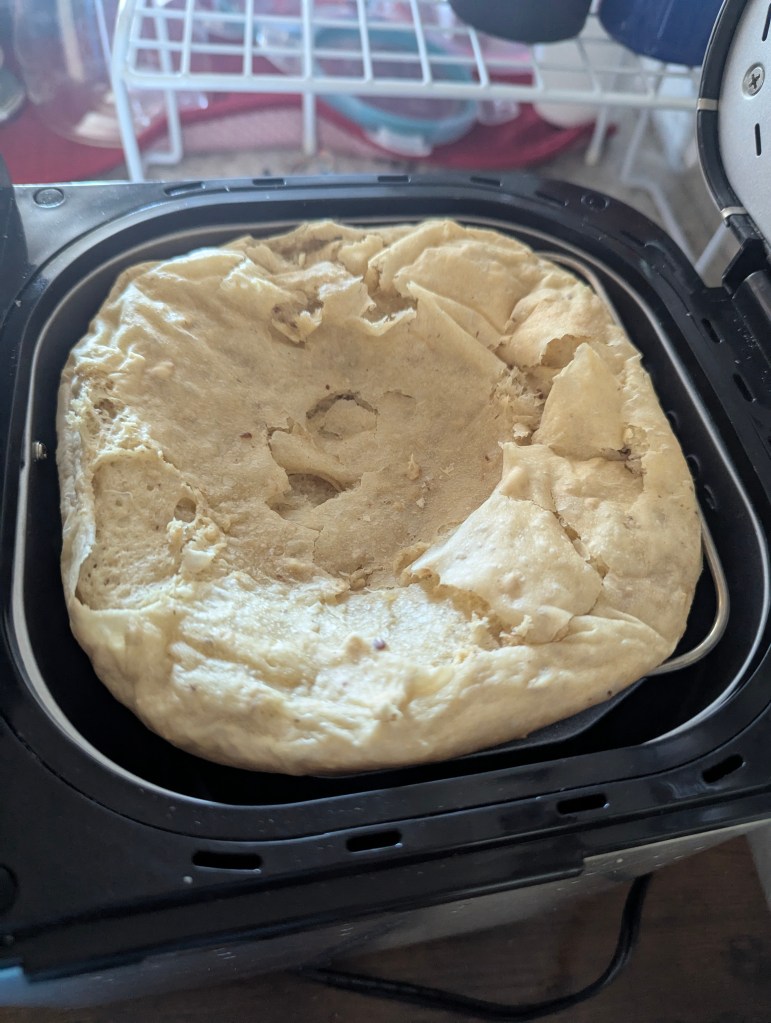
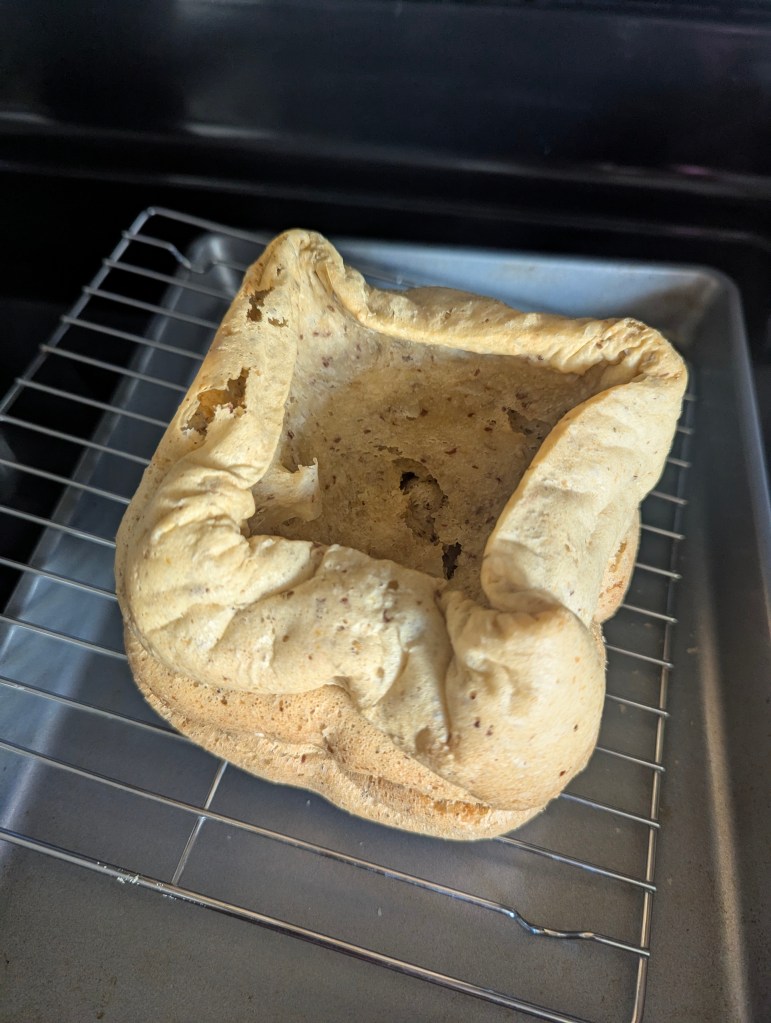
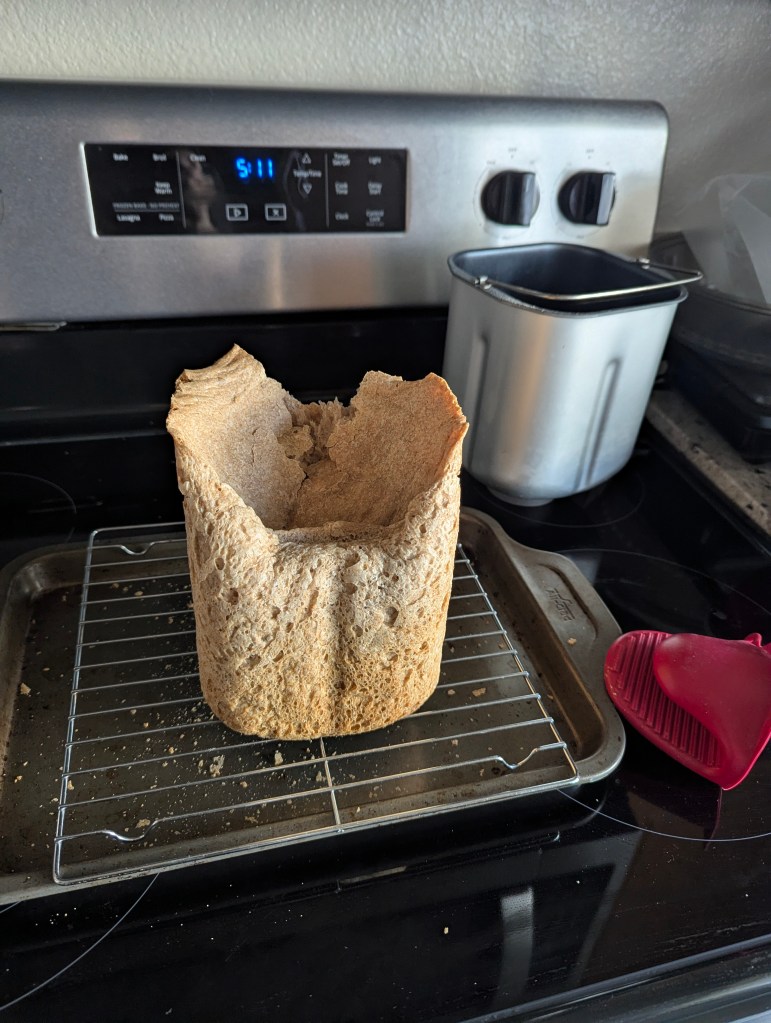
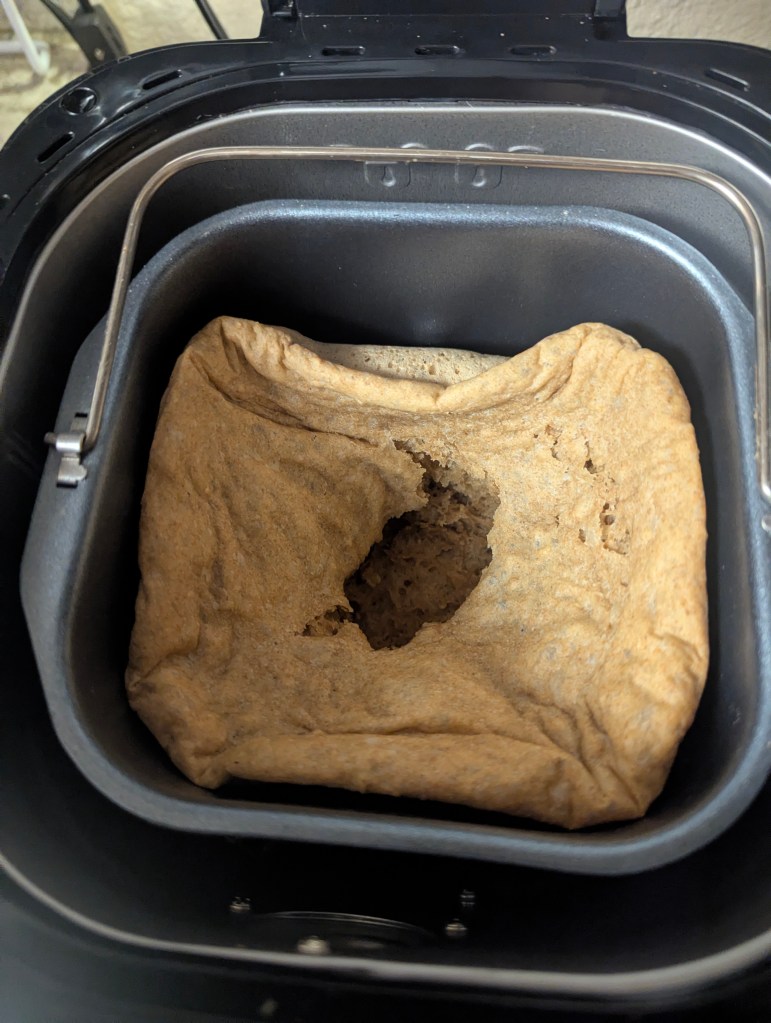
Except that in small apartment kitchens, counter space is limited, so I got a baker’s rack (aka independent shelf unit). The only place to put it was partially on tile and partially on the carpet. No matter how I adjusted the feet, it would still rock back and forth with the movement of the kneading bread maker. Disgruntled because this was exactly where in my kitchen I wanted the bread maker, I reluctantly rearranged my small appliances. Sure enough, on the solid built-in countertop, the bread maker performed perfectly.
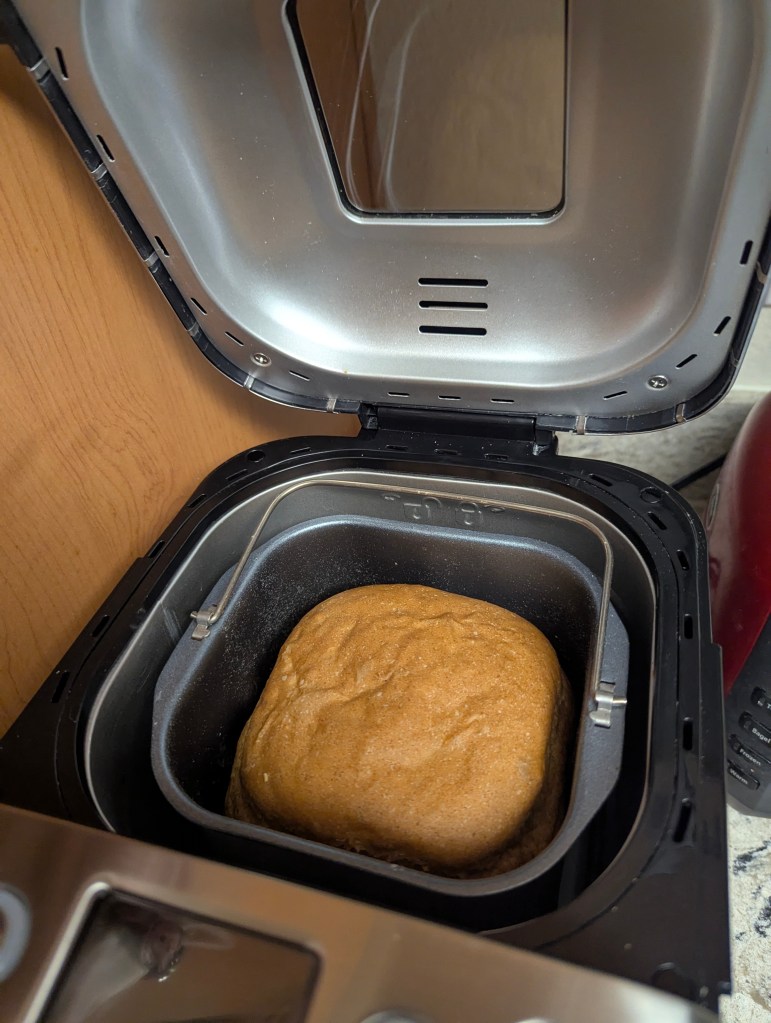
It also took time to find my go-to recipe. Baking is chemistry. We’ve all heard it over and over, and yet the existence of substitution lists makes us think we can customize it, as if it were a stir-fry or a chili recipe. Unfortunately, bread making is even more precise than most baking. Using almond milk instead of dairy, wheat flour in place of white, flax seeds and liquid instead of egg, or oil instead of butter could all affect the outcome, especially when using more than one substitution. Too much or too little flour, liquid, yeast, salt, or sugar could throw off the loaf completely, from glorified dinner roll to accidental bread bowl cavern to completely covering the lid and its many tiny vent holes.
Temperature must be exact, even before combining the ingredients. You must add them in a specific order and not let the salt touch the yeast too early. The sugar is a vital component, but honey and granulated are different measurements. Bread flour at twice the amount of wheat flour helps immensely, and adding too many oats at the “mix ins” stage (signified by loud and repetitive, insistent beeps) can make it dry and crumbly. It is also possible to do the same thing twice in exactly the same way but get very different results as the weather, humidity, elevation, or pressure is different than the previous location or day you tried it.
Then there’s the case of the missing paddle attachment that mixes the ingredients, most often still drying on the dish rack.
You can’t really trust the manufacturer, either, as they say their pans will make 2 lbs loaves. They do not. Do not use the 2 lbs loaf recipe. See: breadsplosion.
They also give you an express mode to make it faster. This seems appealing, but my number one lesson for this post is that it really can’t be rushed.
Bread making is one of those things that takes a while. Whether you’re kneading by hand and letting it rise in a slightly heated oven or sunny kitchen windowsill or tossing all the ingredients into a machine, you can bet that rushing the process will end in disaster and disappointment. This is bad news for an attention-deficient efficiency-minded over-scheduled overachiever.
Good things need time to rise. They are shaped and molded, left alone to expand, worked again, and left under a cozy blanket (okay, tea towel) to rest. Rest, a vital component, can’t be rushed. Even the baking itself can’t be rushed by using a shorter time with a higher temperature. Chemical reactions aren’t just about quantity and quality of ingredients but about the quantity and quality of the process.
And different breads need different ingredients and different processes. They serve different needs and tastes. What success looks like for a ball of pizza dough is going to be different than success of a sandwich bread, which in turn is different than a successful sweet pumpkin loaf quick bread.
You have to know what you’re trying to accomplish, what you need to do it, and what you have to work with.
When I told people about the loaf that went well and then subsequent failures, they often said a variation of, “Oh, but I thought you had figured that out. I thought you had a good one last time.” etc. But fresh bread is a risk every time. Less so as we gain experience, pick a go-to recipe, and learn how to troubleshoot problems for next time, but still a risk, always.
You have to be willing to get it wrong. To be embarrassed. To not be perfect at your first attempt. To adapt to the space and needs you have. To learn by experience and from the wisdom of those who have come before you.
Bread is a naturally popular topic in faith circles, of course, and I’m grateful for the work of professionals like Kendall Vanderslice connecting us with our heritage and ancestors from all over the world who lived by their “daily bread,” as Jesus himself even prayed in his example of how to pray. From unleavened bread in the exodus to the miraculous loaves and fishes to the elements of the communion table to feeding the early church, bread is a big deal for Christians. There’s not much more practically holy than sharing bread.
But there are some parts of bread making that must be personal, that fit your life and no one else’s. There are some things we cannot simply read about or watch but must first be bad at. To be a beginner is not about perfection but about effort and endurance, resilience and research, science and art in one yeasty exploration of your own tendencies, assumptions, needs, and tastes. Over and over.
There is more than Eucharistic literalism here. It’s forgiveness in an unforgiving process. Each slow, gentle rise a forgiveness of a brutal kneading, each recipe a new opportunity, and each collapsed top a sign to try again. Math and chemistry cannot forgive, but time can. Effort and curiosity can. It’s not too much to ask of yourself to persist from ignorance to frustration to hope to joy to a comfortable routine. Even when we cannot forgive ourselves for the past, we can clean the loaf pan, assemble the ingredients, focus on the recipe and helpful hints, and start again, carefully measuring each element of a miracle until it turns to sustenance to keep us going another day.
This year’s resolutions weren’t just about the Star Trek franchise and bread making. They were about giving myself permission to enjoy without being an expert, to learn to love something as a beginner, and to delight in the humility of waiting for what’s next. In a nutshell: exploring strange new worlds and going boldly, and breadily, where I had never gone before.
There are many more worthy causes you should give your money to, but if you have already given to those in need and would like to support this site, especially if you have benefited from it yourself or have linked to or used it to inform your own paywalled work, you are able to do so with my annual Holiday Bake Sale (20% off):
 Invisible Cake Society