
Aphobia is often rooted in intentional ignorance but contains actual legitimate questions non-hateful people have, but are now afraid to ask after seeing the responses to the aphobic person, which defeats the goal of educating. It’s time to address some of these questions in a safe and open place: here in the Invisible Cake Society!
First: We can generally tell the difference between questions asked respectfully and humbly and questions asked to bully, sea lion, and troll. We’re not perfect, and tone on the Internet is hard, especially when emotionally activated, but be encouraged that educators/activists want you to learn!
Now, let’s get going:
I’m into girls, but I’m also on the aromantic spectrum and asexual. What does that even mean? How can I be all of those!? Well, queerness is a big wibbly wobbly blob of grey areas, not neat boxes. Getting free of boxes is the point. Labels help us connect and communicate. They help us feel less alone, find resources, and form community to work on shared goals and experience belonging in a world that seeks to erase us.
We hear about sexual orientation, but there are others, usually but not always aligned. Romance, platonic, aesthetic, etc.
Also frequency: never, rare, average, or only in specific circumstances.
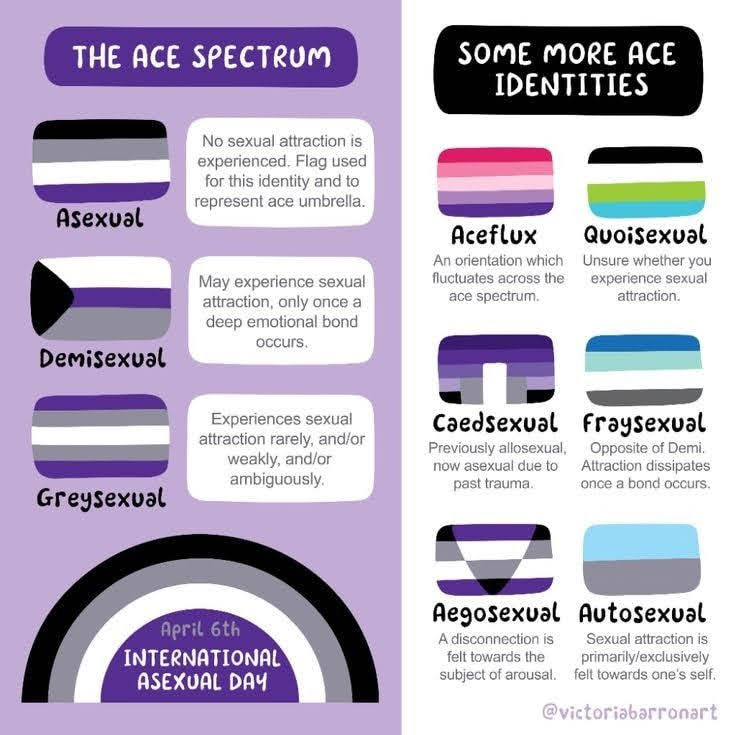
So if you rarely experience attraction to girls not boys, and that attraction is mostly nonsexual…
You may be sapphic asexual or ace lesbian, and possibly somewhere on the aromantic spectrum as well.
We then have favorability, indifference, aversion, and repulsion to specific behaviors.
This is different than sex positivity, neutrality, and negativity that are about attitudes toward sex in society.
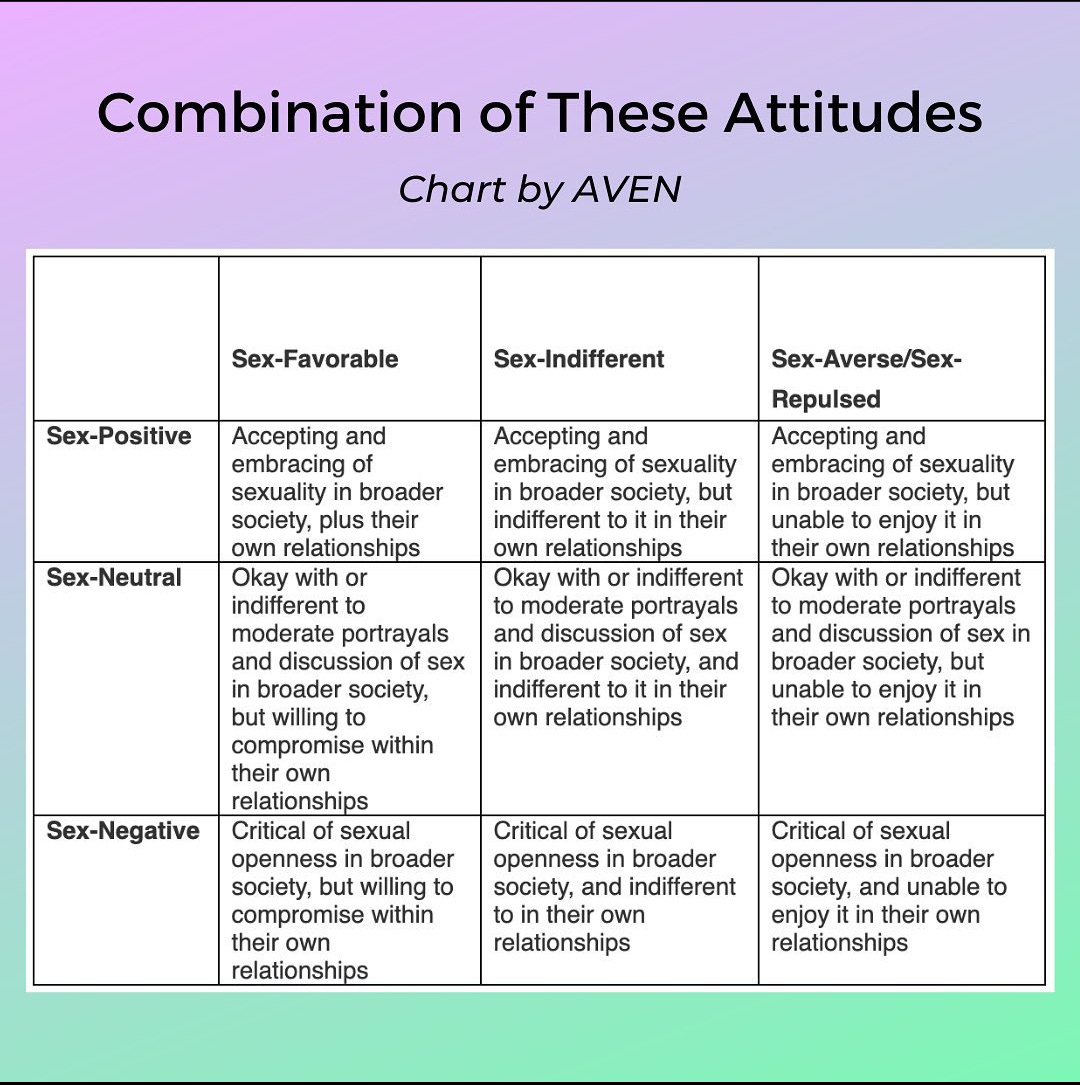
Also generalized desire: you may want to experience kissing but not have a specific person or gender you’re particularly drawn to.
And biological libido/hormones.
All different independent but related things.
Attraction is a word we use with magnets. A fridge door is magnetic even when empty, but if you hold a magnet close, it will react with attraction. Aka, a gay person is still gay even when single or “not getting laid.” Same for straight or bi or pan, etc.
And vice versa, an asexual person is still ace even if they have a sexual partner. That person could be the rare exception of sexual attraction, or someone they love in other ways, or just a fun partner to have a good time with. That’s their business, not yours. Regardless, they are still ace.
We know people can still be straight (and we not only assume it but strictly enforce it as normal) even if they haven’t had sex or dated. But there’s a pressure to prove we aren’t broken or defective so we conform to the norm of romance and sex.
This is broadly called amatonormativity (amato, as in amorous, + normative). Amatonormativity means: the assumption that all people aspire to or have a romantic and sexual relationship at the center of their lives. It is the measure of not only whether you’re similar to others, but your desirability and attractiveness aesthetically and platonically, your success and maturity as an adult, and your character to be a good employee or leader.
“Virginity” is a conservative purity culture term that both honors the purity of a young person (let’s be real, teen girls) and is used as a barb to insult anyone past that “expiration date.”
This is true regardless of your thoughts on abstinence, which is waiting for marriage to have sex. Conservatives and self-proclaimed radical feminists and mainstream culture agree that people without a romantic and sexual relationship by an arbitrary age are societal rejects, undesirable, or sick.
The only part that differs is whether that relationship must be a marriage. Whether it is a hookup buddy or a covenant life partner in the eyes of God, society generally agrees not having one is enough to get you pity and “just get laid” or “needs a girlfriend/boyfriend” comments.
Say you have never or, worse, don’t want, such a relationship, and they lose their minds. How!? Isn’t a romantic and sexual partner a requirement for maturity, health, success, and personal survival??? No, it isn’t.
That’s why while everyone should have the legal right to have romance and sex with any gender, sex and romance are not a “right” you can demand from others. The gender of your partner(s) should not be constrained by law AND ALSO you are not entitled to that relationship from another gender or individual.
This is the consistency of consent. It goes both ways: There is no sexual or romantic liberation without the choice to refuse romance and/or sex. If we’re only fighting for the right to choose the gender of our partner but otherwise chained to the same stigma and shame, that’s not liberation.
If we’re only fighting for the right to choose the gender of our partner but otherwise chained to the same stigma and shame, that’s not liberation.
And yes, I don’t just mean stigma and shame over having had sex or romance but also over NOT having had it or not desiring it.
This liberation benefits not only aro and ace people who are less likely to have partners but EVERYONE who is single, whether by choice or not, divorced or widowed, etc.
In case you haven’t read stats on that lately, that’s roughly half the population. And many of those singles aren’t actively looking for a partner, whether they were partnered before or not.
- So are asexual people “just straight”? No. Some may have hetero attractions, some have gay or bi or pan to describe their attractions, and some are just aro ace with no attractions. And some are a combination. Remember, people are a wibbly wobbly mush.
- Is orientation about how much, or the type, or the quality of sex we’ve had or not had? Nope. Attraction and behavior are independent topics. Related, yes. Entirely the same? Not at all.
- Like magnets, you can change the shortcut terms you use to describe yourself at any time. Maybe in your 20s you were positive that you were a straight, female, sporty, extroverted premed student. Maybe in your 40s now, you are a bi, nonbinary, bookish, ambivert therapist. Labels change! Growth!
 Invisible Cake Society