
Thank you to all our aromantic and asexual Jesus-loving folks who participated this summer’s interview series! Here is a list of all of the posts in this series:
Tag: LGBTQIA+
Get to know a-spectrum Christians: Blue Ice-Tea
As aromantic- and/or asexual-spectrum Christians and Jesus-adjacent people, it can be hard to believe that we are not alone. There are few examples of us in queer Christian spaces speaking about our experiences, not to mention the broader queer or Christian/faith worlds in general. I want to do my part to change that with this website and connect you with more a-spectrum Christian and Christian-ish people across the internet. This summer, I’m hosting a short Q&A series. This is the last interview for this year. I’ll post a round-up list for easy linking soon!
1. Hi! We’re so glad you’re here. Can you introduce yourself to the Invisible Cake Society with your name, pronouns, any identity labels you feel like sharing?
Hi, my name is Blue Ice-Tea (“Ice” for short). As a genderless woman, I’m never sure how to answer “pronouns” questions; most people in real life use “she/her” for me, but online people often use “they/them”. I’m heterosexual, demisexual, and platoniromantic (which is a subtype of quoiromantic). I sometimes use the labels “cis-genderless” or “gender-detached”, or you could just say I don’t have a gender identity. I’m also a white-passing Canadian of mixed European and (West) Indian ancestry.
2. What do you like to spend your time doing, online or in person, creatively and/or professionally?
As you might guess from my blog, I love movies! I also love books and music, and I’ve dabbled in art and creative writing. Unfortunately, I don’t have as much time as I’d like for any of them. At different times in my life, I’ve been into different things: dancing, choir, TTRPGs, and, of course, blogging. Regardless of what I’m doing, though, I try to prioritise spending time with my friends. Watching movies with my friends is probably my favourite thing to do.
3. When did you hear about aromanticism and asexuality, and when did you realize they described you?
I first heard about asexuality when I was in my early 20s–more than 20 years ago, now! I’d actually used the word “asexual” to describe myself once before that, but I wasn’t sure the label was really accurate. When I discovered the asexual community (specifically, AVEN), I started following and participating in it, but I didn’t feel I truly belonged to it until I discovered the word “demisexual” (about 15 years ago). Now I comfortably describe myself as “demisexual” or “ace”.
I’ve always had a conflicted relationship with the “aromantic” label. I don’t experience feelings I consider “romantic”, but I also wouldn’t say I don’t experience romantic feelings. It’s just that the feelings other people label romantic, I consider platonic! This has caused me a lot of confusion over the years, but eventually I discovered the label “platoniromantic”, which means “not distinguishing between romantic and platonic feelings”, and that fits me very well!
4. What’s your faith background and how would you describe your relationship with religion/spirituality/faith today?
I was raised Presbyterian (a kind of Protestant), and growing up I regularly attended church, Sunday school, and youth group. As an adult, I’ve gone to various kinds of churches, including Methodist, Anglican, and Lutheran. My faith was also shaped by popular media: writers like C. S. Lewis, J. R. R. Tolkien, and G. K. Chesterton, and TV shows like Touched by an Angel and Veggie Tales. I went through a period of questioning in my teens, but I’ve never really drifted away from the faith, and I still go to church every Sunday. I believe in God, and my relationship with him is deeply important to who I am.
5. How has your a-spec identity influenced your personal faith?
I think being ace gave me a lot of unfair advantages growing up. The Christian spaces I grew up in were pretty conservative: no sex before marriage, and marriage was only between one man and one woman. These were not very friendly messages for queer people, and they were hard on a lot of straight people, too. But as an ace person, the rules seemed fairly easy. And–especially before I realised I was ace–I didn’t understand why other people had such problems with them. It was easy to be complacent and judgemental. As an adult, I’ve had to work to overcome that and become a better ally to allos, especially queer ones.
The flip side of that is that I didn’t feel the same discomfort in Christian spaces as a lot of people do. For me, Christian spaces were actually more comfortable than a lot of others, because there was less emphasis on sex. As a result, I stayed in the church at an age when a lot of people drift away. I don’t think that was a very good reason, but I am grateful things worked out that way, because the older I get, the more I feel the need for faith in my life. I hope that, as churches become more welcoming and inclusive places, more people will feel comfortable staying in them.
6. How has your a-spec identity affected your relationship with religious or spiritual communities?
Oops, I guess I covered that already!
7. How has your faith affected your relationship with the a-spec or larger LGBTQIA+ community?
I don’t think it’s affected my relationship with the ace community. But coming from a religious background is part of the reason I didn’t engage much with queer spaces when I was younger.
8. Does your a-spec identity impact your gender identity? Or vice versa?
I’ve heard that ace people seem to be less likely to identify with gender, but I can’t say how those things are related in my own case. I also suspect that genderless allosexuals may be more common than we think. I think more research needs to be done in this area.
9. What should all a-spec Christians know?
For ace Christians who grew up in conservative churches, it can be easy to think we must be doing something right because we don’t face the same sexual temptations as those around us. It’s especially easy when we don’t know that asexuality exists. I would like all ace Christians to know that they are ace, that sexual attraction is real, and that if we don’t understand other people’s sexual urges, that’s not because we’re better or because they’re lying; it’s just because we have different sexual orientations and that doesn’t make us better or worse than anyone else.
10. What do you want the larger affirming LGBTQIA and ally Christian community to know about a-spec Christians?
I don’t know if there is anything specific. Obviously, I want everyone to know that ace and aro Christians are real and valid.
11. At Invisible Cake Society, we highlight experiences that have been erased or seem invisible to those outside of them. What’s your favorite way to show your a-spectrum Pride?
I actually don’t show much Pride! I don’t wear an ace ring, and I have hardly any ace merch. I don’t particularly want most people to know about my aceness. I think ace visibility is very important, though, and so I’ve done what I can to educate others about asexuality. I’ve written for AVENues, I focused on asexuality when I was doing my master’s degree, and I obviously write about it on my blog. I like that long-form writing allows me to get into the details and nuances of asexual experience, which can be hard to do in conversation.
Honestly, the time I feel most “proud”–or maybe just comfortable–being ace is when I’m around friends who accept me and value me in my aceness. By which I mean that they accept and value me as a single person who prioritises platonic relationships, and they don’t expect or pressure me to pursue a romantic or sexual relationship.
12. Do you have a favorite example of a-spec representation (whether explicitly stated or not) in media, books, public figures, theater, etc.? What about them resonated with you?
Luke Skywalker’s sexuality is open to interpretation, but his story has been deeply important to me as an ace person. In the original Star Wars trilogy, he never really has a romantic interest, and a lot of his story is instead driven by his relationship with his friends. When I was a child and adolescent, he was one of the only examples I had of a human adult protagonist who was single and happy. In most other stories, the hero’s “happy ending” was equated with finding a partner, and if they ended up single, then the ending was considered unhappy. But Luke’s story ends with him saving his father and reuniting with Han and Leia, and the fact that they are a couple and he’s single doesn’t seem to bother him at all. I could joke that Luke “turned me ace”, but what I really mean is that he gave me permission to be ace–that is, to imagine myself having a life full of love and meaning even if I didn’t have a romantic partner. And, although I have a lot of complaints about the sequel trilogy, I’m really glad they kept Luke single and continued to focus on his platonic relationships.
For a much more recent example, the film Project Hail Mary really resonated with me, not just because one of the characters could be read as ace, but because the film really seems to validate the celibate, friendship-focused lifestyle in a way few movies do.
13. Anything else you want readers to know?
Don’t think so.
14. Where can they follow your work online?
At my main blog, Ace Film Reviews, or my X-Files blog, The Realm of Asexual Possibility.
Get to know a-spectrum Christians: Robert Black
As aromantic- and/or asexual-spectrum Christians and Jesus-adjacent people, it can be hard to believe that we are not alone. There are few examples of us in queer Christian spaces speaking about our experiences, not to mention the broader queer or Christian/faith worlds in general. I want to do my part to change that with this website and connect you with more a-spectrum Christian and Christian-ish people across the internet. This summer, I’m hosting a short Q&A series.
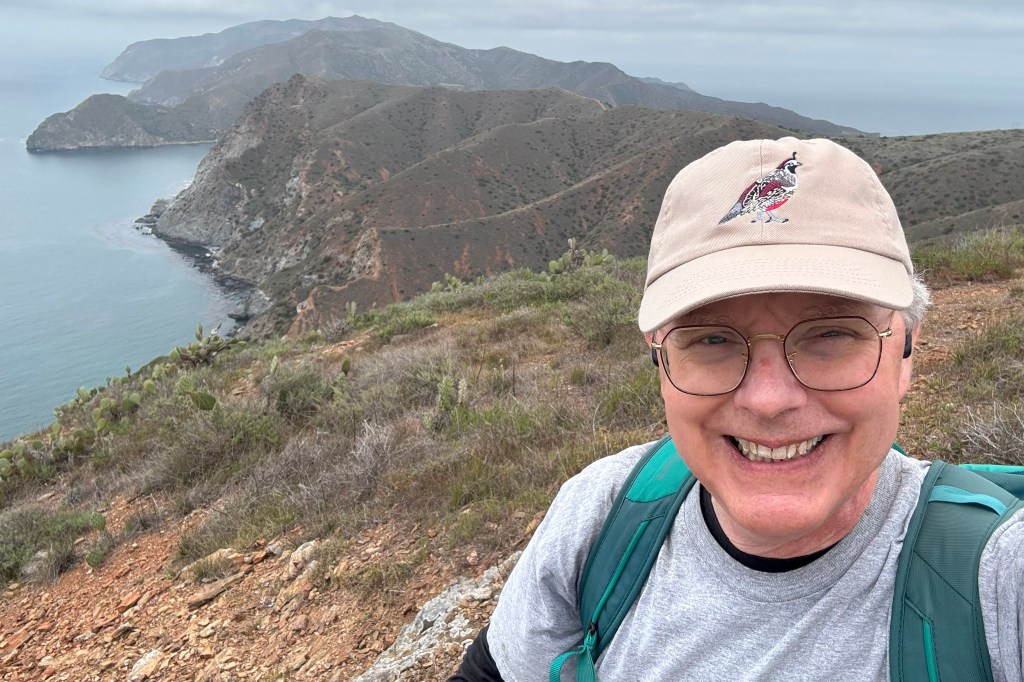
1. Hi! We’re so glad you’re here. Can you introduce yourself to the Invisible Cake Society with your name, pronouns, any identity labels you feel like sharing?
My name is Robert Black, and I use he/him/his. The identity label I’d most like to share is that I’m old–61 to be exact. If I was in my teens or 20s, I’d probably be all over the various microlabels, trying to decide which one fit me, but at my age I’m more likely to say that my sexual orientation is “Been there, done that.”
2. What do you like to spend your time doing, online or in person, creatively and/or professionally?
I’ve written professionally since the mid-’80s, when I wrote nine episodes of the Nickelodeon series You Can’t Do That On Television and worked on the set as the standby script doctor for the 1985 season. After that, I moved to Southern California to try getting into Hollywood, but Hollywood and I didn’t like each other. I switched to writing books in the early 2000s, and I’ve been lucky enough to have a long-term relationship with Royal Fireworks Press of Unionville, New York, writing mostly for teenagers about math, science, and history. In fact, just last week I turned in the proof review for my 15th book.
And now here’s some breaking news: At this point in the original version of this interview, I was going to tell you that I had a day job as a quality engineer in a water heater factory. Just 36 hours after I wrote that, some corporate-level executive decided my position didn’t fit with the corporate restructuring they were about to do. So now I’ll be writing and working with Royal Fireworks full-time. It’s the plan I’d already been working on for when I retired, just moved up a couple of years.
When I’m not writing, I like to go hiking in the mountains or on the islands of Southern California. I also watch a lot of anime, because it seems like Japanese storytelling allows a much wider range of things you can write about and get produced. One of my favorite series from the past year was about high school girls learning mineralogy. No American production company would ever go near a premise like that, but it worked surprisingly well.
3. When did you hear about aromanticism and asexuality, and when did you realize they described you?
I knew I was different in middle school and high school, but there were no words for it in those days. My mom said that some people were just “late bloomers” and there was nothing wrong with it. I finally “discovered girls” when I was 20 (much to the amusement of my college roommates), and a few years later, I met someone and got married. I thought I had become “normal” and was doing what adults were expected to do–and was that a mistake. There was a lot of stuff happening that I won’t waste your time with, but the bottom line is that it was the loneliest time of my life, because I was alienated from myself. It took so much time and energy to fit my role in the relationship, and I didn’t have enough left over to be me.
I was married for five years, and then a few years later, I had a one-year relationship with someone I now consider to have been that “right person” we’re always being told we haven’t met yet. I think I also needed to be in that relationship just to see if it would work without some of the things that had made my marriage so bad. And it did at first, but eventually I ran up against the same problem of not being able to be my real self. It was like I was in some kind of parallel universe–”Sex World”–and staying there didn’t let me be who I am in the regular world.
Around 1999-2000, I started identifying the way I said before–as “Been there, done that.” When I first started seeing the word “asexuality,” I didn’t think it fit me. I do like women, after all, and had I been in relationships that had at least worked for a while. But the more I read about it, the more I realized there were things other men experience that I had not. And when I read about the differences between having a libido in general and being sexually attracted to someone specific, it all finally clicked.
4. What’s your faith background and how would you describe your relationship with religion/spirituality/faith today?
I’m a cradle Episcopalian, born and raised in the Episcopal Church. My ex-wife’s family was evangelical, though, and I tried being evangelical myself for three or four years. It didn’t stick. After my divorce, I went back to the Episcopal Church and spent 27 years in one of the adult choirs at All Saints Church in Pasadena. Unfortunately, age caught up to my singing voice, and now I’m still figuring out where I fit in the church community without it. These days I’m kind of a spiritual ronin, still part of the church but not connected to any particular parish.
5. How has your a-spec identity influenced your personal faith?
It’s more like the other way around. I mentioned All Saints Pasadena by name because it has a long history of welcoming and supporting the LGBTQIA+ community (you can read more about it here: https://allsaints-pas.org/ministries/lgbtq-at-all-saints/). Meeting gay people who were better Christians than I was and meeting gay couples who were better at being married than I ever was opened my eyes to the fact that it was okay to be queer. At the time, I had no idea that a queer identity might ever apply to me, but the experience certainly helped once I realized it.
6. How has your a-spec identity affected your relationship with religious or spiritual communities?
It hasn’t really had a chance to yet. Realizing that I had an a-spec identity and losing my singing voice overlapped with each other. I’ll have to see what happens when I’m ready to be part of a congregation again.
7. How has your faith affected your relationship with the a-spec or larger LGBTQIA+ community?
It’s hard to believe we’re nearing 30 years since this happened–there was a teenage girl I knew online through the Buffy the Vampire Slayer fandom who told me she thought she might be gay, and that it terrified her. I guess she felt safe telling me because I was just a bunch of words in a chat thread, not someone who could disapprove of her in person. My faith and my choir experience enabled me to assure her that not all Christians would hate her, and that I was one of the ones who wouldn’t. She eventually came out and was able to build a life for herself.
Nothing else that dramatic has happened since then, but these days I frequent the r/asexuality subreddit and try to offer encouragement or at least some perspective to the kids and young adults who post their questions and anxieties there. I’d probably take myself too seriously if I called it a “mission,” but it’s a thing that I do.
8. Does your a-spec identity impact your gender identity? Or vice versa?
One thing I really didn’t like about being an evangelical was how much it restricted what it meant to be a man. You hear about all the ways the evangelical community tries to oppress women, but not so much about how those restrictions limit men as well. Look at the hyper-masculinity of the Christian nationalists who get so much attention these days and you’ll see what I’m getting at. There’s no room for an a-spec identity in it, that’s for sure. So maybe I’m saying my a-spec identity and my gender identity reinforce each other against that kind of thinking. I know I’m a man, and I know I’m a-spec, and those are both true no matter what the manosphere thinks about it.
9. What should all a-spec Christians know?
That God loves us just as we are. We’re not broken and He didn’t make a mistake when He made us this way. We have a part to play in the Beloved Community, even if it’s not one of the more traditional roles.
10. What do you want the larger affirming LGBTQIA+ and ally Christian community to know about a-spec Christians?
That we exist! Otherwise, I think it’s best to let them get to know us as individuals, and for us to find our places in the community as individuals. We are ourselves first, and our identities second.
11. At Invisible Cake Society, we highlight experiences that have been erased or seem invisible to those outside of them. What’s your favorite way to show your a-spectrum Pride?
I really don’t have one. This interview is the most visible thing I’ve ever done. I figure most people my age wouldn’t know what I was talking about, nor would it make much difference to them if they did.
12. Do you have a favorite example of a-spec representation (whether explicitly stated or not) in media, books, public figures, theater, etc.? What about them resonated with you?
Two of the best and most popular anime series in recent years have a-spec main characters. In Frieren: Beyond Journey’s End, the title character Frieren is an elf, and at one point it’s explicitly said that elves are considered asexual. There’s even a scene where she turns down an offer to dance because she wants to eat cake! Meanwhile, the main character Maomao in The Apothecary Diaries is never explicitly said to be asexual, but she certainly fits the job description. I like both characters because it’s not so much that they’re against romance and sex, but rather that they have something else in their lives that they value more. I can relate to that.
13. Anything else you want readers to know?
If you’re just coming to identify as ace and/or aro, and you’re wondering what it’s going to mean for your life… well, I have no idea. But I do know this–you do have a life ahead of you, one with possibilities you can’t even imagine right now. Building that life will take time and effort, but that’s what will make it worth doing. You can make it.
14. Where can they follow your work online?
All but two of my books are still in print and can be found at my publisher’s website: https://www.rfwp.com/book-author/robert-black/. I don’t post as much online these days, because it was taking too much time and energy away from my books. But I am on Reddit as u/RABlackAuthor, and as I said, I keep up with the r/asexuality subreddit regularly. I’m also on Facebook, mostly to keep up with family and old friends or to post photos from my latest hiking adventure.
Get to know a-spectrum Christians: Justin Ancheta
As aromantic- and/or asexual-spectrum Christians and Jesus-adjacent people, it can be hard to believe that we are not alone. There are few examples of us in queer Christian spaces speaking about our experiences, not to mention the broader queer or Christian/faith worlds in general. I want to do my part to change that with this website and connect you with more a-spectrum Christian and Christian-ish people across the internet. This summer, I’m hosting a short Q&A series.
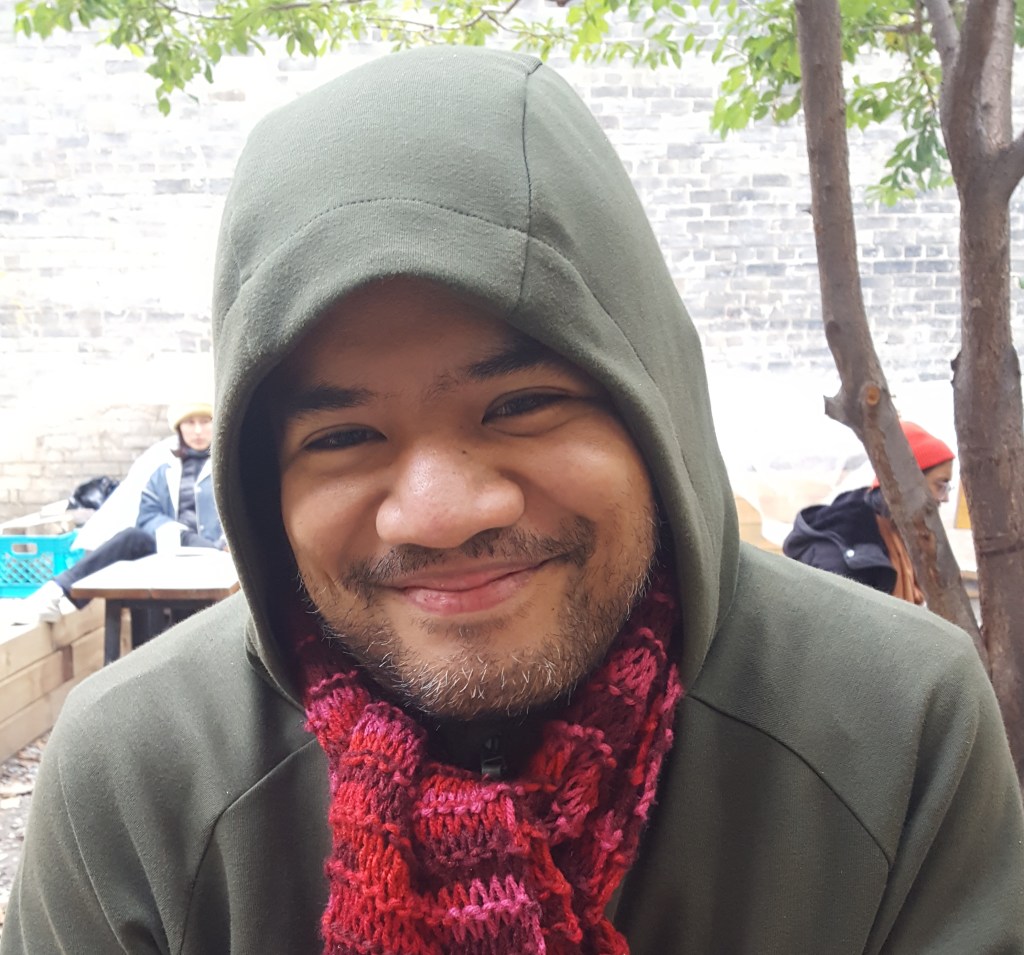
1. Hi! We’re so glad you’re here. Can you introduce yourself to the Invisible Cake Society with your name, pronouns, any identity labels you feel like sharing?
My name is Justin Ancheta—I’m a cis male, my pronouns are he/they, and I identify as invisibly disabled through my stutter. My ace identities range from grey-asexual to aceflux, but I most often use demisexual and biromantic, so I consider myself Bi+ too. For political convenience, I just use the term Bi+ and Ace.
I’m a Filipino-Canadian second-generation immigrant, which means that I’m a diasporic child of Filipino immigrants.
I’m also neurodivergent, having been diagnosed with generalized anxiety disorder, social anxiety disorder, and adult ADHD.
From all of that, I wish “liminal” could be used as an identity label. For all of the identities and communities I’ve listed, I always feel like—regardless of the community in which I’m told I belong—I’m always in a state of quasi-belonging. I’m not really Filipino because I’m culturally so far from my family, nor am I really Canadian, because I’m not white. Because of the nature of how I experience stuttering, I can sometimes pass for being fluent, and sometimes I can’t. My own Christianity has evolved into a state where I’m firmly outside of a lot of the norms and structures I grew up with, yet I still feel myself drawn to a belief in Jesus. I’m not a pure Gold Star Asexual, but I’m not allo either. I’m too much outside allonormativity to be “conventionally” queer, but too much outside cisheteronormativity to be conventionally straight. Being Bi+ for me adds another layer to my sense of being stuck in an in-between zone, not being one or the other, not being A or B. At times it’s a source of pride, a sense of defiance and rebellion against restrictive binary relationship and sexual norms. At other times, it leads to the frustration of never truly feeling safe in knowing where I belong.
2. What do you like to spend your time doing, online or in person, creatively and/or professionally?
Because of my ADHD, I’ve ended up with a lot of obsessions, which I often rotate through. But in general, I’m really passionate about literature and writing in all of its forms. Recent books that I’ve finished are Birds, Art, Life by Kyo McLear and Son of Elsewhere by Elamin Abdelmahmoud. I currently write poetry as well as hybrid and lyric creative non-fiction (CNF); my CNF work on asexuality has been published in AZE Journal and QT Literary Magazine. I also have pieces published in carte-blanche, and the Tahoma Literary Review, and my prose poetry has just been published in PRISM International. I also have a piece on stuttering that’s forthcoming in The Fiddlehead’s Disability issue for Summer 2026. My current project is a memoir-in-essays about my journey with disability, racialization, and queerness.
I’m also really passionate about the tarot; for about five years now, I’ve been a professional tarot reader. I was first introduced to the tarot through a group of friends I can only describe as a witchy Christian coven. The subtlety, ambiguity, and elusiveness of the images in even a bog-standard Rider-Waite-Smith deck was a challenge I found intimidating, pushing my brain to think about and question my inner self in ways I hadn’t before. But at the time I had developed an intense interest in Jungian psychology and Christian mysticism, and the tarot spoke to all of that, plus the ambiguity and elusiveness of my own relationship to sex and gender. I’ve always been fascinated in looking at the tarot through an ace lens, which is why I wrote a whole blog series covering the entirety of the Rider-Waite-Smith tarot (all 78 cards!) from a marginalized asexual perspective. I’m currently in the process of revising and adapting that series into another book.
I also have an interest in technology and all of the technical, political, and social discussions around it; before the AI-fueled memory crisis I loved to collect and upgrade old laptop computers.
I enjoy using metaphors from my interests in my writing—my first published piece in QT Literary Magazine was a playful expression of my demisexual identity through the imagery of the “pairing mode” commonly used in Bluetooth headphones and speakers.
3. When did you hear about aromanticism and asexuality, and when did you realize they described you?
It’s hard for me to answer that, as I can’t point to a central “A-HA!” moment to show when I suddenly realized I was ace. It came about over the course of roughly a year in late 2018 to early 2019, when I started talking to my childhood friend about their experience of asexuality. I did a lot of online “Are you Asexual?” quizzes, and read a lot of pop culture blog posts on asexuality. I kept on running into this brick wall where it felt like so much of the asexual experience resonated with me, and yet my own relationship with sex and sexual attraction left me feeling like I wasn’t “ace” enough to claim that identity. A big turning point for me was when I discovered that asexuality isn’t just one specific monolithic identity but an umbrella, including multiple different identities encompassing a gradient of sexually relating to no one or almost no one. When I discovered that there was a microlabel that fit so well my own experience of sexuality—Biromantic Demisexual—it felt relieving. It’s like I could understand myself so much more, and that I wasn’t alone in feeling what I was feeling.
I still remember sitting in a packed café one Friday evening, discovering the Biromantic Demisexual flag and ordering one of what would be many pins and buttons to adorn my bags. It felt like an act of completion. I felt whole in a way that I hadn’t for a very long time.
This is why the discourse around ace exclusionism and the Gold Star Asexual personally affects me. According to exclusionists, I don’t belong in this community, and everything that I’ve described above was fiction. And on top of that was my experience of the discourse around Ashabi’s 2026 intersectional ace flag, which sent me a clear message that multiply marginalized and racialized ace people like me don’t deserve representation in ace community spaces and are wrong to want that.
It makes the idea of feeling ace pride at times feel hollow and insincere. Yet, I still feel a strong sense of pride in my own asexual journey and in my asexual self.
4. What’s your faith background and how would you describe your relationship with religion/spirituality/faith today?
My faith background was Roman Catholic, though later in life I’d grow to experiment with an Evangelical Fundamentalist Baptist Church, the Anglican Church, and the United Church of Canada. From a very early age, I knew I diverged wildly from the Catholic Church’s stances on critical issues like queer inclusion and abortion (despite a brief transition through right-leaning Centrism in high school). Yet the majesty and deep history of Catholic worship, the candles and the “smells and bells”, as some say, is something I spiritually feel drawn to, again and again. There’s a meditative, mystical, and introspective quality to it that I find healing and nourishing. Pope Francis and Pope Leo XIV have done a lot to convince me that positive social change within the Catholic Church is possible, but in the face of the climate change, the rise of technofascism, and white supremacy, more concrete change can’t come quickly enough.
Right now, my relationship to my Christianity is…fraught. It’s difficult to go online, not just on social media, and see Christians at large reacting with almost bloodthirsty glee to the murders of Renee Nicole Good and Alex Pretti, or seeing them cheer on the actions of ICE, the murders of Black people by the police, or the genocide in Gaza…and that’s on top of the typical queerphobia and acephobia that one has sadly come to expect from Christians and Christianity in general.
It all makes me wonder about what I’m doing. Why I’d tie myself to a religious community that has seemingly embraced violent white supremacy in all of its naked hatred, and zeal for inflicting as much death and suffering on others. Why I’d be part of a community who would rush to the defence of the current US president and his circle over the Epstein Files, while coming down with equal speed and ruthlessness on trans people, or people arrested by ICE for dubious reasons.
The discussion and popularization of the concept of “toxic empathy” articulated in books popular among conservative Christians leaves me feeling like I’m living in the Upside Down, a bizarro world where empathy, compassion, tolerance, grace, and forgiveness are now cardinal sins, while bigotry, hatred, and lying are now cardinal virtues, and the mere act of trans people existing is a mortal sin of the highest possible order. I’ve caught myself wondering if this is what Christianity has always been all along, and that I’m just the odd-ball outlier. I want to believe this isn’t true. I want to believe we can be something more, that we can be a powerful force for both justice and healing.
And yet amidst all of my despair, I see Christ as an example of choosing love, a philosophy that bell hooks and Kai Cheng Thom have written about, to which I was introduced by one close friend: To choose love. To choose the path of humility, empathy, grace, and a desire for dialogue and understanding over anger and othering. To accept that we can make mistakes and learn from them. Of showing up as best we can for ourselves, the people we love, and others around us.
For me, two things can be true: The utter monstrousness of what much of Christianity has done and has become now, and the beauty and inspiration I feel from a Christian faith pushing us to stand up for the marginalized and the downtrodden. That tension can compel one to be more introspective and self-critical, qualities which I think are so important in our increasingly self-centred world.
5. How has your a-spec identity influenced your personal faith?
On a deep level, I’ve always viewed my ace identity in much the same way as my Christianity—something that subverts power and rebels against the restrictive, oppressive norms that prevent us from living our authentic lives in healthy and sustainable ways. So I think in a lot of ways, they’ve informed and supported each other in a virtuous circle. In both asexuality and Christianity, I see a striving for liberation and a better future. I see a desire to decentre that which strips human beings of their dignity, reducing them to items to be consumed. I see a desire to be part of something greater than oneself, and a desire to keep choosing empathy, grace, and compassion for others.
6. How has your a-spec identity affected your relationship with religious or spiritual communities?
It both has and it hasn’t; I haven’t fully outed myself at the church were I work at, mainly because it hasn’t really come up in a relevant way, and because I know that as an affirming church in an affirming denomination, I don’t feel that pressure which comes with being at a place where the entirety of my authentic self is not accepted.
At the same time, it has been a wonderful experience to be connected to Matt Nightingale’s contemplative spirituality group, to be in community with like-minded people and those whose life journeys have matched my own. Being in spaces like that, and being exposed to the writing and work of people like Cheri DiNovo have helped heal my relationship to Christian community.
7. How has your faith affected your relationship with the a-spec or larger LGBTQIA+ community?
I’ve had people in my ace community alongside queer people in my personal life see fit to lecture me repeatedly on Christian privilege and Christian supremacy, as if it’s something that I’ve never heard of and haven’t been thinking of on a daily basis. I’ve experienced conversations with those same ace and queer people—people who I once trusted to take my words, intentions, and actions in good faith—talk to me as if all they’ve ever seen in me is yet another overprivileged older cis male Christian oppressor.
I understand where that comes from. There’s no denying the history of trauma that Christianity and toxic masculinity has inflicted and continues to inflict on queer and marginalized people. That trauma in turn can pose significant barriers to healthy communication with others when disagreements or misunderstandings arise. (Something Sarah Schulman explains very well in her book Conflict is not Abuse.) I try to extend as much grace as I can to such people, and try to be personally accountable when I recognize instances of my own complicity in the harm Christianity causes. But it doesn’t change the fact that it personally hurts me. Slowly, I’ve been learning to make peace with how others have chosen to see me. If anything, it’s been a wonderful lesson from the universe in learning to walk away from people, relationships, and spaces where I’m not wanted.
8. Does your a-spec identity impact your gender identity? Or vice versa?
Being a-spec certainly opened the doors for me to think of my gender identity in ways I wouldn’t if I’d been conscious of my self only as an allo heterosexual. Learning to think of my sexuality in more expansive ways led me to think of my gender identity in more expansive ways too. Choosing to use they/them pronouns was a subtle but big step for me in that regard.
9. What should all a-spec Christians know?
Take care of the ones you love, but take care of your selves, first and foremost; you can’t show up for your community if you’re not showing up for yourself. Protect your boundaries, be quick to show grace, and be patient with your own anger. And always, always choose love.
10. What do you want the larger affirming LGBTQIA+ and ally Christian community to know about a-spec Christians?
We’re not your enemies. Our queer communities can only gain through more inclusion, of intersectional people, people across the aromantic and asexual spectrum, and of people across the spectrum of faith, religion, and spirituality. At an unprecedented time when our communities are facing more and more attacks and erasure from white supremacy and capitalism, we need to focus on building solidarity and unity against a global upsurge in right-wing fascism and bigotry. We’re far past the stage of Niemöller-inspired appeals to speak up for distant marginalized groups under siege now, fearing for a future targeting us: Book bannings, and the regression of women’s rights means they’re already coming for all of us, right now.
The queer community and progressives can’t waste time indulging our collective addiction to lateral aggression (see Frances Lee’s 2017 essay “Excommunicate me from the Church of Social Justice”, which hits just as hard now as it did almost a decade ago). We deserve better.
11. At Invisible Cake Society, we highlight experiences that have been erased or seem invisible to those outside of them. What’s your favorite way to be visible?
By far my favourite way to be visible is through my lyric essay writing. The medium of the lyric essay gives me so much latitude to play with writing in how I can express my asexual and intersectional experiences. I wrote a hermit crab essay about the obligatory “Am I broken?” inner dialogue on my asexuality (which almost every ace or aro person seems to go through) in the form of a software bug report. I have a piece in AZE Journal expressing the timeline of my asexual journey as a set of progressive software release notes. It’s just plain fun.
12. Do you have a favorite example of a-spec representation (whether explicitly stated or not) in media, books, public figures, theater, etc.? What about them resonated with you?
I would say it would be my own representation in my published lyric essay writing, but I don’t want to be narcissistic! In popular media, I found myself most resonating with Florence Simmons from Sex Education Season 2. Her conversation with Jean Milburn was the inspiration for a workshop I facilitated on asexuality, which was one of the most magical and transformative queer experiences I’d ever had.
It’s unfortunate that the show never followed up on either her character or that conversation (not to mention Steve saying “I think I’m demisexual” on a placard in the Season 2 finale), and instead gave us the tragedy of O in Season 4. But the less I say about that, the better.
13. Anything else you want readers to know?
Intersectionality and solidarity will save us. Simply more queer or ace or aro representation will not save us if we can’t back that up with a community and a social movement that challenges how society still upholds white supremacy, cisheteronormativity, amatonormativity, monosexism, and compulsory sexuality. Simply wanting more representation isn’t enough. We need to strive for an end to ableism, racism, classism, saneism, and neuroableism. We need intersectionality and solidarity.
14. Where can they follow your work online?
A quick list of all of my published work including my Asexuality and the Tarot series can be found either on Linktree or on Carrd; plus there’s my work-in-progress website at justinanchetawriter.com.
My latest prose poem, “A Letter to the Elevator Technician who Rescued Us, June 6, 2024” was just released in Issue 64.2 of PRISM International, and my lyric essay “Because I wanted to fly higher than where my voice could take me” is coming out in the Summer 2026 disability issue of The Fiddlehead.
In addition to all of that, people can follow me on what used to be my tarot-centric Instagram account (@rampancy) and they can subject themselves to my rantings on BlueSky (jancheta25.bsky.social).
Get to know a-spectrum Christians: Ell Huang
As aromantic- and/or asexual-spectrum Christians and Jesus-adjacent people, it can be hard to believe that we are not alone. There are few examples of us in queer Christian spaces speaking about our experiences, not to mention the broader queer or Christian/faith worlds in general. I want to do my part to change that with this website and connect you with more a-spectrum Christian and Christian-ish people across the internet. This summer, I’m hosting a short Q&A series to introduce us to you.
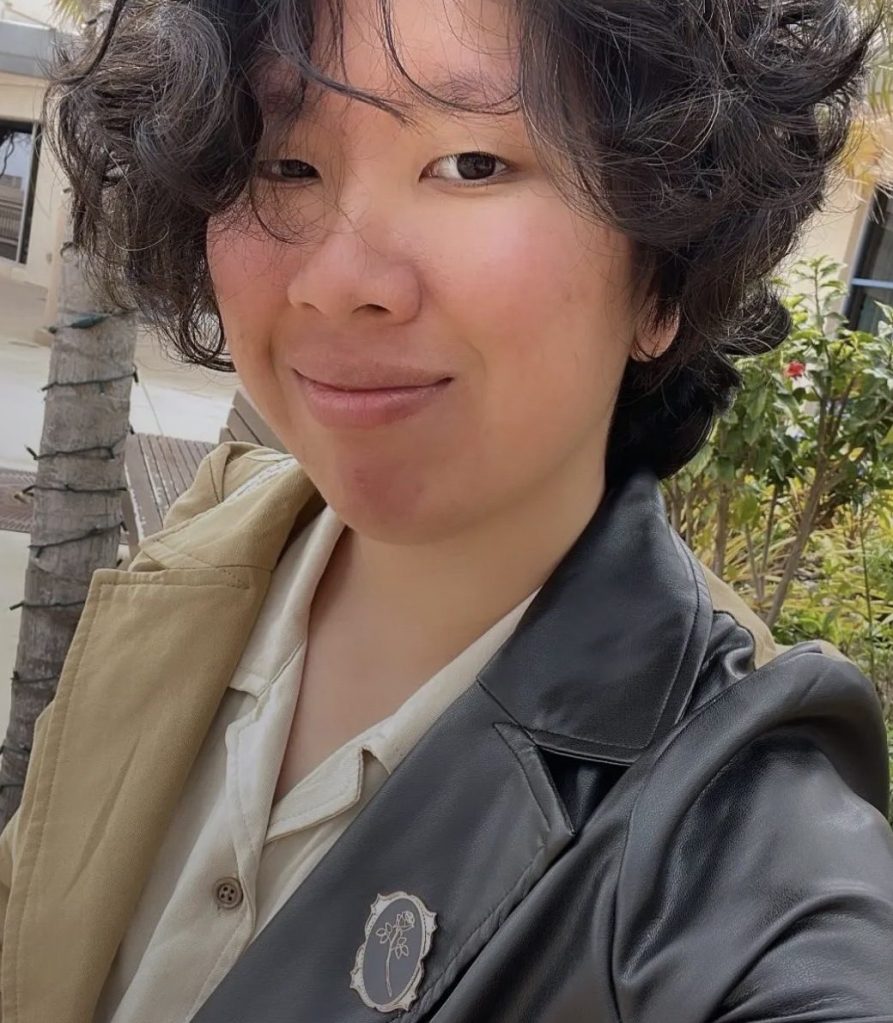
1. Hi! We’re so glad you’re here. Can you introduce yourself to the Invisible Cake Society with your name, pronouns, and any identity labels you feel like sharing?
Hello! I’m Ell Huang (she/they). I’m apothisexual (sex averse) asexual and aromantic.
If I were to get more particular, my desires can be summed up as hetero-queerplatonic (I’m interested in an opposite gender platonic life partner) and demi-sensual (emotional bond needed first, craves physical touch but not sexual).
Gender is a matter of curiosity for me right now.
I am also second generation immigrant Taiwanese American and autistic.
2. What do you like to spend your time doing, online or in person, creatively and/or professionally?
I LOVE engaging deeply with art such as books and movies. I love being in deep conversation about all sorts of ways stories are in conversation with one another, especially the fantasy, fairytale/folklore, Gothic, and horror genres. I also love writing, directing skits, and making videos.
3. When did you hear about aromanticism and asexuality, and when did you realize they described you?
The internet was helpful in connecting me to that language. In high school, I secretly was beginning to suspect “asexual” described me, but I didn’t confirm until my later years in college. Partially because, I figured, I was either “really good at purity” or the soulmate God made me to be with (that is, someone I would feel this attraction for) was someone I’d meet later as an adult. I also think I quietly identified as aromantic first because I felt I didn’t even have to think about sex until later…and then it switched.
Asexuality became easier to identify with, while it became more prominently existential-crisis-inducing to realize I did not feel romantic attraction either.
Very extraordinarily well-meaning friends would tell me “being asexual doesn’t mean you have to be aromantic!” but the scary thing was…I was also aromantic. I am both aromantic and asexual, and for my personal experiences, the Venn diagram comparing the two experiences is a circle.
4. What’s your faith background and how would you describe your relationship with religion/spirituality/faith today?
I’ll call myself agnostic because I’m being honest, and I’ll call myself religious because I’m being honest.
I grew up evangelical but left that behind. Today, I resonate a lot with liberation theology. I also have a lot of reverence for what I learn from my Catholic friends. In all honesty, “agnostic” is also an accurate descriptor for how I feel some days, though it’s loose. I still choose to believe in a loving Creator and an afterlife to hope for reunion with loved ones and a second chance at life, especially for those gone too soon, and all I can do is hope.
I also believe in ghosts and spirits. We can’t be the only ones “right” about that.
5. How has your a-spec identity influenced your personal faith?
The older I get, the more my asexuality feels like it’s changed my perspective on life and the faith in it. While I didn’t care for sex + romance growing up anyway, there was still this mysterious, elusive hope for it as something to be revealed in the future. There was this pretty, romanticized Tumblr graphic I still remember influencing me for years: “Imagine a guy so focused on God that the only reason he looked up to notice you was because he heard God say, ‘That’s her.'” See, there was once a time that felt so sweet and amazing to hear, to be romanticized like that, to be the answer to someone’s prayers like that, to be hyped up so positively behind your back like that!
Now, I think it’s dumb as rocks, and rather insulting to everyone involved: me, whoever that guy is, and God.
Rather, now I have moments that I’m grateful and in awe of friendships and their capacity to grow throughout life, but I also have moments where I still struggle with existential crises and platonic heartbreak and grief. There have been moments I’ve felt “called to celibacy” (genuinely), which I think aligned with a call to authenticity for myself; and other moments I’ve mistakenly thought it was my “calling” to save people from pain at the expense of myself, perhaps making the mistake of thinking it was on me as an asexual/aromantic with “the extra time,” to self-sacrifice like Jesus. (Is there an Ace Savior Complex? Just thought of that now. Might have to think more about that).
In honesty, it feels complex now. Because I desire more platonic physical touch and a queerplatonic partner, I no longer feel “called to celibacy” now, even though I believe it was true and helpful for a time then. So I’m in the process of deconstructing that.
The other side of it, though: I don’t see Jesus in a romantic light. We repeat countless metaphors for trying to capture a relationship with the Divine, and the romantic ones never really made sense to me personally because in that case, you’d be mad to find out he loves others. A romantic relationship metaphor feels too reductive and exclusive, not to mention derailing from the type of impact Jesus’s human life on earth was dedicated to. A parenting, teaching, mentor, ancestral, or queerplatonic friendship makes sense to me as a way to see Jesus without feeling cheated that, yes, Jesus loves other people too.
6. How has your a-spec identity affected your relationship with religious or spiritual communities?
Ooooh this is a complex one as well. I’ve had different experiences. The evangelical community is actually discriminatory toward asexuals once you’re in your 20s. People have this misconception that “the church accepts you the most!” and “asexuals are the puritans oppressing everyone!” but it’s only that we camouflage within purity culture in the beginning.
The flip side is harsh: all the shame of purity culture happens to us later, and possibly for the rest of our lives for some, for not experiencing sexual attraction. I have actually even been set up without my knowledge or consent with a stranger once, and a family member responded, “Why did I have to raise you” when I said no.
On the other hand, many of my closest friends are at the intersection of queer and religious(/adjacent), and I’ve been told my coming out has helped others come out as well.
In being able to de-center heteronormativity and amatonormativity, we’ve been able to breathe in much deeper platonic friendships and share the existential crises of life together. It’s been liberating to make friends wayyyy past the purity culture panic. And that “being way past this” doesn’t mean having sex, for me. That just means deconstructing the obsession with policing or prescribing (heteronormative) sex, and getting over these arbitrary rules of gender binary and gender separation that keep us from practicing empathy with one another to full capacity.
I also remember coming out to my pastor in our small progressive Asian American church (made up of outcasts, mostly second- or 1.5-generation immigrant young adults who got kicked out of evangelical immigrant churches). It was one of the best conversations I could have asked for, the way he immediately embraced this knowledge, respected my privacy, apologized for amatonormativity in the church once he noticed it, and actively took it upon himself to make language in church more inclusive of asexuality and platonic love.
7. How has your faith affected your relationship with the a-spec or larger LGBTQIA+ community?
Once again, complex! I don’t prioritize this struggle, but I have definitely been vehemently judged or misunderstood by other queer folks as inherently a traitor to the community just for also being personally religious. I’ve once been physically cornered and urged to renounce my belief in an afterlife to prove my leftism (an absurd type of situation I’d thought evangelicals only made up!). Ironically, this took place less than 24 hours after being physically cornered in a conservative place and urged to promise I would just say yes to the next man interested in me. One after the other, I was told it was just so unheard of and wrong for me to not have sex; then I was told it was so wrong for me to believe in heaven.
I don’t believe in hell, but I don’t think it’s fair to force people to renounce belief in heaven or reunion for those they lost either. I definitely understand where a lot of the rage comes from, I mean, fuck MAGA (and I know, it’s much older than that). But it’s also hard because I feel infantilized at times for believing in anything. I look foolish, head in the clouds, “clinging to childhood” for hoping in heaven. I’m still put in this position all over again, to choose between believing God loves me (does He? do They?) and choosing authenticity in who I am as a queer person.
It’s genuinely a tightrope to walk knowing and respecting people’s triggers, prioritizing people’s safety, and still being honest if it comes up that, yeah, I do believe in something, but no, it doesn’t involve divine punishment or religious exclusivity. Not everyone wants to associate with queer religious folks, and I have to respect the space because I know people want common ground in relationships, but at the same time I don’t like when people are just sitting there making themselves angry at the existence of me and demanding the end of all religion when I’m just lighting my incense saying a prayer in my room. I don’t like it any more than people just sitting there making themselves angry at the existence of my asexual queerplatonic life and demanding I still promise to submit to sex eventually. It’s white supremacist in itself too, to call for an end to all different people’s relationship to spirituality and the divine.
On the other hand! Again, you’d be amazed at how much queerness and faith intersect in my life. It was the active hospitality of queer Christians, in multiple instances spanning over ten years of my life, that embodied the hospitality of Christ to me and restored my faith.
Every time someone has somehow restored my faith, it was a queer person. Every single time I was in need, and someone gave me a safe place to stay, it was a queer person.
8. Does your a-spec identity impact your gender identity? Or vice versa?
I used to think not, but lately? Gender is curious for me. I think my asexuality has helped reframe a lot: when I usually want masculinity in my life, it’s not because I want sex with it, but because I want to wear it, embody it, express it myself. When I want masculine friends in my life, part of that is because I want different friends in general anyway, but another part of it might be because I want positive versions of masculinity in my life as I explore it. I think what I seek in a queerplatonic relationship is a brother figure for this reason, to bring out the genderqueer or masculine side of me in a supportive safe space with a friend. Not everyone gets that, though; it’s very different from the way people even on the ace spectrum describe sexual or romantic attraction to men. Even as I say this, I’m still exploring it, so I know that could change.
As far as my socialized gender goes, growing up I was steeped in the idea that girls were romantic and boys were sexual, and un-curious folks might brush off one aspect of my identity as “that’s just being a woman.”
But a) I remain both asexual and aromantic in adulthood as a grown woman, and b) women are sexual too; they’re just shamed or endangered for it any time they express it.
The lack of safe spaces to explore didn’t make me asexual; it just made it harder to find out I was asexual. On the flip side, if I were born and socialized as a boy, it might have also been hard to find out about asexuality because compulsory sexuality so forcefully defines what it means to be a man. This might parallel the flip side of what purity culture does for asexual Christians, the camouflage and then the vulnerability.
9. What should all a-spec Christians know?
You’re not the same as purity culture, you’re not lacking in passion just because it looks different, and authenticity is never the problem. Authenticity to who you are is never contradictory to the life God made you to have. You did not just “abort” a planned soulmate by coming out as a-spec. You did not miss out on love for saying no. You can pursue love of any kind, forge relationships of any kind, and the “right person” or “right people” would never be anyone who thrives off of your suffering/stifling for life. You also don’t have to self-sacrifice. You are whole, with a whole life, too.
We are not holier than anyone else. But neither are we any less whole.
10. What do you want the larger affirming LGBTQIA and ally Christian community to know about a-spec Christians?
One way to support a-spec Christians: I’d like us to recognize and catch singlism when we hear it. For example, notice when small groups are created to try to foster deeper fellowships, and “singles” is automatically associated with younger age demographics, while “married” is associated with mature adulthood. Or when we hear sayings like “some are single for a season, some are single for a reason!” which implies singleness as either a test or a punishment, either way a negative temporary pending status to ideally relieve. Or when our automatic response to a single adult is to pray for them to end their singleness quickly.
Another thing to know: no, I actually would not thrive in a nunnery. And there is something weird about assuming that just because I am aroace and Christian, I must by default be selfless and self-sacrificing, in a way not expected of straight people. It’s an echo of the Side A/Side B “Are gay and intersex people called to celibacy” debates all over again.
But this goes hand in hand with how celibacy/singleness itself does deserve a lot more respect as a valid, informed, personal human choice too. People also don’t owe anyone sex in order to be a fully realized mature human being. Some people genuinely would thrive in a nunnery, and they deserve better than just being someone’s “puritanical” virgin joke punchline.
These identities are not the same, and all must be separated from purity culture. But the way we treat each of them is all connected in the larger conversation on deconstructing amatonormativity.
11. At Invisible Cake Society, we highlight experiences that have been erased or seem invisible to those outside of them. What’s your favorite way to show your a-spectrum Pride?
I wear a black ring on my middle finger every day! I also like to show queer art and flags in the background of my videos sometimes.
12. Do you have a favorite example of a-spec representation (whether explicitly stated or not) in media, books, public figures, theater, etc.? What about them resonated with you?
Canon: Thơ (from the short film Thơ directed by Heather Muriel Nguyễn) incredibly resonated with me. She makes her sex averseness clear to her romantic partner, that it’s more like doing someone else’s dirty dishes, but is slowly still pressured into “doing someone else’s dishes” on demand anyway, if she’s going to achieve romantic intimacy. I really felt compelled by the short’s use of dreamlike visual metaphor, vibrant colorful lighting, and tense music to creatively emphasize how such an experience of feeling expected to “earn” love by pushing through trauma would feel like. I resonated with her experience of educating others (flipping the script where she was once “educated” on “universal” things) and slowly finding that still not everyone who initially seems to accept asexuality actually respects it. Been there. And I resonated with her breaking free.
Heather’s film Thơ can be watched here: https://youtu.be/fg3p0kxWD4o?si=OtoZ7HZAlG-lj4i6
Headcanon: Wednesday Addams (Wednesday, but also The Addams Family + The Addams Family Values). Come on, what an ace icon! I love that she is in direct contrast with her doting, most passionately entangled loving parents, and they all as a family fiercely love and accept each other so unapologetically. Wednesday also shows her care for others differently and I really appreciate that she does not have to change that. In the show Wednesday, she is set up like most stone-cold protagonists to “learn how to love,” but then subverts expectations with platonic examples every time (while shutting down the boy who insists she can’t say no to him). In fact, in Season 1 when her arc involves letting herself cry (where she once thought it was weakness), one of the rare times she does show the most intense tearful emotion for someone else is not for anything romantic but when she’s rescuing Thing from the brink of death.
For me, when I get insecure about whether my asexuality or aromanticism is just naivete, “innocence,” or “fear of intimacy,” I look at how Wednesday doesn’t give a fuck. She embodies “It’s badass to know what you want and who you are.” And she also embodies all this while protecting her very enthusiastically allosexual parents and queer friends too.
13. Anything else you want readers to know?
Demisexuality isn’t purity culture either! Though I’d be so fascinated and curious to hear how demisexual Christians in particular have deconstructed purity. It’s different from my own apothisexual experience, and just would be cool to learn from!
Along those lines though: I feel like there’s a strange micro-expectation of all asexuals to turn out demisexual “if you just meet the right person,” and it’s important to know that that’s not everyone, nor is it as simple as that. And representation of one experience doesn’t cancel out others. Like with the Addams family, we can be very different but all valid!
Also: people can stop commenting, “but you don’t have to be aromantic!” lol I know. But I simply am.
14. Where can they follow your work online?
I started The Creator’s Apprentice, my semi-spiritual, film-inspired blog, as a huge movie lover and as someone who sees God in the strange and unusual. I was frustrated with how surface-level or dismissive of real issues so many evangelical Christian blogs were, and I wanted to create an alternative where faith was not threatened by good art but often shown to be enhanced or deepened by it. Gradually, the cinema-inspired reflections have become more about relating fantasy/horror to my asexuality/aromanticism, though I am still also open about my faith in them.
- The Creator’s Apprentice: worrydollsandfloatinglights.wordpress.com
- Bluesky: @nocturnalxlight
- Instagram: @nocturnalxlight
- TikTok: @ellmerryspinster
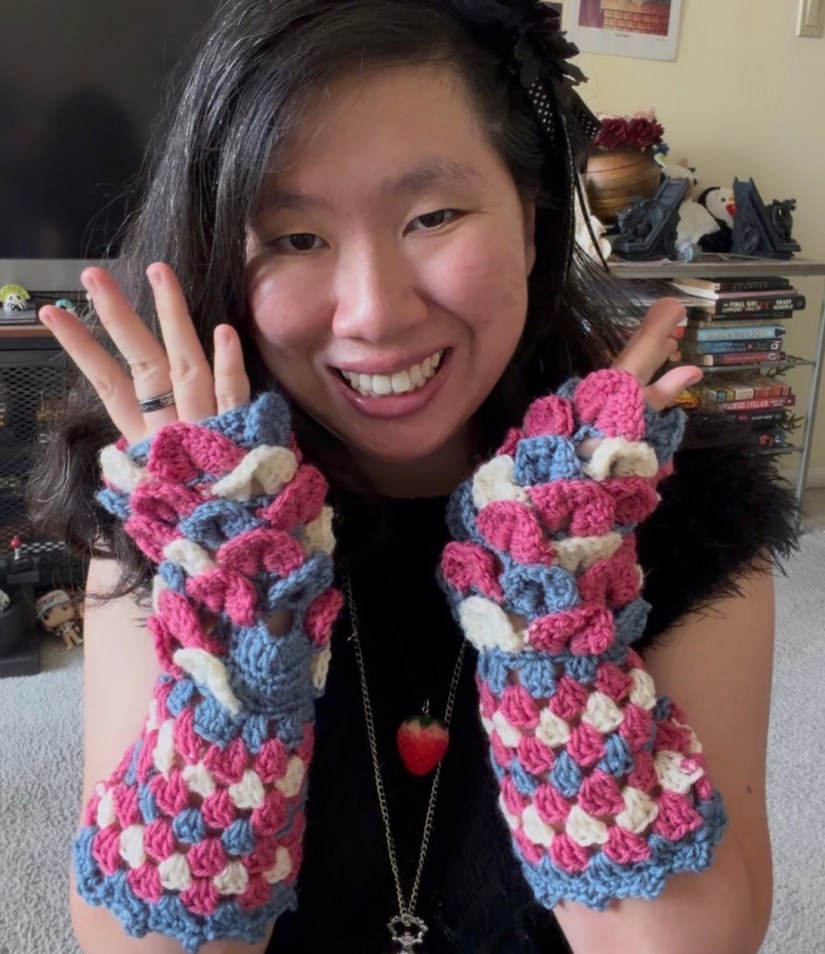
Get to know a-spectrum Christians: Kristen Tallau
As aromantic- and/or asexual-spectrum Christians and Jesus-adjacent people, it can be hard to believe that we are not alone. There are few examples of us in queer Christian spaces speaking about our experiences, not to mention the broader queer or Christian/faith worlds in general. I want to do my part to change that with this website and connect you with more a-spectrum Christian and Christian-ish people across the internet. This summer, I’m hosting a short Q&A series to introduce them to you.
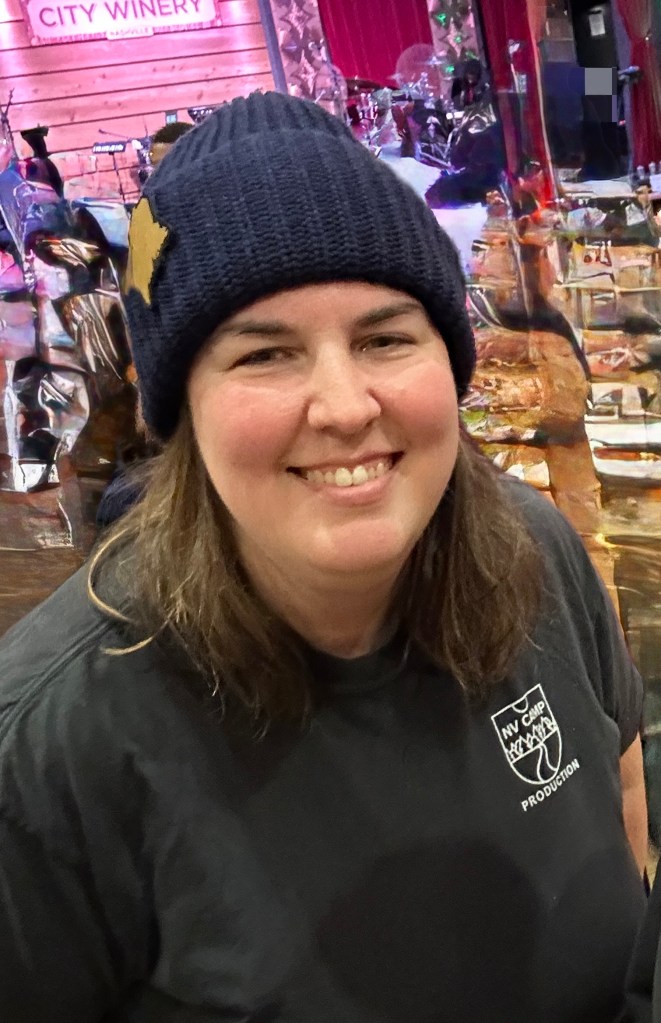
- Hi! We’re so glad you’re here. Can you introduce yourself to the Invisible Cake Society with your name, pronouns, any identity labels you feel like sharing?
Hello! Thanks for having me! I’m Kristen, pronouns are she/her/hers. I identify as asexual, biromantic, and sapphic, which is basically a fancy way of saying I’m not sexually attracted to anyone, but I am romantically attracted to anyone, and chances are it’ll be a woman. - What do you like to spend your time doing, online or in person, creatively and/or professionally?
Well, my day job tends to be crazy at times. I work as a video engineer in the corporate conference world, so my days can be anywhere from 4 to 18 hours long. When I have a day off or time to myself, I love baking, especially bread. (Yes, I have watched every series of Great British Bake Off, multiple times! And bread week is always my favourite!) I also enjoy reading, mostly sci fi and adventure for fiction, and I’ve recently started getting back into playing Switch.
So if anyone has some game recs, I’d love to hear! - When did you hear about aromanticism and asexuality, and when did you realize they described you?
It was during Pride month of 2018. I was seeing posts from friends about it, and it was the first time I had been seeing people posting about the LGBTQIA+ community with the IA added. The I was easy enough to guess, but I was curious about the A. So, I googled it. And I started reading all these stories from people describing asexuality and their experiences with it, and I realised I was reading about my experience too. Took awhile longer to realise the biromantic and sapphic labels, but finally having something to describe what I had (not) experienced my whole life was so wonderful. - What’s your faith background and how would you describe your relationship with religion/spirituality/faith today?
I grew up Independent Baptist. Like not quite Duggar-level fundamentalist, but not super far off, either. I had friends who were IBLP (Institute in Basic Life Principles). It got better when my family started attending a Southern Baptist Convention (SBC) church when I was at university. It got even better after I left the SBC. I still follow Jesus, and I would still say I’m a Christian, but it’s the Jesus of the gospels (rather than white Republican Jesus) who loves and welcomes queer people, rather than shutting them out. My faith is still evolving, but it’s still there. - How has your a-spec identity influenced your personal faith?
It’s made it more inclusive. Realising my own queerness after 30 years of believing being queer is a sin forced me to reexamine a lot of other parts of my faith and expand it to include a wider spectrum of people. - How has your a-spec identity affected your relationship with religious or spiritual communities?
To be honest, it’s made me more cautious. Being primarily from super fundie spaces means people will misunderstand you, mishear you, and think they know exactly what you’re talking about, and basically anything that ends in the term “sexuality” is generally frowned upon. I was telling a friend at a former church about an interaction I’d had on AVEN’s website, and suddenly one of the elders of the church had run up to the table and interjected with, “You know there won’t be homosexuals in heaven, right? You know that, right?” And then just as quickly ran off. Like, dude, what? Now I wait for people within a church or religious space to prove themselves first before even telling them about my orientation. - How has your faith affected your relationship with the a-spec or larger LGBTQIA+ community?
If I’m going to truly say that everyone is made imago Dei, that is, in the image of God, that includes all the diversity and variation we see. And that includes the not: the not sexually attracted, the not romantically attracted, the not gender affiliated. It does not make any of us less-than. I see Jesus speaking positively about the queer people of his time, and teaching that sex and marriage will not be a thing in the kingdom. Inclusion means including those for whom something may not apply. - Does your a-spec identity impact your gender identity? Or vice versa?
Not really. I identify as female, and always have. Realising my asexuality didn’t affect that. Maybe it will in the future, but I have other things to dwell on for now. - What should all a-spec Christians know?
We are not broken. We are not partial human beings because we aren’t attracted to others in ways they might expect. For my fellow millennial a-specs who are also purity culture survivors, this is especially important. - What do you want the larger affirming LGBTQIA+ and ally Christian community to know about a-spec Christians?
Our faith is not contingent on our identity, and vice versa. And while so many churches use marriage as an illustration of the “Christian walk,” there are so many more ways to be inclusive of those of us who may not ever marry. Community is the support everyone needs; it just shows up differently for us. - At Invisible Cake Society, we highlight experiences that have been erased or seem invisible to those outside of them. What’s your favorite way to show your a-spectrum Pride?
I’m a hobbyist baker, so I lean into the cake and garlic bread tropes a lot. Bread actually is my favourite thing to bake, so it makes it easy. It doesn’t necessarily lead to conversations about being a-spec, but when it does, it’s a fun conversation, and either way, you have something to snack on with friends! And who doesn’t love that? - Do you have a favorite example of a-spec representation (whether explicitly stated or not) in media, books, public figures, theater, etc.? What about them resonated with you?
One is Elsa, from Frozen. Also I high-key relate to her wanting to be alone once everything goes to hell, but that’s beside the point. She’s not your typical Disney princess, looking for her Prince Charming. She’s dealing with learning how she’s not actually broken by being different from others. She’s telling off her sister, Anna, for being boy crazy (I relate to that SO hard), and Elsa is more concerned with doing what she needed to do to be queen rather than finding her own person.
Another is Dr. Spencer Reid, from Criminal Minds. Granted, I haven’t watched the entire series (it’s so dark!), so I’m not sure if he’s ever presented as actually a-spec, but it does seem to be his thing, even though he does have partners here and there. As someone who’s asexual but also biromantic, it’s great to me to see someone for whom that distinction also seems to exist. - Anything else you want readers to know?
Trust people when they say they’re aspec. Ask questions to learn. Just like anyone who says they’re gay/trans/etc., please believe us when we say what we are. Trust us. We know. - Where can they follow your work online?
I’m a cohost on the Where Do We Go From Here? podcast, on the No Hard Feelings segment once a month. Personally, I’m mostly active on Threads and Instagram, where my handle on both is @krtall. I also have a baking Insta @aceofbakes24 where it’s just photos of my baking.
Get to know a-spectrum Christians: Paul Willis
As aromantic- and/or asexual-spectrum Christians and Jesus-adjacent people, it can be hard to believe that we are not alone. There are few examples of us in queer Christian spaces speaking about our experiences, not to mention the broader queer or Christian/faith worlds in general. I want to do my part to change that with this website and connect you with more a-spectrum Christian and Christian-ish people across the internet. This summer, I’m hosting a short Q&A series to introduce them to you.
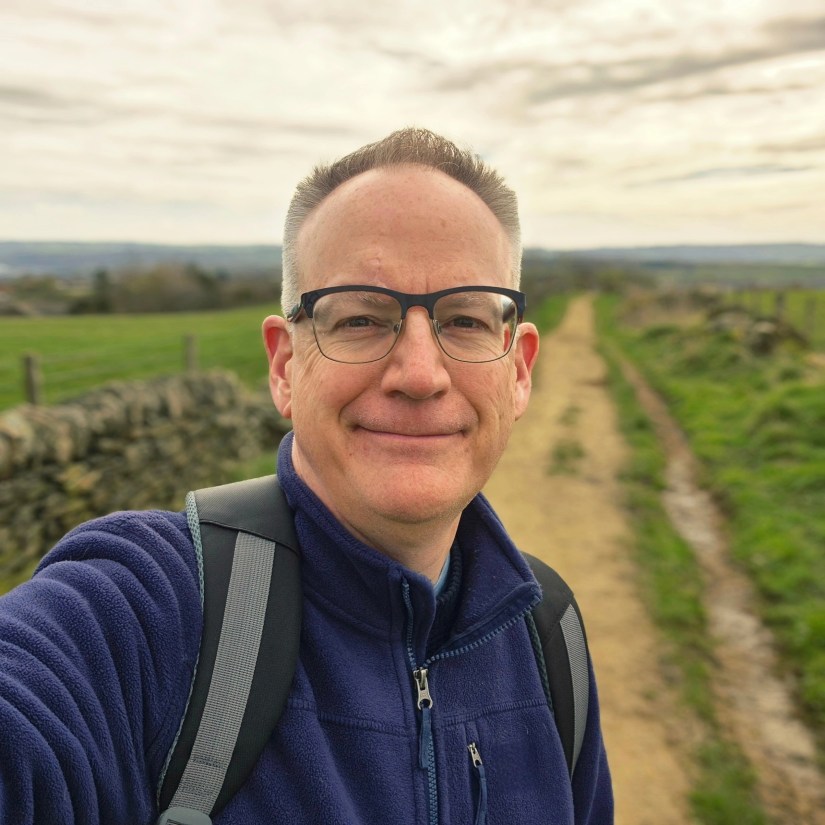
- Hi! We’re so glad you’re here. Can you introduce yourself to the Invisible Cake Society with your name, pronouns, any identity labels you feel like sharing?
So honoured to be invited to take part in this! I’m Paul, he/him. I identify currently as asexual—more specifically navigating the spaces of greysexuality, aegosexual expression, and demisexuality (where sexual attraction has only ever flickered into place after a deep, secure emotional connection is formed). I am very aware of an aesthetic and emotional attraction to women, though I’m still figuring out whether heteroromantic or aromantic describes the romantic side of that best! - What do you like to spend your time doing, online or in person, creatively and/or professionally?
My day job is a civil servant in the UK Government, helping and supporting people into employment. When I’m not at work, I spend creative time playing piano and viola (not at the same time!). I am also deeply passionate about exploring the landscape around me; I love walking in nature and visiting medieval churches, finding a lot of peace in their history, spirituality and architecture. I’m a fan of movies and TV drama and documentaries, and I’m an avid reader—mostly non-fiction around spirituality and the faith journey, but I’m also a fan of the Sister Fidelma mysteries by Peter Tremayne. - When did you hear about aromanticism and asexuality, and when did you realize they described you?
For many years, I carried the weight of a complex relationship history. My first marriage lasted seven years and bore us two children, but ultimately broke down under the weight of several painful factors, including the impact of a late miscarriage. My second marriage—a blended family with teenage step-children—also lasted seven years, but eventually just faded away and I found myself single again.
It was a few years after this when I finally encountered the term asexuality and it felt like a profound shift. Realizing that this described me was the missing piece of the puzzle; suddenly, my entire relationship history fell into place. Looking back through that lens, the long-standing confusion melted away, allowing me to view my past marriages and my whole life journey with a deep sense of peace, clarity, and self-compassion. - What’s your faith background and how would you describe your relationship with religion/spirituality/faith today?
I was brought up in a village in Kent in the UK by Christian parents and attended our local Baptist church. It was pretty standard evangelical stuff—two services on Sundays, midweek prayer meetings, and youth groups. It gave me a very structured, traditional foundation. In my early 20s, I spent two pivotal years working at Lee Abbey—a Christian hotel, retreat, and conference centre on the North Devon coast run by a community of volunteers. That experience was foundational for my spiritual direction and journey, opening me to wide diversity of faith traditions, worship styles and spiritual practices. After leaving that environment, I went through a long, 15-year period of secularism—wandering through a spiritual desert of deconstruction where the old answers no longer held up. It wasn’t until 2019 that the seeds of something new began to take root. Today, I identify as a contemplative Christian, finding my spiritual home in a very personal, experiential blend of traditions. My practice is grounded as a regular attender at my local Quaker meeting, beautifully woven together with Celtic Christian spirituality and an Open and Relational theology. I’m very comfortable with mystery and prefer having questions that cannot be answered than answers that cannot be questioned. I am a spiritual wanderer! - How has your a-spec identity influenced your personal faith?
As someone who didn’t identify as ace until their 50s it’s interesting to look back and realise that even when I assumed I was heterosexual I always considered myself an ally to the LGBTQIA+ community. Not in an outspoken way, but just quietly aligning myself with the view that love is love, etc. I was raised in that teaching that said the Bible condemns same-sex relationships, but I could never quite accept that; and when I was going through my teens and early 20s—school, college, and even at Lee Abbey—as I formed friendships with people who were openly queer and got to know them as people, I could not view them as the “deviants” I had been raised to see in, you know, that “Love the sinner, hate the sin” stance. - How has your a-spec identity affected your relationship with religious or spiritual communities?
I think it’s put me at odds with some of my friends from that time at Lee Abbey. We’re all still in touch, 30 years on, online and through the occasional reunions. But I’m very respectful and honouring of other people’s faith journeys and positions. I’m aware that some still attend quite evangelical churches, but others I’ve chatted to have been on similar journeys to mine and are now also much more explorers of faith and so are comfortable when I say I’m asexual. - How has your faith affected your relationship with the a-spec or larger LGBTQIA+ community?
I’ll be honest, as a quiet introvert I’ve never really had a close relationship with those larger groups and communities. I’ll support and promote them on social media, but I’ve never been one for being loudly out and proud or attending big Pride events. My advocacy is much more quiet and personal. - Does your a-spec identity impact your gender identity? Or vice versa?
I don’t feel it impacts my gender identity directly—I’m comfortable identifying as a cisgender man. However, it definitely impacted how I viewed my gender roles. Growing up, there is a lot of societal pressure on men to be hyper-focused on dating, pursuing, and sex. Realising I am a-spec allowed me to let go of those rigid cultural expectations of what “being a man” is supposed to look like, which was incredibly liberating. - What should all a-spec Christians know?
The ultimate message of the Gospel is that God is Love. This is stated so many times in the Bible, especially in the New Testament and the Gospels. What all a-spec Christians should know is that you’re loved exactly as you are. Being true to yourself, learning to love yourself, and loving your neighbour—without the requirement of conforming to amative or romantic norms—is the very essence of living out that divine love. - What do you want the larger affirming LGBTQIA and ally Christian community to know about a-spec Christians?
A-spec Christians are just as valid—and valued—as anyone else. - At Invisible Cake Society, we highlight experiences that have been erased or seem invisible to those outside of them. What’s your favorite way to show your a-spectrum Pride?
Because I’m an introvert, my favourite way to show Pride isn’t through big public displays, but through quiet authenticity. For me, that looks like embracing my passions and leaning into the quiet places where I feel most connected. I find my resetting spaces in nature and through my twice-yearly retreats in the Yorkshire Pennines. It’s about being comfortable in my own skin, sharing my story when it matters, and creating spaces where others feel permitted to step away from the pressure of compulsory romance. Taking part in this interview is a big step in visibility for me! - Do you have a favorite example of a-spec representation (whether explicitly stated or not) in media, books, public figures, theater, etc.? What about them resonated with you?
To be honest, I haven’t come across many explicit examples of a-spec representation in the media I consume. However, as an avid reader and TV viewer, I always find myself drawn to stories that highlight deep, loyal friendships, intellectual companionship, or partnerships where the emotional bond is the anchor of the story, rather than standard Hollywood romance. - Anything else you want readers to know?
Just that it is never too late to discover who you are. Finding the words for my identity in my 50s didn’t change me; it just gave me the map to understand the landscape I’d been walking my whole life. If you’re in a spiritual or personal desert right now, have patience with yourself. The wanderings are part of the journey. - Where can they follow your work online?
I keep a fairly quiet profile online these days, but I keep a private Instagram account I update frequently, and you can occasionally find my spiritual ponderings on my Substack. All my links are here: https://linktr.ee/pcwillis.
Get to know a-spectrum Christians: Beks Roen
As aromantic- and/or asexual-spectrum Christians and Jesus-adjacent people, it can be hard to believe that we are not alone. There are few examples of us in queer Christian spaces speaking about our experiences, not to mention the broader queer or Christian/faith worlds in general. I want to do my part to change that with this website and connect you with more a-spectrum Christian and Christian-ish people across the internet. This summer, I’m hosting a short Q&A series to introduce them to you.
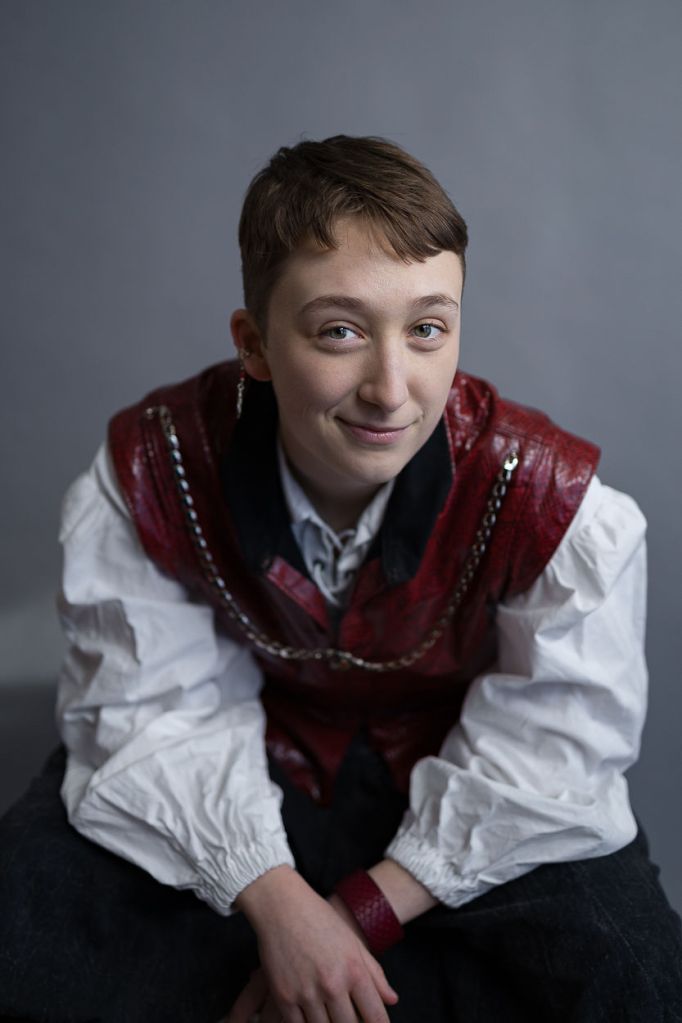
Today we have aroace actor and writer Beks Roen!
- Hi! We’re so glad you’re here. Can you introduce yourself to the Invisible Cake Society with your name, pronouns, any identity labels you feel like sharing?
Thanks for having me! I’m Beks Roen, they/he. I go by Beks and Roen interchangeably, and am transmasculine, non-binary and aroace!
- What do you like to spend your time doing, online or in person, creatively and/or professionally?
For recharge time, I love reading, seeing theatre (especially outdoor Shakespeare), hosting friends for dinner, and watching DropoutTV with loved ones. Professionally, I love writing, acting, and anything stage combat: whether I’m performing, choreographing, or teaching.
- When did you hear about aromanticism and asexuality, and when did you realize they described you?
I think I first heard about asexuality and aromanticism during the pandemic shutdown. I’d only just met a couple folks who taught me about polyamory and genderqueerness a year before, so I went right back to them after some googling and talked through it. I remember reading some PDF of “examples of shared/common ace experiences” and going, “oh. Wait. This explains a lot. Oh no how am I gonna handle this?? Uhhhh, call friends!”
- What’s your faith background and how would you describe your relationship with religion/spirituality/faith today?
My dad is a United Methodist pastor, so I grew up moving every couple of years and having a real rough time with parsonage housing. But my parents never pushed church. If I had homework or a Sunday matinee, it was okay for me to do my work first and not go to church. I’m forever grateful for their grace. I still use UMC language, but I’d describe myself as more “spiritual not religious.” I find incredible, powerful, transformational spirituality in theatre, which has a ton of structural and functional overlap with institutional religion. Theatre and writing are my spiritual disciplines because creativity and co-imagination are such powerful ways to participate with the divine, however you label it.
- How has your a-spec identity influenced your personal faith?
I don’t think it has. Realizing I’m aroace didn’t change my relationship to faith. I see aspec ideals showing up in my faith: I’ve become very community-focused, and am grounding more and more faith in people. I meditate, tap, pray, and do yoga every day, which have been super supportive spiritual practices for me (especially doing yoga every evening with my mom). As I’ve accepted myself and allowed for more ambiguity, I’ve encountered more and more unexpected blessings. Timelines, support, new friends; aligning in ways I couldn’t control, but am intensely grateful for.
- How has your a-spec identity affected your relationship with religious or spiritual communities?
My family has been incredibly supportive, which I constantly celebrate. Most of the time, though I get the blank stare of confusion more often than not, folks have been open to listening and hearing. Even in the Midwest, whether it be church or theatre, I encounter more curiosity than animosity. I’m sure a part of that open response has to do with my white privilege. It’s a lot of 101 conversations, to the point where I made a Google Doc with links to all the educators I learned from (Angela Chen, Yasmin Benoit, Ashabi at Ace in Grace, Cody Daigle-Orians at Ace Dad Advice, etc.). I’ve found a lot of support in theatre spaces, with the occasional pushback. Case in point, I’ve been hired to play an aroace Romeo at Advice to the Players this summer (July 31-August 9, 2026)! The director and team and several audience members have been incredibly supportive and excited to follow this adventure. Out of all the conversations I’ve had about it over the past year, only two people have been outright aphobic about it. Most are curious and excited to see what happens!
- How has your faith affected your relationship with the a-spec or larger LGBTQIA+ community?
I see the anti-Blackness in the ace community and my heart breaks. We can do better. We should do better. For white Christian aces: Jesus calls us to do better. Jesus’ top two commandments were about love. We are to love each other, not slam a neighbor for supporting the community.
- Does your a-spec identity impact your gender identity? Or vice versa?
I found asexuality first, which domino-ed into aromanticism and gender discovery. I used to be really focused on trying to figure this out. Where the delineation was. Trying to define each container of each label I wear. But as I continue reading more from aspec folks like Ashabi (Ace in Grace), Angela Chen, Cody Daigle-Orians and others, the more I’ve relaxed and realized that for me, I can let it be a gradient. Where a variety of things are present, but there’s no clear lines between each.
- What should all a-spec Christians know?
You’re loved. You’re not alone.
- What do you want the larger affirming LGBTQIA and ally Christian community to know about a-spec Christians?
Faith and aspec identity are not mutually exclusive. And LGBTQ+ rights and aspec identity are not mutually exclusive. We’re here, queer, biblically accurate.
- At Invisible Cake Society, we highlight experiences that have been erased or seem invisible to those outside of them. What’s your favorite way to be visible?
Theatre!! I literally started my own production company, Roguish Goblin Stories, to produce shows that highlight the trans/aspec Shakespeare resonances that feel obvious to me, and produce original adventures that center trans and aspec leads. My writing absolutely supports this as well, but the physical impact of co-experiencing an aspec character’s journey in person deepens the connection way beyond my writing alone. When I produced my first original production, Boy-ish, I had multiple conversations with audience members afterwards about the two main characters: one was aroace, the other was non-binary. The show had basically nothing to do with their labels, but it still opened people’s horizons up and made the trans and aspec audience members feel seen for the first time in their lives. That’s why I write, and produce what I write in person whenever possible: to remind people that they’re loved and not alone.
- Do you have a favorite example of a-spec representation (whether explicitly stated or not) in media, books, public figures, theater, etc.? What about them resonated with you?
Honestly, as much as I see aspec resonances over and over again in Shakespeare and other classics (Romeo, Mercutio, Orpheus, Hamlet, Benedick and Beatrice, Jacques, Coriolanus, etc.) I also see aspec love between Sam Gamgee and Frodo from Lord of the Rings. Their love is so deeply, beautifully queerplatonic. Their dedication to each other. Right from the start: Frodo’s panic when Sam tries to swim after him as the Fellowship fractures, even though Sam can’t swim. Sam’s line on Mount Doom always makes me weep: “I can’t carry the Ring, but I can carry you.” We need more relationships like Frodo and Sam in media, which is a huge part of why I became a writer.
13. Anything else you want readers to know?
I’d love to see more people, aspec or not, celebrating Soul Ace Day and supporting Black aspec folks. There’s a chat with the founders here that I found really helpful. We’re in life together, folks. You’re loved. You’re not alone.
14. Where can we follow your work online?
- My website is beksroen.org, where you can find links to my books, socials, etc.
- Roguish Goblin Stories is where I’m building my own production company: subscribers get recordings of all the shows I produce!
- I run my own Substack (free and paid options) at https://beksroen.substack.com/
- My first album of music released May 9!
LGBTQIA+ Holiday Romance/Family Movies
Merry Queersmas and happy holigays! While Hallmark, Lifetime, Netflix, HBO Max, Prime, Hulu, and more are certainly known for their abundant straight/cis holiday romances and family comedies, queer holiday romance and family movies do exist! We have more Christmas, Thanksgiving, holiday, seasonal, and new year movies and miniseries than you might think. Representation can be so important for queer people, and these films normalize queer relationships, gender expressions, and identities for everyone. Joy is revolutionary, hope is our fuel, peace is our dream, and love wins in every form: romantic, platonic, familial, and more.
Fair warning that while some of these are produced by major studios like the streamers and networks above, some of these are very indie, and they vary in quality of writing, acting, and cinematography. Also read the linked description for content, rating, and where to watch.
I suggest starting at the top and going down. I’ve put them in a rough recommended watching order, but go with the vibe you’re looking for at the moment. Save this list and check off the ones you’ve seen as you go!
- The Christmas Writer (2025)
- The Christmas Baby (2025)
- A Keller Christmas Vacation (2025)
- Friends and Family Christmas (2023)
- Under the Christmas Tree (2021)
- Christmas at the Ranch (2021)
- Christmas House 1 and 2 (2020/2021)
- Looking for Her (2022)
- The Holiday Sitter (2022)
- The Lost Holliday (2024)
- Single All the Way (2021)
- The Christmas Setup (2020)
- Season of Love (2019) – (Tello)
- The Holiday Exchange (2024)
- Every Time a Bell Rings (2021)
- Happiest Season (2020)
- The Christmas Clapback (2022)
- I Hate New Years (2020)
- A Picture Perfect Holiday (2021)
- Merry & Gay/Christmas with Love (2022)
- Breakfast with Scot (2007)
- New York Christmas Wedding (2020)
- Christmas on Cherry Lane series (2023-2025)
- Holidazed miniseries (2024)
- A Jenkins Family Christmas (2021)
- The Holiday Club (2024) (Tello)
- Holiday I Do (2023) (Tello)
- Ghosting: The Spirit of Christmas
- Let It Snow (2019)
- With Love miniseries (2021)
- Zoey’s Extraordinary Christmas (2021)
- The Christmas Lottery (2020)
- City of Trees (2019)
- Make the Yuletide Gay (2009)
- Aging Out (2024) short film
- What’s Cooking (2000) – (Thanksgiving movie)
- A Christmas to Treasure (2022)
- Shared Rooms (2016)
- A Christmas in New York (2016)
- Christmas with You (2022)
- The Family Stone (2005)
- Carol (2015)
- Coyote Creek Christmas (2021)
- Fathers of the Bride: A Yuletide Wedding Comedy (2025)
Have not seen due to unavailability in my region (US):
- Is Nugget Dead? A Christmas Story (2024)
- Dashing in December (2020)
- A Firefighter’s Christmas Wish
- Fruitcake
- 8 Women
- A New Diva’s Christmas Carol
- This Is Not a Christmas Movie
- A Savage Christmas
- The Bitch Who Stole Christmas
- A Christmas Sunset
- Meet Me Outside
- Red Lodge
Second string
The movies listed below are the ones that were very low quality or had amateur production/writing/acting, slow or boring, the takeaway message or vibe just didn’t resonate with me, or that I simply wouldn’t recommend as “good” or rewatch myself, but they might be exactly what you need, so give ’em a shot if the above aren’t enough or don’t have the vibe you’re going for. Some of these are highly professional major studio quality and I just personally found them obnoxious, full of microaggressions, or unlikable due to queerphobic tropes, and on the opposite end of the spectrum, others were sweet and well-intentioned but probably filmed on a freshman’s phone after a first-year screenwriting class and/or had a budget of around $5.
- Mixed Christmas (2024)
- Lez Bomb (2018)
- Last ExMas (2024)
- Love, the Coopers
- Oh. What. Fun. (2025)
- EXmas (2023)
- Christmas with the Darlings (2020)
- The Magical Christmas Tree (2021)
- Friendsgiving (2020)
- Coming Home for Christmas (2021) (Warning: Main character is transphobic. Read the Letterboxd reviews!)
- Friends, Foes, and Fireworks (2017)
- Scrooge & Marley (2012) [This one is primarily on this list for creepy sfx. If you like very depressing horror, cis gay experiences of historically accurate homophobia, and don’t mind mid indie quality, give it a shot.]
- Merry Happy Whatever (2019) (miniseries)
I’ll update with more as more are released each year. Let me know if you have more to suggest! The only criteria are that an LGBTQIA+ person is a major character (not necessarily the main one, though), it is overall a positive/affirming message in regards to queer rights and dignity, and that it is a holiday-centered romance or family drama that takes place primarily around November, December, or early January.
The point of all this
I want to be absolutely clear: The end goal is no more nonaffirming churches. Not a “diversity of thought” that’s just rewriting purity codes. Not a “range of opinions” with a variety of ways to exclude and dehumanize and tolerate “separate but equal.” Not a bare minimum. Not an “I love you but.”
Whether these churches accept correct, just, God-honoring theology or simply fade into history as factories of shame and harm and fake-nice, the collective liberation vision does not include nonaffirming theologies. Affirming theology *is* correct theology. We have beat around the bush long enough.
The mainline squandered opportunity after opportunity to draw that line, and we’re seeing the fruit of that, but we’re also seeing the fruit of the risk, the courage, the willingness to say NO to fence-riding and big-tent and “inclusive of all, the marginalized and the powers behind marginalization.”
In Christ, gender is not a factor for whether a marriage is holy, for whether sex is sinful, for whether someone is qualified to lead, serve, parent, teach, adopt, or write, for when passion is lust or love is healthy. That doesn’t mean we abandon discernment, but that gender isn’t relevant to it.
We are uncompromising in that. Lesbian, gay, bi/pan/+, trans/nonbinary/genderqueer, intersex, asexual/aromantic/agender, and all other kinds of queerness are not just permitted but *required* for the full reflection of the image of God and the accurate representation of the Kingdom come on earth.
Churches that factor in gender to who is permitted to do what are not only harmful, even deadly, for a small subset of the population. That is too minimizing. They are lacking in faithfulness. They are missing out on our gifts and our presence, but they are also missing out on the real, true God.
Conviction isn’t the enemy. Just like how becoming affirming isn’t “throwing out sexual ethics” or “there are no rules” or “rewriting history/the Bible,” it also isn’t an accommodation we’re asking for, a way to boost your Good Person points, or a secondary issue. It’s accurate, correct, right.
Have the courage to say so. Have the willingness to exclude the intolerant beliefs and opinions while honoring the need to listen, learn, grow, influence, and teach. It’s not about excluding individuals; it’s about setting our doctrinal truth, our policies, our reason for being.
Conservatives will panic: “See, the crazy liberals want to erase us! They want to eradicate us! They discriminate against us! The intolerant left!” Yes. I do. I want to erase the possibility that any queer kid grows up thinking God hates, Jesus is ashamed, or the Spirit would take away their joy.
I want to eradicate queer death, suffering, rejection, and homelessness. I do discriminate against bigotry and hate and fear-peddling propaganda lies. I want the world to stop tolerating violence, inequality, and terror in the name of “religious freedom,” “thought diversity,” and “broad umbrellas.”
We refuse anything less as the destination. The future is one where every church is practicing and preaching the truth, the life, the freedom, and the blessing that is only reflected with full queer welcome, inclusion, affirmation, belonging, and leadership at every level.
 Invisible Cake Society