asexuality, faith, interview, queer

Get to know a-spectrum Christians: Kristen Tallau

As aromantic- and/or asexual-spectrum Christians and Jesus-adjacent people, it can be hard to believe that we are not alone. There are few examples of us in queer Christian spaces speaking about our experiences, not to mention the broader queer or Christian/faith worlds in general. I want to do my part to change that with this website and connect you with more a-spectrum Christian and Christian-ish people across the internet. This summer, I’m hosting a short Q&A series to introduce them to you.


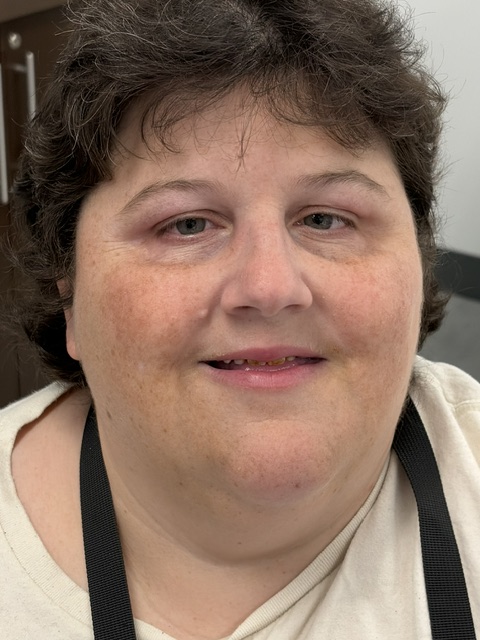
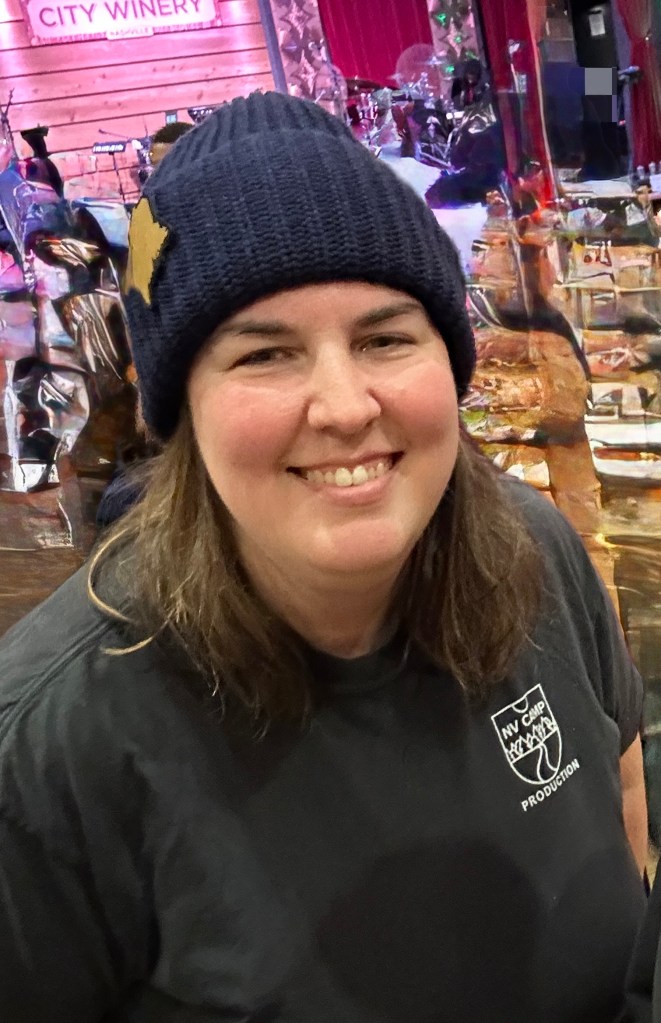
Kristen Tallau
  1. Hi! We’re so glad you’re here. Can you introduce yourself to the Invisible Cake Society with your name, pronouns, any identity labels you feel like sharing?
    Hello! Thanks for having me! I’m Kristen, pronouns are she/her/hers. I identify as asexual, biromantic, and sapphic, which is basically a fancy way of saying I’m not sexually attracted to anyone, but I am romantically attracted to anyone, and chances are it’ll be a woman.
  2. What do you like to spend your time doing, online or in person, creatively and/or professionally?
    Well, my day job tends to be crazy at times. I work as a video engineer in the corporate conference world, so my days can be anywhere from 4 to 18 hours long. When I have a day off or time to myself, I love baking, especially bread. (Yes, I have watched every series of Great British Bake Off, multiple times! And bread week is always my favourite!) I also enjoy reading, mostly sci fi and adventure for fiction, and I’ve recently started getting back into playing Switch.
    So if anyone has some game recs, I’d love to hear!
  3. When did you hear about aromanticism and asexuality, and when did you realize they described you?
    It was during Pride month of 2018. I was seeing posts from friends about it, and it was the first time I had been seeing people posting about the LGBTQIA+ community with the IA added. The I was easy enough to guess, but I was curious about the A. So, I googled it. And I started reading all these stories from people describing asexuality and their experiences with it, and I realised I was reading about my experience too. Took awhile longer to realise the biromantic and sapphic labels, but finally having something to describe what I had (not) experienced my whole life was so wonderful.
  4. What’s your faith background and how would you describe your relationship with religion/spirituality/faith today?
    I grew up Independent Baptist. Like not quite Duggar-level fundamentalist, but not super far off, either. I had friends who were IBLP (Institute in Basic Life Principles). It got better when my family started attending a Southern Baptist Convention (SBC) church when I was at university. It got even better after I left the SBC. I still follow Jesus, and I would still say I’m a Christian, but it’s the Jesus of the gospels (rather than white Republican Jesus) who loves and welcomes queer people, rather than shutting them out. My faith is still evolving, but it’s still there.
  5. How has your a-spec identity influenced your personal faith?
    It’s made it more inclusive. Realising my own queerness after 30 years of believing being queer is a sin forced me to reexamine a lot of other parts of my faith and expand it to include a wider spectrum of people.
  6. How has your a-spec identity affected your relationship with religious or spiritual communities?
    To be honest, it’s made me more cautious. Being primarily from super fundie spaces means people will misunderstand you, mishear you, and think they know exactly what you’re talking about, and basically anything that ends in the term “sexuality” is generally frowned upon. I was telling a friend at a former church about an interaction I’d had on AVEN’s website, and suddenly one of the elders of the church had run up to the table and interjected with, “You know there won’t be homosexuals in heaven, right? You know that, right?” And then just as quickly ran off. Like, dude, what? Now I wait for people within a church or religious space to prove themselves first before even telling them about my orientation.
  7. How has your faith affected your relationship with the a-spec or larger LGBTQIA+ community?
    If I’m going to truly say that everyone is made imago Dei, that is, in the image of God, that includes all the diversity and variation we see. And that includes the not: the not sexually attracted, the not romantically attracted, the not gender affiliated. It does not make any of us less-than. I see Jesus speaking positively about the queer people of his time, and teaching that sex and marriage will not be a thing in the kingdom. Inclusion means including those for whom something may not apply.
  8. Does your a-spec identity impact your gender identity? Or vice versa?
    Not really. I identify as female, and always have. Realising my asexuality didn’t affect that. Maybe it will in the future, but I have other things to dwell on for now.
  9. What should all a-spec Christians know?
    We are not broken. We are not partial human beings because we aren’t attracted to others in ways they might expect. For my fellow millennial a-specs who are also purity culture survivors, this is especially important.
  10. What do you want the larger affirming LGBTQIA+ and ally Christian community to know about a-spec Christians?
    Our faith is not contingent on our identity, and vice versa. And while so many churches use marriage as an illustration of the “Christian walk,” there are so many more ways to be inclusive of those of us who may not ever marry. Community is the support everyone needs; it just shows up differently for us.
  11. At Invisible Cake Society, we highlight experiences that have been erased or seem invisible to those outside of them. What’s your favorite way to show your a-spectrum Pride?
    I’m a hobbyist baker, so I lean into the cake and garlic bread tropes a lot. Bread actually is my favourite thing to bake, so it makes it easy. It doesn’t necessarily lead to conversations about being a-spec, but when it does, it’s a fun conversation, and either way, you have something to snack on with friends! And who doesn’t love that?
  12. Do you have a favorite example of a-spec representation (whether explicitly stated or not) in media, books, public figures, theater, etc.? What about them resonated with you?
    One is Elsa, from Frozen. Also I high-key relate to her wanting to be alone once everything goes to hell, but that’s beside the point. She’s not your typical Disney princess, looking for her Prince Charming. She’s dealing with learning how she’s not actually broken by being different from others. She’s telling off her sister, Anna, for being boy crazy (I relate to that SO hard), and Elsa is more concerned with doing what she needed to do to be queen rather than finding her own person.

    Another is Dr. Spencer Reid, from Criminal Minds. Granted, I haven’t watched the entire series (it’s so dark!), so I’m not sure if he’s ever presented as actually a-spec, but it does seem to be his thing, even though he does have partners here and there. As someone who’s asexual but also biromantic, it’s great to me to see someone for whom that distinction also seems to exist.
  13. Anything else you want readers to know?
    Trust people when they say they’re aspec. Ask questions to learn. Just like anyone who says they’re gay/trans/etc., please believe us when we say what we are. Trust us. We know.
  14. Where can they follow your work online?
    I’m a cohost on the Where Do We Go From Here? podcast, on the No Hard Feelings segment once a month. Personally, I’m mostly active on Threads and Instagram, where my handle on both is @krtall. I also have a baking Insta @aceofbakes24 where it’s just photos of my baking.
asexuality, faith, interview

Get to know a-spectrum Christians: Paul Willis

As aromantic- and/or asexual-spectrum Christians and Jesus-adjacent people, it can be hard to believe that we are not alone. There are few examples of us in queer Christian spaces speaking about our experiences, not to mention the broader queer or Christian/faith worlds in general. I want to do my part to change that with this website and connect you with more a-spectrum Christian and Christian-ish people across the internet. This summer, I’m hosting a short Q&A series to introduce them to you.


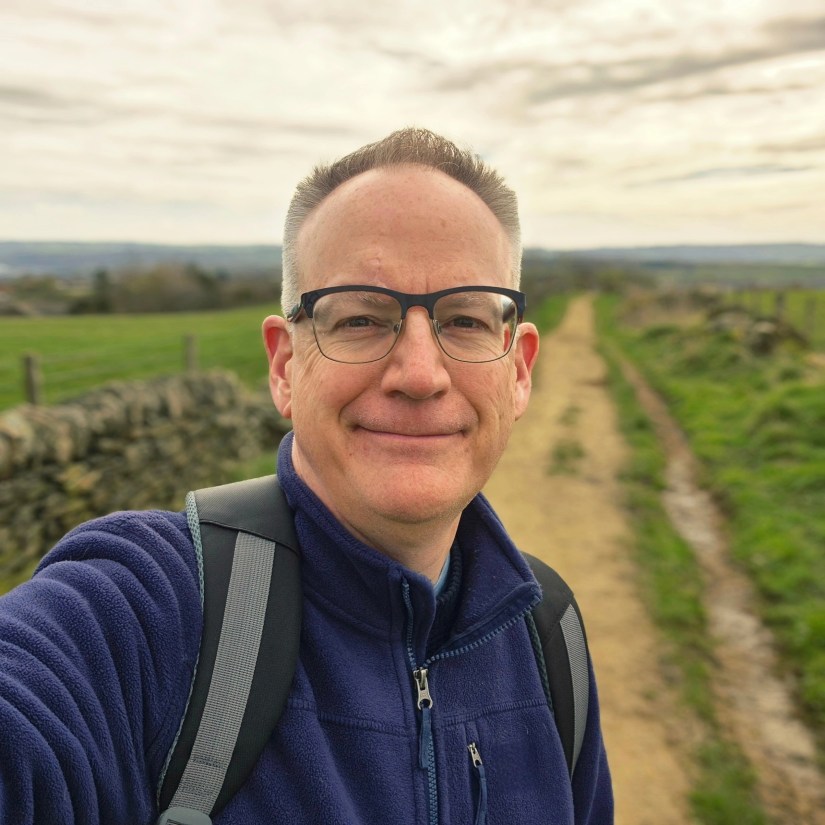
PaulWillis
  1. Hi! We’re so glad you’re here. Can you introduce yourself to the Invisible Cake Society with your name, pronouns, any identity labels you feel like sharing?
    So honoured to be invited to take part in this! I’m Paul, he/him. I identify currently as asexual—more specifically navigating the spaces of greysexuality, aegosexual expression, and demisexuality (where sexual attraction has only ever flickered into place after a deep, secure emotional connection is formed). I am very aware of an aesthetic and emotional attraction to women, though I’m still figuring out whether heteroromantic or aromantic describes the romantic side of that best!

  2. What do you like to spend your time doing, online or in person, creatively and/or professionally?
    My day job is a civil servant in the UK Government, helping and supporting people into employment. When I’m not at work, I spend creative time playing piano and viola (not at the same time!). I am also deeply passionate about exploring the landscape around me; I love walking in nature and visiting medieval churches, finding a lot of peace in their history, spirituality and architecture. I’m a fan of movies and TV drama and documentaries, and I’m an avid reader—mostly non-fiction around spirituality and the faith journey, but I’m also a fan of the Sister Fidelma mysteries by Peter Tremayne.

  3. When did you hear about aromanticism and asexuality, and when did you realize they described you?
    For many years, I carried the weight of a complex relationship history. My first marriage lasted seven years and bore us two children, but ultimately broke down under the weight of several painful factors, including the impact of a late miscarriage. My second marriage—a blended family with teenage step-children—also lasted seven years, but eventually just faded away and I found myself single again.

    It was a few years after this when I finally encountered the term asexuality and it felt like a profound shift. Realizing that this described me was the missing piece of the puzzle; suddenly, my entire relationship history fell into place. Looking back through that lens, the long-standing confusion melted away, allowing me to view my past marriages and my whole life journey with a deep sense of peace, clarity, and self-compassion.

  4. What’s your faith background and how would you describe your relationship with religion/spirituality/faith today?
    I was brought up in a village in Kent in the UK by Christian parents and attended our local Baptist church. It was pretty standard evangelical stuff—two services on Sundays, midweek prayer meetings, and youth groups. It gave me a very structured, traditional foundation. In my early 20s, I spent two pivotal years working at Lee Abbey—a Christian hotel, retreat, and conference centre on the North Devon coast run by a community of volunteers. That experience was foundational for my spiritual direction and journey, opening me to wide diversity of faith traditions, worship styles and spiritual practices. After leaving that environment, I went through a long, 15-year period of secularism—wandering through a spiritual desert of deconstruction where the old answers no longer held up. It wasn’t until 2019 that the seeds of something new began to take root. Today, I identify as a contemplative Christian, finding my spiritual home in a very personal, experiential blend of traditions. My practice is grounded as a regular attender at my local Quaker meeting, beautifully woven together with Celtic Christian spirituality and an Open and Relational theology. I’m very comfortable with mystery and prefer having questions that cannot be answered than answers that cannot be questioned. I am a spiritual wanderer!

  5. How has your a-spec identity influenced your personal faith?
    As someone who didn’t identify as ace until their 50s it’s interesting to look back and realise that even when I assumed I was heterosexual I always considered myself an ally to the LGBTQIA+ community. Not in an outspoken way, but just quietly aligning myself with the view that love is love, etc. I was raised in that teaching that said the Bible condemns same-sex relationships, but I could never quite accept that; and when I was going through my teens and early 20s—school, college, and even at Lee Abbey—as I formed friendships with people who were openly queer and got to know them as people, I could not view them as the “deviants” I had been raised to see in, you know, that “Love the sinner, hate the sin” stance.

  6. How has your a-spec identity affected your relationship with religious or spiritual communities?
    I think it’s put me at odds with some of my friends from that time at Lee Abbey. We’re all still in touch, 30 years on, online and through the occasional reunions. But I’m very respectful and honouring of other people’s faith journeys and positions. I’m aware that some still attend quite evangelical churches, but others I’ve chatted to have been on similar journeys to mine and are now also much more explorers of faith and so are comfortable when I say I’m asexual.

  7. How has your faith affected your relationship with the a-spec or larger LGBTQIA+ community?
    I’ll be honest, as a quiet introvert I’ve never really had a close relationship with those larger groups and communities. I’ll support and promote them on social media, but I’ve never been one for being loudly out and proud or attending big Pride events. My advocacy is much more quiet and personal.

  8. Does your a-spec identity impact your gender identity? Or vice versa?
    I don’t feel it impacts my gender identity directly—I’m comfortable identifying as a cisgender man. However, it definitely impacted how I viewed my gender roles. Growing up, there is a lot of societal pressure on men to be hyper-focused on dating, pursuing, and sex. Realising I am a-spec allowed me to let go of those rigid cultural expectations of what “being a man” is supposed to look like, which was incredibly liberating.

  9. What should all a-spec Christians know?
    The ultimate message of the Gospel is that God is Love. This is stated so many times in the Bible, especially in the New Testament and the Gospels. What all a-spec Christians should know is that you’re loved exactly as you are. Being true to yourself, learning to love yourself, and loving your neighbour—without the requirement of conforming to amative or romantic norms—is the very essence of living out that divine love.

  10. What do you want the larger affirming LGBTQIA and ally Christian community to know about a-spec Christians?
    A-spec Christians are just as valid—and valued—as anyone else.

  11. At Invisible Cake Society, we highlight experiences that have been erased or seem invisible to those outside of them. What’s your favorite way to show your a-spectrum Pride?
    Because I’m an introvert, my favourite way to show Pride isn’t through big public displays, but through quiet authenticity. For me, that looks like embracing my passions and leaning into the quiet places where I feel most connected. I find my resetting spaces in nature and through my twice-yearly retreats in the Yorkshire Pennines. It’s about being comfortable in my own skin, sharing my story when it matters, and creating spaces where others feel permitted to step away from the pressure of compulsory romance. Taking part in this interview is a big step in visibility for me!

  12. Do you have a favorite example of a-spec representation (whether explicitly stated or not) in media, books, public figures, theater, etc.? What about them resonated with you?
    To be honest, I haven’t come across many explicit examples of a-spec representation in the media I consume. However, as an avid reader and TV viewer, I always find myself drawn to stories that highlight deep, loyal friendships, intellectual companionship, or partnerships where the emotional bond is the anchor of the story, rather than standard Hollywood romance.

  13. Anything else you want readers to know?
    Just that it is never too late to discover who you are. Finding the words for my identity in my 50s didn’t change me; it just gave me the map to understand the landscape I’d been walking my whole life. If you’re in a spiritual or personal desert right now, have patience with yourself. The wanderings are part of the journey.

  14. Where can they follow your work online?
    I keep a fairly quiet profile online these days, but I keep a private Instagram account I update frequently, and you can occasionally find my spiritual ponderings on my Substack. All my links are here: https://linktr.ee/pcwillis.

disability, faith, Mental health, neurodivergence, resources

Progressive Christianity and neurodivergence

Justin, Ell, and I hosted a gathering for neurodivergent progressive Christians for Disability Pride Month 2025. Though this year’s event was not specifically for asexual and aromantic people, there is significant overlap with these communities, which was reflected in this discussion. (See our previous conversations about the a-spec Christian intersection here.)  

Discussion questions:

  1. How has your neurodivergence affected your experience of Christianity? 
  1. How has your faith affected your experience of being neurodivergent?
  1. How have you been supported by your community?
  1. What challenges have you encountered in your communities?
  1. How can the Christian community as a whole better support and uplift neurodivergent people? What can Christianity learn from neurodivergent people and their lived experience?
  1. What encouragement/words of affirmation can you share with other neurodivergent Christians?
  2. What spiritual practices, resources or supports have helped you with your neurodivergence and faith?