
As aromantic- and/or asexual-spectrum Christians and Jesus-adjacent people, it can be hard to believe that we are not alone. There are few examples of us in queer Christian spaces speaking about our experiences, not to mention the broader queer or Christian/faith worlds in general. I want to do my part to change that with this website and connect you with more a-spectrum Christian and Christian-ish people across the internet. This summer, I’m hosting a short Q&A series.
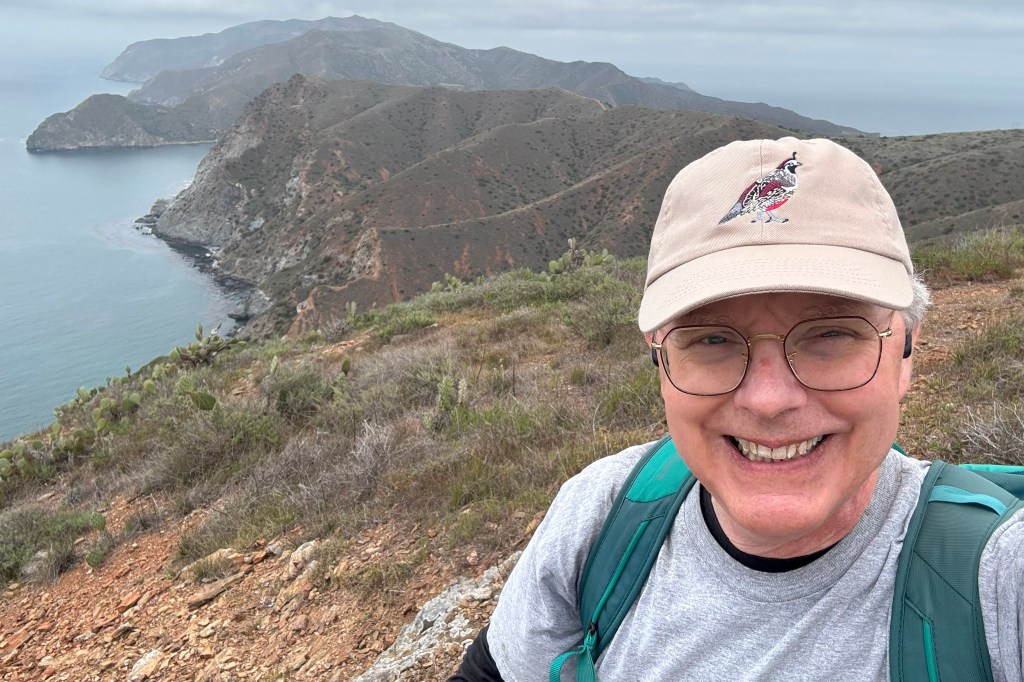
1. Hi! We’re so glad you’re here. Can you introduce yourself to the Invisible Cake Society with your name, pronouns, any identity labels you feel like sharing?
My name is Robert Black, and I use he/him/his. The identity label I’d most like to share is that I’m old–61 to be exact. If I was in my teens or 20s, I’d probably be all over the various microlabels, trying to decide which one fit me, but at my age I’m more likely to say that my sexual orientation is “Been there, done that.”
2. What do you like to spend your time doing, online or in person, creatively and/or professionally?
I’ve written professionally since the mid-’80s, when I wrote nine episodes of the Nickelodeon series You Can’t Do That On Television and worked on the set as the standby script doctor for the 1985 season. After that, I moved to Southern California to try getting into Hollywood, but Hollywood and I didn’t like each other. I switched to writing books in the early 2000s, and I’ve been lucky enough to have a long-term relationship with Royal Fireworks Press of Unionville, New York, writing mostly for teenagers about math, science, and history. In fact, just last week I turned in the proof review for my 15th book.
And now here’s some breaking news: At this point in the original version of this interview, I was going to tell you that I had a day job as a quality engineer in a water heater factory. Just 36 hours after I wrote that, some corporate-level executive decided my position didn’t fit with the corporate restructuring they were about to do. So now I’ll be writing and working with Royal Fireworks full-time. It’s the plan I’d already been working on for when I retired, just moved up a couple of years.
When I’m not writing, I like to go hiking in the mountains or on the islands of Southern California. I also watch a lot of anime, because it seems like Japanese storytelling allows a much wider range of things you can write about and get produced. One of my favorite series from the past year was about high school girls learning mineralogy. No American production company would ever go near a premise like that, but it worked surprisingly well.
3. When did you hear about aromanticism and asexuality, and when did you realize they described you?
I knew I was different in middle school and high school, but there were no words for it in those days. My mom said that some people were just “late bloomers” and there was nothing wrong with it. I finally “discovered girls” when I was 20 (much to the amusement of my college roommates), and a few years later, I met someone and got married. I thought I had become “normal” and was doing what adults were expected to do–and was that a mistake. There was a lot of stuff happening that I won’t waste your time with, but the bottom line is that it was the loneliest time of my life, because I was alienated from myself. It took so much time and energy to fit my role in the relationship, and I didn’t have enough left over to be me.
I was married for five years, and then a few years later, I had a one-year relationship with someone I now consider to have been that “right person” we’re always being told we haven’t met yet. I think I also needed to be in that relationship just to see if it would work without some of the things that had made my marriage so bad. And it did at first, but eventually I ran up against the same problem of not being able to be my real self. It was like I was in some kind of parallel universe–”Sex World”–and staying there didn’t let me be who I am in the regular world.
Around 1999-2000, I started identifying the way I said before–as “Been there, done that.” When I first started seeing the word “asexuality,” I didn’t think it fit me. I do like women, after all, and had I been in relationships that had at least worked for a while. But the more I read about it, the more I realized there were things other men experience that I had not. And when I read about the differences between having a libido in general and being sexually attracted to someone specific, it all finally clicked.
4. What’s your faith background and how would you describe your relationship with religion/spirituality/faith today?
I’m a cradle Episcopalian, born and raised in the Episcopal Church. My ex-wife’s family was evangelical, though, and I tried being evangelical myself for three or four years. It didn’t stick. After my divorce, I went back to the Episcopal Church and spent 27 years in one of the adult choirs at All Saints Church in Pasadena. Unfortunately, age caught up to my singing voice, and now I’m still figuring out where I fit in the church community without it. These days I’m kind of a spiritual ronin, still part of the church but not connected to any particular parish.
5. How has your a-spec identity influenced your personal faith?
It’s more like the other way around. I mentioned All Saints Pasadena by name because it has a long history of welcoming and supporting the LGBTQIA+ community (you can read more about it here: https://allsaints-pas.org/ministries/lgbtq-at-all-saints/). Meeting gay people who were better Christians than I was and meeting gay couples who were better at being married than I ever was opened my eyes to the fact that it was okay to be queer. At the time, I had no idea that a queer identity might ever apply to me, but the experience certainly helped once I realized it.
6. How has your a-spec identity affected your relationship with religious or spiritual communities?
It hasn’t really had a chance to yet. Realizing that I had an a-spec identity and losing my singing voice overlapped with each other. I’ll have to see what happens when I’m ready to be part of a congregation again.
7. How has your faith affected your relationship with the a-spec or larger LGBTQIA+ community?
It’s hard to believe we’re nearing 30 years since this happened–there was a teenage girl I knew online through the Buffy the Vampire Slayer fandom who told me she thought she might be gay, and that it terrified her. I guess she felt safe telling me because I was just a bunch of words in a chat thread, not someone who could disapprove of her in person. My faith and my choir experience enabled me to assure her that not all Christians would hate her, and that I was one of the ones who wouldn’t. She eventually came out and was able to build a life for herself.
Nothing else that dramatic has happened since then, but these days I frequent the r/asexuality subreddit and try to offer encouragement or at least some perspective to the kids and young adults who post their questions and anxieties there. I’d probably take myself too seriously if I called it a “mission,” but it’s a thing that I do.
8. Does your a-spec identity impact your gender identity? Or vice versa?
One thing I really didn’t like about being an evangelical was how much it restricted what it meant to be a man. You hear about all the ways the evangelical community tries to oppress women, but not so much about how those restrictions limit men as well. Look at the hyper-masculinity of the Christian nationalists who get so much attention these days and you’ll see what I’m getting at. There’s no room for an a-spec identity in it, that’s for sure. So maybe I’m saying my a-spec identity and my gender identity reinforce each other against that kind of thinking. I know I’m a man, and I know I’m a-spec, and those are both true no matter what the manosphere thinks about it.
9. What should all a-spec Christians know?
That God loves us just as we are. We’re not broken and He didn’t make a mistake when He made us this way. We have a part to play in the Beloved Community, even if it’s not one of the more traditional roles.
10. What do you want the larger affirming LGBTQIA+ and ally Christian community to know about a-spec Christians?
That we exist! Otherwise, I think it’s best to let them get to know us as individuals, and for us to find our places in the community as individuals. We are ourselves first, and our identities second.
11. At Invisible Cake Society, we highlight experiences that have been erased or seem invisible to those outside of them. What’s your favorite way to show your a-spectrum Pride?
I really don’t have one. This interview is the most visible thing I’ve ever done. I figure most people my age wouldn’t know what I was talking about, nor would it make much difference to them if they did.
12. Do you have a favorite example of a-spec representation (whether explicitly stated or not) in media, books, public figures, theater, etc.? What about them resonated with you?
Two of the best and most popular anime series in recent years have a-spec main characters. In Frieren: Beyond Journey’s End, the title character Frieren is an elf, and at one point it’s explicitly said that elves are considered asexual. There’s even a scene where she turns down an offer to dance because she wants to eat cake! Meanwhile, the main character Maomao in The Apothecary Diaries is never explicitly said to be asexual, but she certainly fits the job description. I like both characters because it’s not so much that they’re against romance and sex, but rather that they have something else in their lives that they value more. I can relate to that.
13. Anything else you want readers to know?
If you’re just coming to identify as ace and/or aro, and you’re wondering what it’s going to mean for your life… well, I have no idea. But I do know this–you do have a life ahead of you, one with possibilities you can’t even imagine right now. Building that life will take time and effort, but that’s what will make it worth doing. You can make it.
14. Where can they follow your work online?
All but two of my books are still in print and can be found at my publisher’s website: https://www.rfwp.com/book-author/robert-black/. I don’t post as much online these days, because it was taking too much time and energy away from my books. But I am on Reddit as u/RABlackAuthor, and as I said, I keep up with the r/asexuality subreddit regularly. I’m also on Facebook, mostly to keep up with family and old friends or to post photos from my latest hiking adventure.

