asexuality, faith, interview

Get to know a-spectrum Christians: Paul Willis

As aromantic- and/or asexual-spectrum Christians and Jesus-adjacent people, it can be hard to believe that we are not alone. There are few examples of us in queer Christian spaces speaking about our experiences, not to mention the broader queer or Christian/faith worlds in general. I want to do my part to change that with this website and connect you with more a-spectrum Christian and Christian-ish people across the internet. This summer, I’m hosting a short Q&A series. If you would like to be included, send me an email using my contact form here.


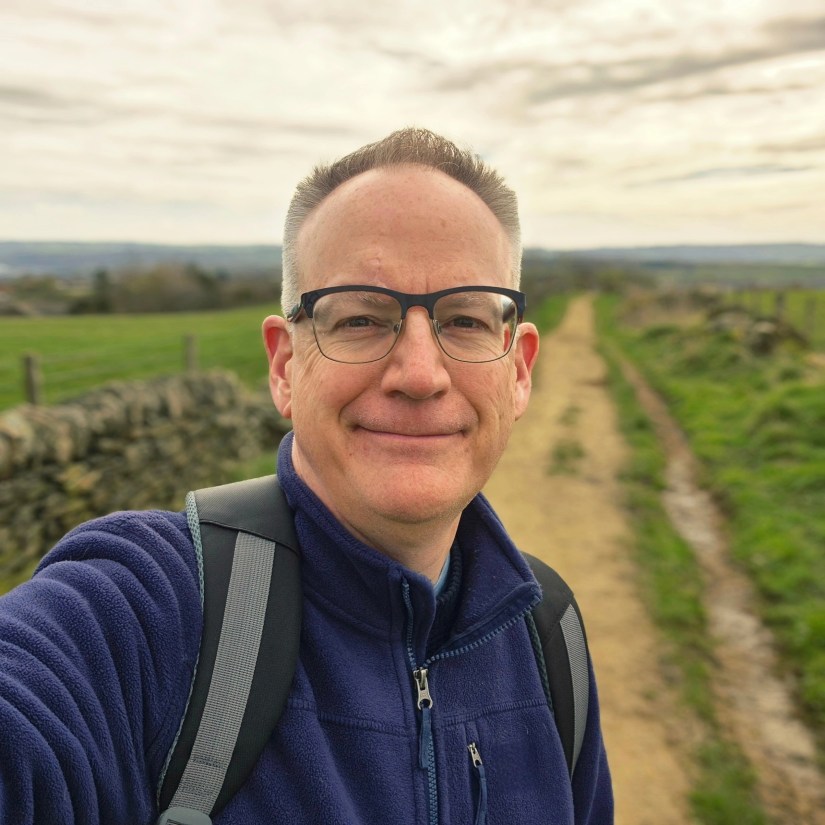
PaulWillis
  1. Hi! We’re so glad you’re here. Can you introduce yourself to the Invisible Cake Society with your name, pronouns, any identity labels you feel like sharing?
    So honoured to be invited to take part in this! I’m Paul, he/him. I identify currently as asexual—more specifically navigating the spaces of greysexuality, aegosexual expression, and demisexuality (where sexual attraction has only ever flickered into place after a deep, secure emotional connection is formed). I am very aware of an aesthetic and emotional attraction to women, though I’m still figuring out whether heteroromantic or aromantic describes the romantic side of that best!

  2. What do you like to spend your time doing, online or in person, creatively and/or professionally?
    My day job is a civil servant in the UK Government, helping and supporting people into employment. When I’m not at work, I spend creative time playing piano and viola (not at the same time!). I am also deeply passionate about exploring the landscape around me; I love walking in nature and visiting medieval churches, finding a lot of peace in their history, spirituality and architecture. I’m a fan of movies and TV drama and documentaries, and I’m an avid reader—mostly non-fiction around spirituality and the faith journey, but I’m also a fan of the Sister Fidelma mysteries by Peter Tremayne.

  3. When did you hear about aromanticism and asexuality, and when did you realize they described you?
    For many years, I carried the weight of a complex relationship history. My first marriage lasted seven years and bore us two children, but ultimately broke down under the weight of several painful factors, including the impact of a late miscarriage. My second marriage—a blended family with teenage step-children—also lasted seven years, but eventually just faded away and I found myself single again.

    It was a few years after this when I finally encountered the term asexuality and it felt like a profound shift. Realizing that this described me was the missing piece of the puzzle; suddenly, my entire relationship history fell into place. Looking back through that lens, the long-standing confusion melted away, allowing me to view my past marriages and my whole life journey with a deep sense of peace, clarity, and self-compassion.

  4. What’s your faith background and how would you describe your relationship with religion/spirituality/faith today?
    I was brought up in a village in Kent in the UK by Christian parents and attended our local Baptist church. It was pretty standard evangelical stuff—two services on Sundays, midweek prayer meetings, and youth groups. It gave me a very structured, traditional foundation. In my early 20s, I spent two pivotal years working at Lee Abbey—a Christian hotel, retreat, and conference centre on the North Devon coast run by a community of volunteers. That experience was foundational for my spiritual direction and journey, opening me to wide diversity of faith traditions, worship styles and spiritual practices. After leaving that environment, I went through a long, 15-year period of secularism—wandering through a spiritual desert of deconstruction where the old answers no longer held up. It wasn’t until 2019 that the seeds of something new began to take root. Today, I identify as a contemplative Christian, finding my spiritual home in a very personal, experiential blend of traditions. My practice is grounded as a regular attender at my local Quaker meeting, beautifully woven together with Celtic Christian spirituality and an Open and Relational theology. I’m very comfortable with mystery and prefer having questions that cannot be answered than answers that cannot be questioned. I am a spiritual wanderer!

  5. How has your a-spec identity influenced your personal faith?
    As someone who didn’t identify as ace until their 50s it’s interesting to look back and realise that even when I assumed I was heterosexual I always considered myself an ally to the LGBTQIA+ community. Not in an outspoken way, but just quietly aligning myself with the view that love is love, etc. I was raised in that teaching that said the Bible condemns same-sex relationships, but I could never quite accept that; and when I was going through my teens and early 20s—school, college, and even at Lee Abbey—as I formed friendships with people who were openly queer and got to know them as people, I could not view them as the “deviants” I had been raised to see in, you know, that “Love the sinner, hate the sin” stance.

  6. How has your a-spec identity affected your relationship with religious or spiritual communities?
    I think it’s put me at odds with some of my friends from that time at Lee Abbey. We’re all still in touch, 30 years on, online and through the occasional reunions. But I’m very respectful and honouring of other people’s faith journeys and positions. I’m aware that some still attend quite evangelical churches, but others I’ve chatted to have been on similar journeys to mine and are now also much more explorers of faith and so are comfortable when I say I’m asexual.

  7. How has your faith affected your relationship with the a-spec or larger LGBTQIA+ community?
    I’ll be honest, as a quiet introvert I’ve never really had a close relationship with those larger groups and communities. I’ll support and promote them on social media, but I’ve never been one for being loudly out and proud or attending big Pride events. My advocacy is much more quiet and personal.

  8. Does your a-spec identity impact your gender identity? Or vice versa?
    I don’t feel it impacts my gender identity directly—I’m comfortable identifying as a cisgender man. However, it definitely impacted how I viewed my gender roles. Growing up, there is a lot of societal pressure on men to be hyper-focused on dating, pursuing, and sex. Realising I am a-spec allowed me to let go of those rigid cultural expectations of what “being a man” is supposed to look like, which was incredibly liberating.

  9. What should all a-spec Christians know?
    The ultimate message of the Gospel is that God is Love. This is stated so many times in the Bible, especially in the New Testament and the Gospels. What all a-spec Christians should know is that you’re loved exactly as you are. Being true to yourself, learning to love yourself, and loving your neighbour—without the requirement of conforming to amative or romantic norms—is the very essence of living out that divine love.

  10. What do you want the larger affirming LGBTQIA and ally Christian community to know about a-spec Christians?
    A-spec Christians are just as valid—and valued—as anyone else.

  11. At Invisible Cake Society, we highlight experiences that have been erased or seem invisible to those outside of them. What’s your favorite way to show your a-spectrum Pride?
    Because I’m an introvert, my favourite way to show Pride isn’t through big public displays, but through quiet authenticity. For me, that looks like embracing my passions and leaning into the quiet places where I feel most connected. I find my resetting spaces in nature and through my twice-yearly retreats in the Yorkshire Pennines. It’s about being comfortable in my own skin, sharing my story when it matters, and creating spaces where others feel permitted to step away from the pressure of compulsory romance. Taking part in this interview is a big step in visibility for me!

  12. Do you have a favorite example of a-spec representation (whether explicitly stated or not) in media, books, public figures, theater, etc.? What about them resonated with you?
    To be honest, I haven’t come across many explicit examples of a-spec representation in the media I consume. However, as an avid reader and TV viewer, I always find myself drawn to stories that highlight deep, loyal friendships, intellectual companionship, or partnerships where the emotional bond is the anchor of the story, rather than standard Hollywood romance.

  13. Anything else you want readers to know?
    Just that it is never too late to discover who you are. Finding the words for my identity in my 50s didn’t change me; it just gave me the map to understand the landscape I’d been walking my whole life. If you’re in a spiritual or personal desert right now, have patience with yourself. The wanderings are part of the journey.

  14. Where can they follow your work online?
    I keep a fairly quiet profile online these days, but I keep a private Instagram account I update frequently, and you can occasionally find my spiritual ponderings on my Substack. All my links are here: https://linktr.ee/pcwillis.

aromanticism, asexuality, essays, interview

Get to know a-spectrum Christians: Beks Roen

As aromantic- and/or asexual-spectrum Christians and Jesus-adjacent people, it can be hard to believe that we are not alone. There are few examples of us in queer Christian spaces speaking about our experiences, not to mention the broader queer or Christian/faith worlds in general. I want to do my part to change that with this website and connect you with more a-spectrum Christian and Christian-ish people across the internet. This summer, I’m hosting a short Q&A series. If you would like to be included, send me an email using my contact form here.

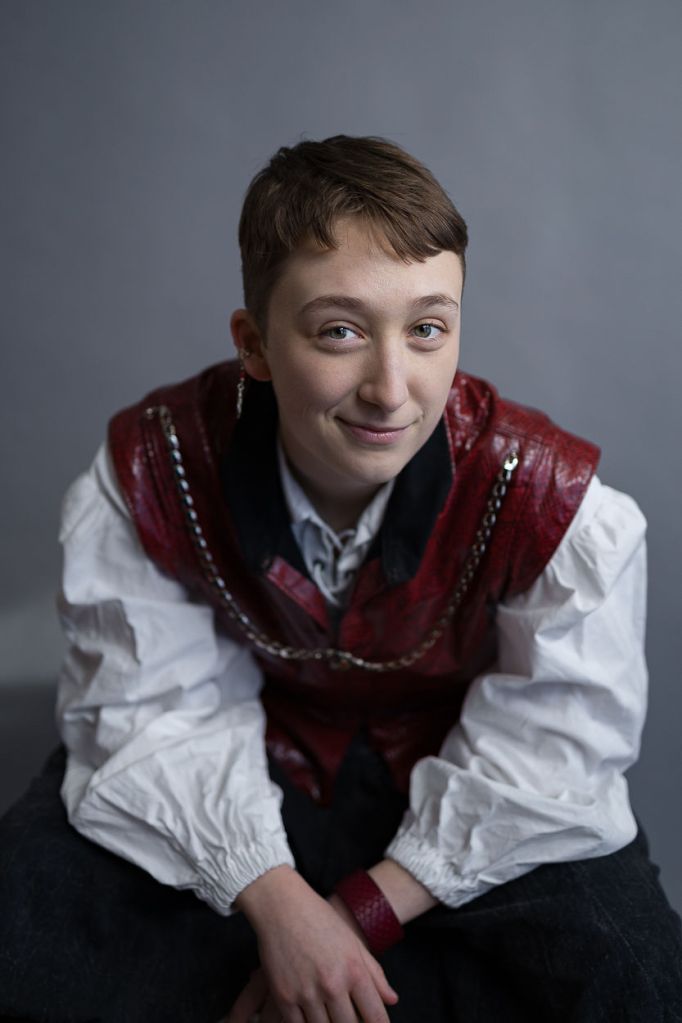
Beks Roan

Today we have aroace actor and writer Beks Roen!

  1. Hi! We’re so glad you’re here. Can you introduce yourself to the Invisible Cake Society with your name, pronouns, any identity labels you feel like sharing?

Thanks for having me! I’m Beks Roen, they/he. I go by Beks and Roen interchangeably, and am transmasculine, non-binary and aroace!

  1. What do you like to spend your time doing, online or in person, creatively and/or professionally?

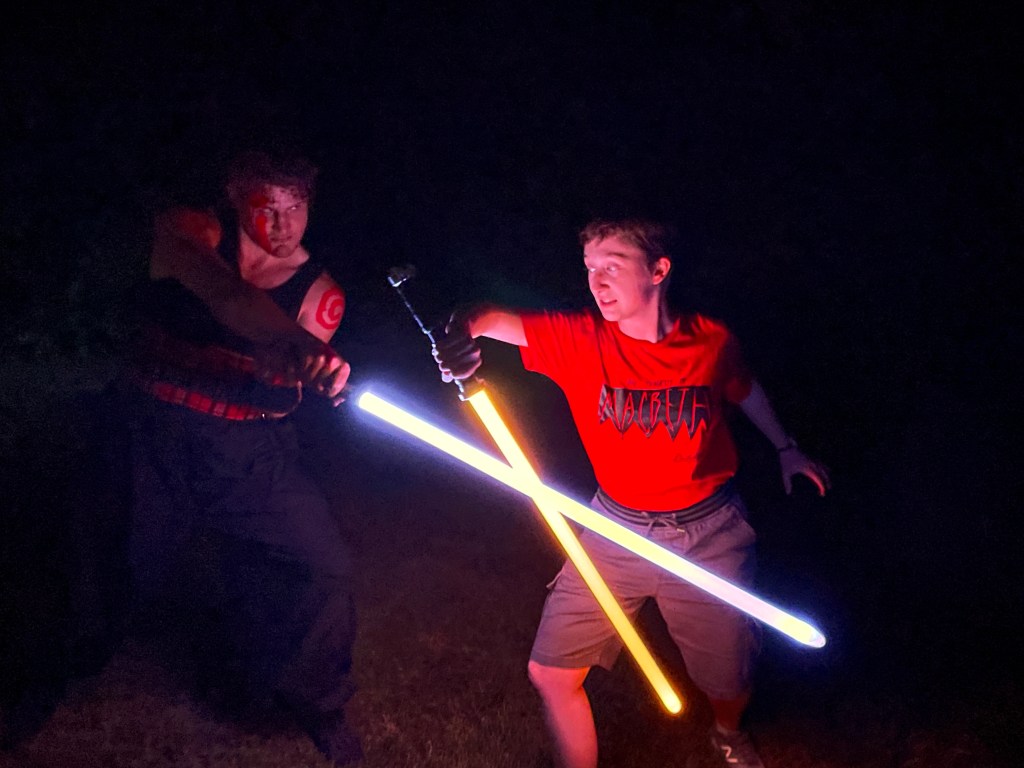
For recharge time, I love reading, seeing theatre (especially outdoor Shakespeare), hosting friends for dinner, and watching DropoutTV with loved ones. Professionally, I love writing, acting, and anything stage combat: whether I’m performing, choreographing, or teaching.

  1. When did you hear about aromanticism and asexuality, and when did you realize they described you?

I think I first heard about asexuality and aromanticism during the pandemic shutdown. I’d only just met a couple folks who taught me about polyamory and genderqueerness a year before, so I went right back to them after some googling and talked through it. I remember reading some PDF of “examples of shared/common ace experiences” and going, “oh. Wait. This explains a lot. Oh no how am I gonna handle this?? Uhhhh, call friends!”

  1. What’s your faith background and how would you describe your relationship with religion/spirituality/faith today?

My dad is a United Methodist pastor, so I grew up moving every couple of years and having a real rough time with parsonage housing. But my parents never pushed church. If I had homework or a Sunday matinee, it was okay for me to do my work first and not go to church. I’m forever grateful for their grace. I still use UMC language, but I’d describe myself as more “spiritual not religious.” I find incredible, powerful, transformational spirituality in theatre, which has a ton of structural and functional overlap with institutional religion. Theatre and writing are my spiritual disciplines because creativity and co-imagination are such powerful ways to participate with the divine, however you label it.

  1. How has your a-spec identity influenced your personal faith?

I don’t think it has. Realizing I’m aroace didn’t change my relationship to faith. I see aspec ideals showing up in my faith: I’ve become very community-focused, and am grounding more and more faith in people. I meditate, tap, pray, and do yoga every day, which have been super supportive spiritual practices for me (especially doing yoga every evening with my mom). As I’ve accepted myself and allowed for more ambiguity, I’ve encountered more and more unexpected blessings. Timelines, support, new friends; aligning in ways I couldn’t control, but am intensely grateful for.

  1. How has your a-spec identity affected your relationship with religious or spiritual communities?

My family has been incredibly supportive, which I constantly celebrate. Most of the time, though I get the blank stare of confusion more often than not, folks have been open to listening and hearing. Even in the Midwest, whether it be church or theatre, I encounter more curiosity than animosity. I’m sure a part of that open response has to do with my white privilege. It’s a lot of 101 conversations, to the point where I made a Google Doc with links to all the educators I learned from (Angela Chen, Yasmin Benoit, Ashabi at Ace in Grace, Cody Daigle-Orians at Ace Dad Advice, etc.). I’ve found a lot of support in theatre spaces, with the occasional pushback. Case in point, I’ve been hired to play an aroace Romeo at Advice to the Players this summer (July 31-August 9, 2026)! The director and team and several audience members have been incredibly supportive and excited to follow this adventure. Out of all the conversations I’ve had about it over the past year, only two people have been outright aphobic about it. Most are curious and excited to see what happens!

  1. How has your faith affected your relationship with the a-spec or larger LGBTQIA+ community?

I see the anti-Blackness in the ace community and my heart breaks. We can do better. We should do better. For white Christian aces: Jesus calls us to do better. Jesus’ top two commandments were about love. We are to love each other, not slam a neighbor for supporting the community.

  1. Does your a-spec identity impact your gender identity? Or vice versa?

I found asexuality first, which domino-ed into aromanticism and gender discovery. I used to be really focused on trying to figure this out. Where the delineation was. Trying to define each container of each label I wear. But as I continue reading more from aspec folks like Ashabi (Ace in Grace), Angela Chen, Cody Daigle-Orians and others, the more I’ve relaxed and realized that for me, I can let it be a gradient. Where a variety of things are present, but there’s no clear lines between each.

  1. What should all a-spec Christians know?

You’re loved. You’re not alone.

  1. What do you want the larger affirming LGBTQIA and ally Christian community to know about a-spec Christians?

Faith and aspec identity are not mutually exclusive. And LGBTQ+ rights and aspec identity are not mutually exclusive. We’re here, queer, biblically accurate.

  1. At Invisible Cake Society, we highlight experiences that have been erased or seem invisible to those outside of them. What’s your favorite way to be visible?

Theatre!! I literally started my own production company, Roguish Goblin Stories, to produce shows that highlight the trans/aspec Shakespeare resonances that feel obvious to me, and produce original adventures that center trans and aspec leads. My writing absolutely supports this as well, but the physical impact of co-experiencing an aspec character’s journey in person deepens the connection way beyond my writing alone. When I produced my first original production, Boy-ish, I had multiple conversations with audience members afterwards about the two main characters: one was aroace, the other was non-binary. The show had basically nothing to do with their labels, but it still opened people’s horizons up and made the trans and aspec audience members feel seen for the first time in their lives. That’s why I write, and produce what I write in person whenever possible: to remind people that they’re loved and not alone.

  1. Do you have a favorite example of a-spec representation (whether explicitly stated or not) in media, books, public figures, theater, etc.? What about them resonated with you?

Honestly, as much as I see aspec resonances over and over again in Shakespeare and other classics (Romeo, Mercutio, Orpheus, Hamlet, Benedick and Beatrice, Jacques, Coriolanus, etc.) I also see aspec love between Sam Gamgee and Frodo from Lord of the Rings. Their love is so deeply, beautifully queerplatonic. Their dedication to each other. Right from the start: Frodo’s panic when Sam tries to swim after him as the Fellowship fractures, even though Sam can’t swim. Sam’s line on Mount Doom always makes me weep: “I can’t carry the Ring, but I can carry you.” We need more relationships like Frodo and Sam in media, which is a huge part of why I became a writer.

13. Anything else you want readers to know?

I’d love to see more people, aspec or not, celebrating Soul Ace Day and supporting Black aspec folks. There’s a chat with the founders here that I found really helpful. We’re in life together, folks. You’re loved. You’re not alone.

14. Where can we follow your work online?

Beks demonstrates their craft
disability, essays, Mental health, neurodivergence

Contained

Blooming between enoughness, too-muchness, limitations, and stewardship.

“Maybe our constraints are an altar.
Maybe our limits are sacred. Maybe we fulfill our purpose even if the container is smaller than you expected.”

Maybe we aren’t disqualified because we can’t do everything for everyone.
Maybe our capacity, however limited for a season, is an invitation.”

– Sarah Bessey, “In which I get honest about contentment, capacity, and a few other things”


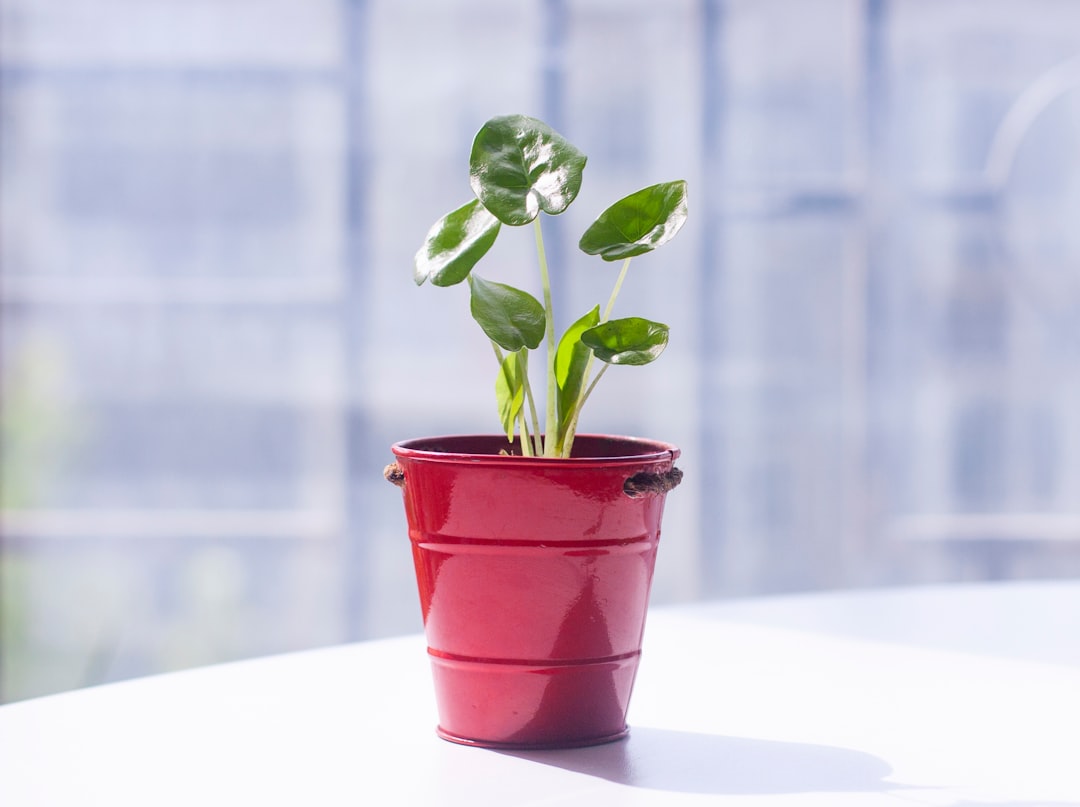
a small potted plant sitting on top of a table
Photo by Amelia Cui on Unsplash

This Enneagram 3 has been wrestling with “But is it enough to the world? Should I be doing more? Am I doing enough?” for many years.

Sarah Bessey asked these questions in a Substack post last week, and I wrote much of the following as an essay-length comment in response. At her encouragement, I am not being self-deprecating about my hyperverbal tendencies and am instead turning it into an actual essay here. 😊

Enoughness and too-muchness haunt me as I bounce between ADHD and anxiety, between disabilities and giftedness, between work-for-your-worthiness hustle culture and the fine line of comfort that tips necessary recovery-mode rest into self-indulgence and privilege. Am I achieving enough to have earned my belonging, my right to be treated with respect, my credibility when I speak on my own story, my rest? And then there are the less me-focused questions: Am I doing enough to steward my gifts for the needs of the world? Am I loving my neighbor or just talking about it online? Am I missing opportunities when I could have made a difference but didn’t see the need right in front of me, which I am uniquely gifted and called to fill?

For one example, there is work to be done around building the field of asexual theology as a subset of queer theology, and I know I could and maybe even “should” do it, but here at this point in time, I spend so much time managing my disorders and disabilities and general adulting that even reading and remembering a book feels like a daunting task, much less trying to be one of few pioneers in a niche and controversial subgenre of a subgenre. Maybe that will change! My containers and limits today might only be for a season. I can’t know.

And still the ambition is there: Maybe I will feel like I am making a difference if I just wrote a book or got a significant speaking gig or finally went to seminary, just as the leaders and mentors in my life have suspected I someday will. The Enneagram 3 in me knows I could be Someone Special, if I just tried harder, had the right master’s degree from the right school, started a podcast, networked with all the right people, had an impressive title, never said “no” ever, flew to all the conferences and namedropped and threw my resume and story around like currency. If tried to be everything shiny and powerful and impressive to everyone all of the time, maybe enoughness would find me.

Alas for the darn bounds of time and space that I have to live linearly, constrained to physics, for lack of a TARDIS.

But being Someone Special is not a magic solution for the enoughness. This is part of my twice-exceptional ADHD, anxiety, perfectionist, compulsive overachiever recovery plan: to live contained to what I can do and not what I should do. I know it sounds simple, like the first-day-of-therapy kind of basic. But I realized in 2024 that I wasn’t getting to bed late because of Revenge Bedtime Procrastination, in which one stays up late to extend their fun free time. I simply had too many things on my plate for a normal human to get done in a day, and I am not a “normal” human. I am an invisibly disabled one, just in small ways that add up, and not always obviously, even to myself. My brain and body are different than other people’s, in need of different and sometimes more time-consuming care or problem-solving. (In 2023, my Word of the Year was “Complicated, as in letting myself be.” And that was a huge theme. Very accurate for that year. Goodness.)

I know all the hustle culture currency, which we have been taught will buy love or respect, is just another lie of capitalism. So, as Kendra Adachi says, naming what matters to ME (and not to everyone’s expectations to live up to) is vital for survival.


Back to the good I could do in the world, which genuinely does need what I am uniquely gifted to share: My skills as an editor and former journalist can teach my friends and followers media literacy; my specific theology and knowledge as a queer asexual Methodist provides a rare perspective on de/reconstruction and advocacy training; my White middle-class privilege to boost a cause or raise awareness or speak until my voice is hoarse allows others to get what they need. But at what point do my gifts/abilities/skills and the world’s needs surpass my capacity, regardless of my fit-ness for the task and call to stewardship of all I’ve been given?

My local leaders of United Women in Faith, the UMC women’s organization, said their theme this year, is “No one can do everything, but we can all do something. Let’s see what we can do together.” It is essentially the same “my drop in the bucket” concept I’ve held like a lifeline: I can’t fill the whole bucket of the solution, but I can be one droplet that makes the bucket overflow with compassion and care for all.

So I know I can’t do everything, but am I doing enough, what’s expected of me, what I should be doing, what the world needs from me, what is my duty and responsibility to step up and do? One body, many parts, means I can’t be the whole body by myself, but as a body part, am I contributing my function to justify the gifts I’ve been given and meet the needs of those who need me to give them?

I tried so hard in 2024. I did what I could. And in some ways, it was never going to be enough, and learning that the hard way allowed me to discern “the difference” of the infamous prayer, between what is mine to change and what is mine to accept I cannot change. People like to edit this to “no longer accepting what I cannot change, but changing what I cannot accept” as if it makes any sense. With apologies to Angela Davis, often cited as the source of this quote, it doesn’t add up. The lesson of the container is learned in cracking it to pieces and the necessary repair work that follows. I cannot save the whole world and convert them to be Justice Warriors with my leftover Evangelical Hero Complex (vintage Sarah Bessey blog post throwback!). I can’t change the election outcome or my body’s neediness or hateful people who don’t want to do better and refuse to learn anything. But I can accept what is out of my control and still commit to live my values regardless of the circumstances. For another metaphor, if a brick wall is blocking my path, the only way forward is to start by accepting that the wall is immovable, but I am not. I can’t change the wall, but I can change direction in response to it. This is “the wisdom to know the difference.”

As Sarah wrote about, we must make peace with being contained, constrained, being CONtent/conTENT of a boundaried physics-abiding linear timestream with over a third of my 24 hours a day being paid work and another third being necessary sleep. We must trust it’s enough, we’re doing enough, we’re enough, or that we’ve equipped others enough that they can pick up the baton and start running for themselves. And maybe we build that community we want, not through earning admirers from hustling, impressing, or fulfilling obligations and duties with our own skills, but in encouraging, equipping, opening doors, and giving away our seat at the table to those who need to be heard and seen. And then, when we are refreshed and discerning wisely, we can jump back in with what IS ours to do.

Sarah also wrote of others demanding moremoremore, which can turn from an honor into a storm of expectations and duty and stewardship and performance and responsibility so fast. As Taylor Swift sings, “the crowd was chanting MORE” as she was falling apart and pretending to be on top of the world (“I Can Do It With a Broken Heart”). It is often a mistimed, misplaced, or misworded expression of gratitude.

I say this to all of you from hard-won experience: you are already enough. And you have the wisdom to determine your own course of action and capacity to give. Comparison and competition will not measure accurately, ever. Your worthiness and enoughness lie unshaken within you by any outside force or others’ assessment. You’re wanted and not forgotten, you’re important and belong, you’re respected and trusted, you’re so very deeply loved and appreciated, you’re effective and outstanding in your work. And often that work does hit exactly where your neighbors and loved ones have their own needs. And I sit with you all in that grief of discernment, priorities and values alignments, and adding and subtracting to your schedule, knowing that some of the “moremoremore!” cheeping baby birds will have to learn to fly and seek their need-meeting elsewhere because you cannot be everything to everyone all of the time, even if you’d be better at it than others or have been given unique gifts to do it. Sometimes that opens the door for someone else to be the one who steps up to help, and sometimes that learn-to-fly moment will be the realization the baby birds need to lead themselves. The “moremoremore” might be a chance for the crowd to grow into “I can too” and blossom into a community of support so you aren’t the lone pioneer in your area of expertise and giftings, just one necessary and interdependent part of a larger body.

Being involuntarily boundaried by our limitations is a grief. Don’t skip over that part. We must learn to lament.

And also. Healthy containers and constraints can lead to more diverse ecosystems and stronger, lasting growth. They will also help us get quiet and still enough to hear the whisper of the Spirit or nudge in a direction to go and love in ways we are uniquely called to, equipped for, gifted in, and given to delight in.

If I must live bounded in a container of energy, time, space, and ability, then let me be a garden, flourishing and resting and bearing fruit and contributing to the growth of others, each in its season.

girl sitting using smartphone
Photo by Kelly Sikkema on Unsplash