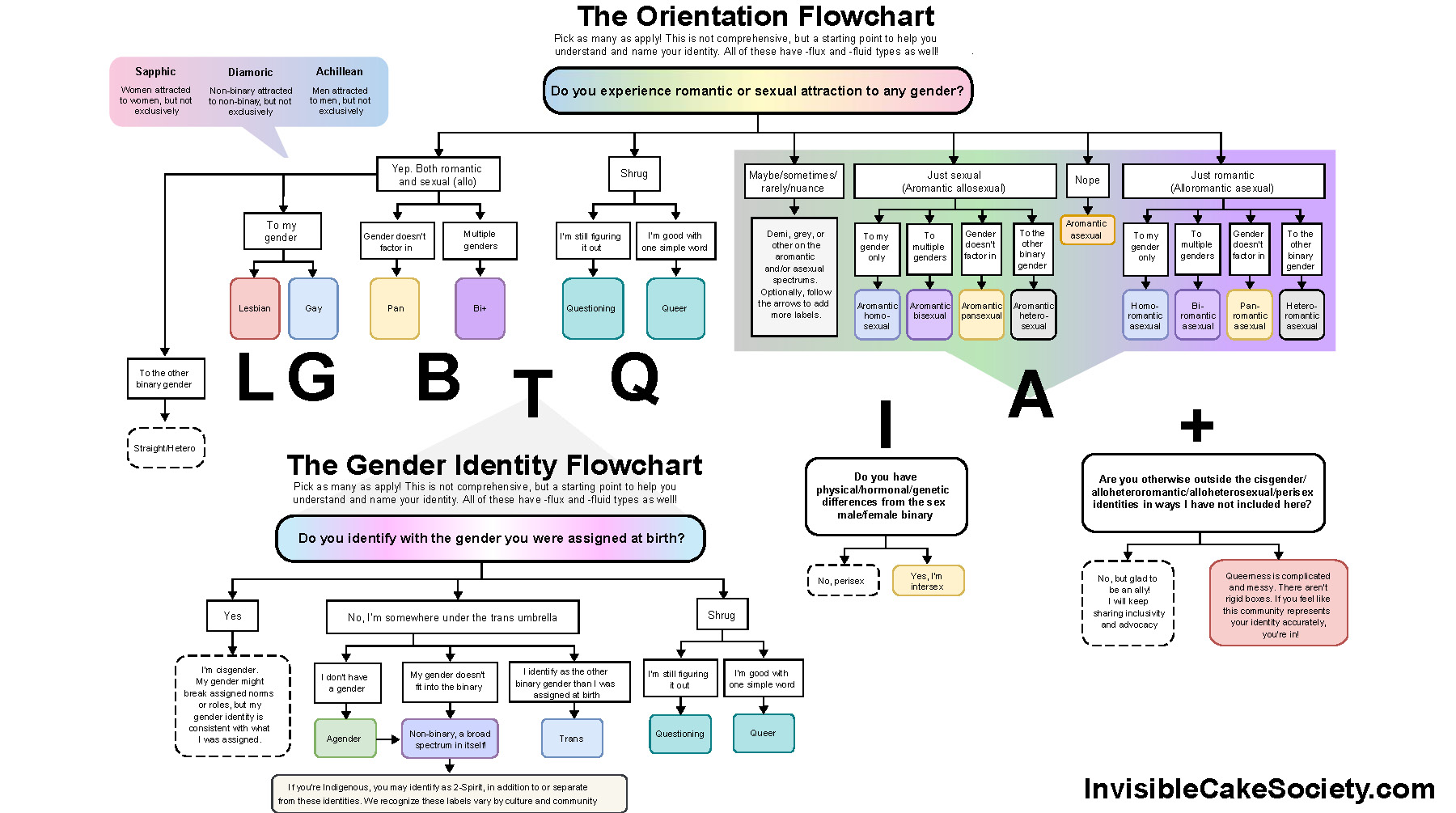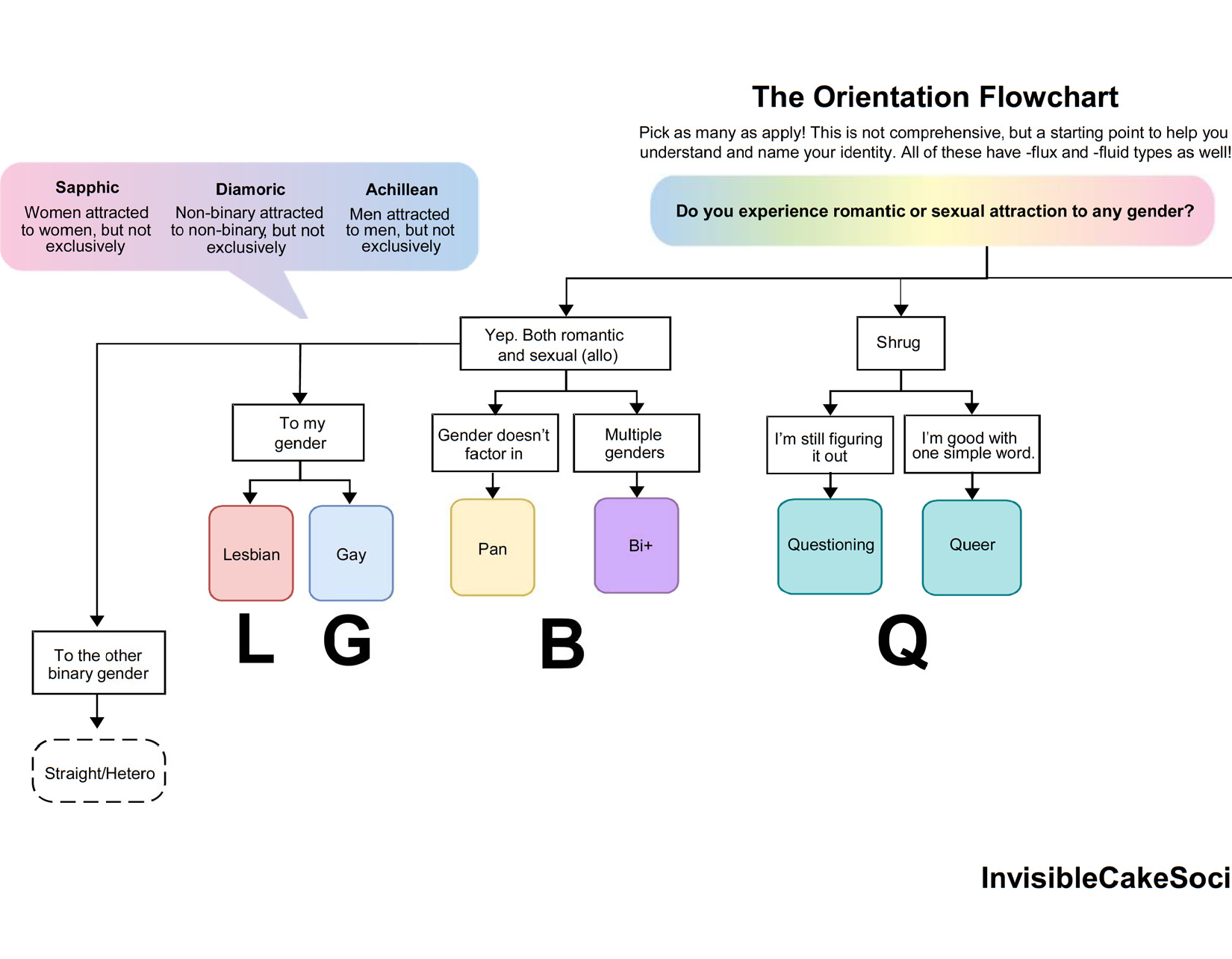
aromanticism, asexuality, essays, queer

You Are Not Bad Representation: A list of things you don’t have to do

1. You don’t have to be perfect as a queer person to prove that queerness is good. For the Christians, this might show up as pressure to individually always display fruit of the spirit to prove we are morally okay. While queer-affirming theology does lead to fruit of the spirit at a population level, you individually don’t have to be perfect to prove queerness as a whole is okay.

2. You don’t have to be content or fulfilled as a single aromantic and/or asexual person. There’s a lot of pressure on us to prove we aren’t missing out or scared of commitment or broken. But it’s okay to feel lonely because honestly life is lonely sometimes, and being a-spec in an amatonormative world is hard.

3. You don’t have to want to date or have sex even if you are allo and queer. Liberation isn’t about checking off a list of formerly forbidden behaviors. It just makes what you DO want possible because you have the freedom to choose.

4. You don’t have to want poly, open, or otherwise ethical nonmonogamous relationships in order to be supportive of others’ choices and desires. It’s okay to say this isn’t for you while advocating for others to have the same freedom of choice in the opposite direction.

5. You can decide your labels were wrong and change them, add more, or stay questioning forever. There’s no deadline to join a faction or house or cabin. This is not a fictional school or dystopian society. Even if it means detransitioning or deciding you aren’t attracted to your gender or realizing you aren’t on the a-spectrum after all. You’re always welcome as long as it’s helpful, and you’re welcome back if you change your mind or find better language. Keep fighting for your former community and be a well-informed ally.

6. You don’t have to date or have sex with someone of your same gender. You don’t have to dress androgynous as a nonbinary person or pass as cis if you’re transitioning. You don’t have to change your appearance or music or media tastes or hobbies to fit in. It’s about identity, not behavior.

7. You don’t have to renounce everyone you’ve been with or every term you previously identified with. You don’t have to have been born this way or have known as a kid. There’s no “must have exhibited symptoms before age ___” diagnostic criteria. Your whole story is your story, whether you’ve always known or just realized at age 80. Fluidity, self-awareness, and learning new terms are all valid reasons to identify differently than you did when you were younger.

8. You do not have to drink alcohol.

9. You don’t have to be feminine to be a gay man or masculine to be a lesbian. You don’t have to hate Valentine’s and rom-coms to be aro or hate sexual humor or erotica to be asexual. You don’t have to be hyperfeminine to be a trans woman or hypermasculine to be a trans man. Or feel completely androgynous to be nonbinary or agender. You can have as many genders as you want or any self-experience or expression.

10. Relatedly, you don’t have to stick to gender roles. The point is that we’re breaking free of heteronormativity, not recreating it in a more inclusive way. Stop expecting trans men or butch lesbians or bear gay men to fill patriarchal “man of the house ” “wears the pants” roles, and stop treating trans women and femme lesbians and twink gay men to be the delicate or incapable or weak one. What choices work for you is between you and your partner, not the “shoulds” of rebranded patriarchy.

aromanticism, asexuality, disability, essays, faith, Mental health, neurodivergence, queer

A complicated year

I started this year with a specific Word of the Year, a tradition in Christian women’s circles dating back to the heyday of the “blogsphere.” I usually don’t remember mine by April, but this year was different. This year the word that came to me, or that I picked (depending on what you believe about such things), was “complicated.”

As in, letting myself be.

I refused to simplify myself any longer. I would not pretend to be straight for others’ comfort. I would not pretend to be the perfect gold-star aromantic asexual person while denying the reality of my vague sapphic attractions, while accepting that I would never be fully accepted in the lesbian community either. Aromantic and yet a romantic. A cis woman and yet deeply, intrinsically, queerly, asexually so.

I would not hide that I have nontraditionally presenting ADHD in addition to my variety pack of mental illnesses. I would give up trying to screen and test myself over and over for autism, which I probably don’t actually have but also don’t not have entirely. I would be hyperactive and exhausted, both wrapped in brain fog and begging for someone quick enough to catch up with my twice-exceptional brain that has already put the pieces together. I would live into the reality of my disabilities despite feeling unqualified to use that term. I would respect my body’s needs and differences as my own and not the object of others’ expectations.

Continue reading “A complicated year”
allyship, aromanticism, asexuality, disability, faith, Mental health, neurodivergence, queer, resources

Naming

As you might assume from my content on this site, I carry a lot of labels. Some are less well-known than others, and some carry inaccurate connotations. Some I am constantly working for greater awareness of, and others I keep quieter about. These labels have been immensely helpful for me, whether they are as specific as a microlabel on the spectrum of aromantic and asexual identity or as broad as the unifying and nebulous umbrella terms that I’m not sure where all I fit within.

Naming is important to self-concept and acceptance of our identity, but there are equally important stages that we move through before and after we first say, “Hi, my name is ____ and I’m ____.” These aren’t strictly linear, but they are numbered for the sake of organization:

Continue reading “Naming”
asexuality, Poetry

Ace Bewareness Week

This is a silly little poem about Twitter, but I really do hope we can recapture the joy and belonging and welcome this Ace Awareness Week in the midst of all the creepy, scary, and ghoulish opinions on the internet. Hope you find all treats and no tricks this year!

Smell it approaching.

It’s coming up fast,

haunting our Pride with dread.

The bad takes change colors

hot as the spices in your cup.

The ringing cheer in the air

from the stadium chants,

“Conform, conform conform.”

The ignorant blue checks moan

with laments they have no knowledge of.

The biting wind of aphobia

swirls the rotting leaves. 

It’s that time of year again!

Ace awareness week is coming.

asexuality, queer, resources

Ace and allo partnerships

Recently, I was asked about ace and allo marriages, and I didn’t have any resources about marriage/partnership and asexuality, especially when one of those partners is allo. In fact, there really aren’t many resources like this out there in general. I’ve never been in a partnership like this as an adult, so I don’t have any experience in this area to draw from. However, aces and their allo partners on Twitter were eager to help and share what they have learned. We all hope these stories and links can strengthen ace/allo marriages and long-term committed partnerships of all kinds. 

My thanks to M.J. Weissenberger, Mitchell Atencio, Grey, Loxley Blaine, Russ Walker, Case, Cody Daigle-Orians, Kate Wood, our anonymous friends, and everyone who replied to my tweet here.

Many mentioned setting boundaries, trying nontraditional things that work for you (separate beds or bedrooms, for example), honest communication, being willing to compromise when you can but be honest when you can’t, and learning more about various ace labels and experiences to have clearer language to communicate your needs and desires. While therapy in general is a good fit for this kind of relationship issue, many therapists are not ace-informed, especially marriage and relationship therapists, so be careful going in to choose someone who understands your situation and won’t pressure you into sex or relationship structures that don’t work for you. For example, some ace/allo partners found polyamory was a good fit and enjoy multiple relationships, but others didn’t and resented how it was assumed or presented as the “solution” to fix their relationship. Some of these answers may work for you and some won’t. They are not blanket solutions, simply lived experiences of those in these partnerships.

Here’s more of what aces and allos in relationships with aces had to say:

Continue reading “Ace and allo partnerships”
asexuality, essays, faith, queer

Side A. Celibate. Asexual. Queer.

Asexuality is not the same as celibacy. Lots of asexual people do have sex. Asexuality is about attraction, not behavior.

I am also celibate. I consider this a calling in the sense that God made me sex-averse intentionally and for a reason.

Not all asexual people are sex-averse.

My understanding of this vocation is different from those who typically get the microphone in regards to celibacy, talking about a traditional understanding of what gay people must do with their sexuality to be “orthodox.”

I’m Side A. How does this work?

Celibacy should be for those who are personally called to it. It should not be in any way related to your orientation. Straight, bi, pan, queer, ace, gay, whatever… you can be called to celibacy.

Important: This also has nothing to do with anyone else. It’s you and only you.

Side A theology doesn’t reserve any specific restrictions on any orientation. We are all one in Christ Jesus and each individual part of Christ’s body has its own calling. This is why I’m all over the podcast land as a celibate ace telling you to create your own sexual ethic.

Can you be Side A and celibate? YES. There is no sexual liberation without the choice not to have it. Side A doesn’t mean you personally feel called to have sex. It means the Bible is fully affirming of queer relationships and identities including the choice to have sex. Or not!

If anyone tells you you have to be Side B if you’re called to celibacy, here is your sign that that’s a lie. It’s about belief and biblical interpretation. Not behavior.

Stuff like this is why the church needs asexual leadership. We have the vocabulary for this. We need more Christian aces affirmed and heard. We need the church to understand the difference between attraction, behavior, desire, and vocation. Aces can lead. We’re worthy and called.

Remember: We aren’t new. Just erased. Just today I ran across a blog on a queer Christian website acknowledging asexuality as a queer orientation. It was written 21 years ago. We’ve been here. You just haven’t been listening or haven’t had the opportunity because of gatekeeping.

We’re in your churches. We may not know the label (though that’s changing as awareness grows), but we’re there. We might be partnered. But some of us are happily single, and we might be celibate and/or sex-averse. And we have words to describe that array of sexuality and desire.

Give aces a voice and you’ll discover so many keys to this beautiful diversity of God’s kingdom. We can help those called to celibacy and unite in our common goals. We can support singles who need help accepting their vocation to singleness.

We also face queerphobia, often recycled arguments used against bi or pan or gay and lesbian people are used against us, right here on this website every damn day and in churches and elsewhere.

Asexuality is so difficult to see because it is not only against traditional understandings of sexuality (heteronormativity) but also against the assumptions that we can sub in different genders into that traditional understanding (all have sexual attraction = allonormativity).

Asexuality is compatible with the Bible (and so is celibacy) but runs counter to “traditional Christian teaching” that emphasizes being created for heterosexual marriage, aka a lifelong sexual relationship, implying that God gives everyone attraction. So while asexuality and celibacy aren’t the same, we do have shared history.

Theology that only says same-sex marriage is ok without seeing vocational singleness and/or celibacy as holy too is missing it just as much as those who demand celibacy is the only “orthodox” answer for queerness. Both are missing the parallel diversity the ace community provides.

(Meaning that for centuries, asexuality has had to work out whether it is only for those not interested in the acts of sex, behavior, or for anyone without attraction, regardless of behavior. We landed on the latter in recent years. More on this elsewhere.)

So do I need Side A theology for my “pet sins”? Am I just capitulating to the culture to sleep with whoever I want? Am I Side A because celibacy is too hard? Am I going along with sexual trends of “the world”? Nope. I’m ace, single, and celibate. But I’m Side A because I’ve seen the good fruit when everyone is allowed to live out their own unique, God-given identities and vocations and behavior. Asexuality is a form of queerness that reveals anything is possible when we discard the narrow roles normativity would place on us.

So don’t devalue my calling by claiming it’s tied to orientation. Don’t perpetuate myths about asexuals by claiming it’s just “not having sex” or the same as celibacy. That’s not it. But aces and celibate people do have a lot of overlap and goals in common. It’s time to work together, fully affirming each other’s callings.

More on asexuality here.

aromanticism, asexuality, faith, queer, resources

Queer podcasts

A few podcasts around queerness, queer faith, and aromanticism and asexuality. For my own podcast appearances, see Podcasts.

Queer – general

Queer Christian

Search for these on your favorite podcast-listening platform!

asexuality, Poetry, queer

Dangerous

Call me dangerous

Call me wayward

I’m not sorry

for my honesty

/

I am queerly a woman 

And I was born set to bold

A persistent problem

To your systems and theology

/

I will not be quiet 

Call me threat, call me fire

Let’s burn it down

Call me hurricane 

/

I am hurricane

I will blow fear away

Rain down justice

Waters holy

/

We fought too hard 

To play power games

There’s too much at stake

To stay silent in grey

/

So call me dangerous

Call me violent

Rainbow light

I split skies wider.