This is a silly little poem about Twitter, but I really do hope we can recapture the joy and belonging and welcome this Ace Awareness Week in the midst of all the creepy, scary, and ghoulish opinions on the internet. Hope you find all treats and no tricks this year!
Recently, I was asked about ace and allo marriages, and I didn’t have any resources about marriage/partnership and asexuality, especially when one of those partners is allo. In fact, there really aren’t many resources like this out there in general. I’ve never been in a partnership like this as an adult, so I don’t have any experience in this area to draw from. However, aces and their allo partners on Twitter were eager to help and share what they have learned. We all hope these stories and links can strengthen ace/allo marriages and long-term committed partnerships of all kinds.
My thanks to M.J. Weissenberger, Mitchell Atencio, Grey, Loxley Blaine, Russ Walker, Case, Cody Daigle-Orians, Kate Wood, our anonymous friends, and everyone who replied to my tweet here.
Many mentioned setting boundaries, trying nontraditional things that work for you (separate beds or bedrooms, for example), honest communication, being willing to compromise when you can but be honest when you can’t, and learning more about various ace labels and experiences to have clearer language to communicate your needs and desires. While therapy in general is a good fit for this kind of relationship issue, many therapists are not ace-informed, especially marriage and relationship therapists, so be careful going in to choose someone who understands your situation and won’t pressure you into sex or relationship structures that don’t work for you. For example, some ace/allo partners found polyamory was a good fit and enjoy multiple relationships, but others didn’t and resented how it was assumed or presented as the “solution” to fix their relationship. Some of these answers may work for you and some won’t. They are not blanket solutions, simply lived experiences of those in these partnerships.
Here’s more of what aces and allos in relationships with aces had to say:
Content warning for child abusestory. Start at 3:24 if this is a trigger for you
First, it is a great feeling to be able to understand and process every word from a speaker without needing the captions. That almost never happens. I feel like I actually processed every word!
Aside from speaking skills, this was so healing. And not only as someone with APD but the heart behind it holds several jewels I think we all need to learn from. Dr. Alexander approaches her work in a way that feels more like ministry than many “ministers” we hear about online.
“I know what it feels like … to be imprisoned, but I also know how it feels to be set free.”
This is the crux of it, right from the start. Those of us deconstructing or evolving or just plain leaving conservative and evangelical church traditions know that feeling of being “set aside and dismissed.” Queer people who have lived in the closet know the feeling of being restrained inside that metaphor, of being not only hidden but trapped. Neurodivergent and mentally ill and disabled people know this prison that is their own mind and body. So many of us who resonate with a name like “Invisible Cake Society” have had to work through our traumas while it felt like no one could perceive us and no one would believe us.
Last week when I wrote here about Barbara Brown Taylor’s EF podcast episode, I had no idea that this week’s episode was also going to be so relevant to that post, so we’re doing this two weeks in a row. I used the metaphor of a child’s toy that comes with shapes that correspond to holes in a box. So did Dr. Chanequa Walker-Barnes in her 2019 Evolving Faith conference talk featured in this week’s episode! It was a perfect part 2 to that topic. She follows up on that moment of recognition and grief over how tired we are of “being good instead of being alive” with a crucial question:
Who told you that you had to fit?
She describes herself as “an ill-fitting Christian. A square peg trying to fit into a round hole, each of the angles representing the diverse religious traditions that shaped my understanding of the Divine.”
Sounds familiar!
But the key is that she doesn’t end there. As Sarah and Jeff discuss at the end of the episode, Jeff says, “For some of us coming to a message like Chanequa’s, the grief of this is that we once did fit and we once really did belong. But for others of us, we’ve never fit and we’ve never belonged, perhaps because of some indelible aspect of our identity. And then there are the folks who have had both experiences.”
The new season of the Evolving Faith podcast debuted this week! I’m so excited for you all to see what this community has up its sleeve for this year. We start off with a bang from the ever-wise Barbara Brown Taylor, revisiting her talk from the 2019 EF conference.
She has this quote in there:
I’m thinking about how tired a tame Christian can get. Tired of self-censoring, tired of swallowing the questions that matter most, tired of putting more energy into being good than being alive.
That line in particular hit me hard. Thus far in my life, I have ultimately been preoccupied with that goodness. Not just the goodness in a sense of being right or moral, the way an Enneagram 1 might, but in the sense of the Enneagram 3. Is this good? Is it meeting your expectations? Is this okay? Am I doing it right? Is this what I’m supposed to be doing? Is this what you want from me? Is this what we’re scripted to do and be and say? At the root of these is the question of worthiness and earning, achieving belonging by measuring up, adhering those ever-shifting standards of what is expected and required and demanded by a society that rewards those who win at its games.
And some of the games, a few, I can be so good at. I play until I am exhausted. So tired, as Taylor says, of all my energy going into my efforts to hold back and to not be obnoxious or too much, to silence myself.
I do, sometimes, need to silence myself. To exhibit tact and self-control, an overlooked fruit of the spirit. I do need to listen more and center myself less, to plug in to empathy and pass the mic. But I don’t think that’s what this is about.
This is the goodness-instead-of-being-fully-alive decision point. The part where we choose to grit our teeth and nod along, prioritizing approval over authenticity. To “lop off any part of ourselves that falls outside the lines,” as Taylor says in her talk. We try to force belonging and it becomes fitting in, fitting into the box at any cost, even when we have to leave some parts behind.
Of course, there will always be some parts of ourselves that get more airtime in certain spaces or relationships. But what is it costing us when we have to hide entire parts of who we are in our churches, homes, families, friendships, workplaces, and communities because the standard of goodness is a different shape than the shape we occupy?
We are tired. So tired. It’s not always our choice, and for that, we grieve. We grieve for when it is the only choice, and for when it is the best bad option available to us. We grieve for when others can’t see our belovedness and for when we can’t bring ourselves to face it in the mirror.
Taylor says grief sets us on a path to “embrace the full terrain of living.” Fullness beyond goodness. Fullness beyond looking around for confirmation we’re doing it right. Fullness beyond holding back in fear and inauthenticity for the sake of fitting a hole in a box like a child’s toy, made for simple shapes to be granted entry. Stars in the star spot, big hearts in the big heart spot, even ordinary squares in the spot for ordinary squares. And perhaps we’re something else entirely, not simple or familiar to those making the rules of the box.
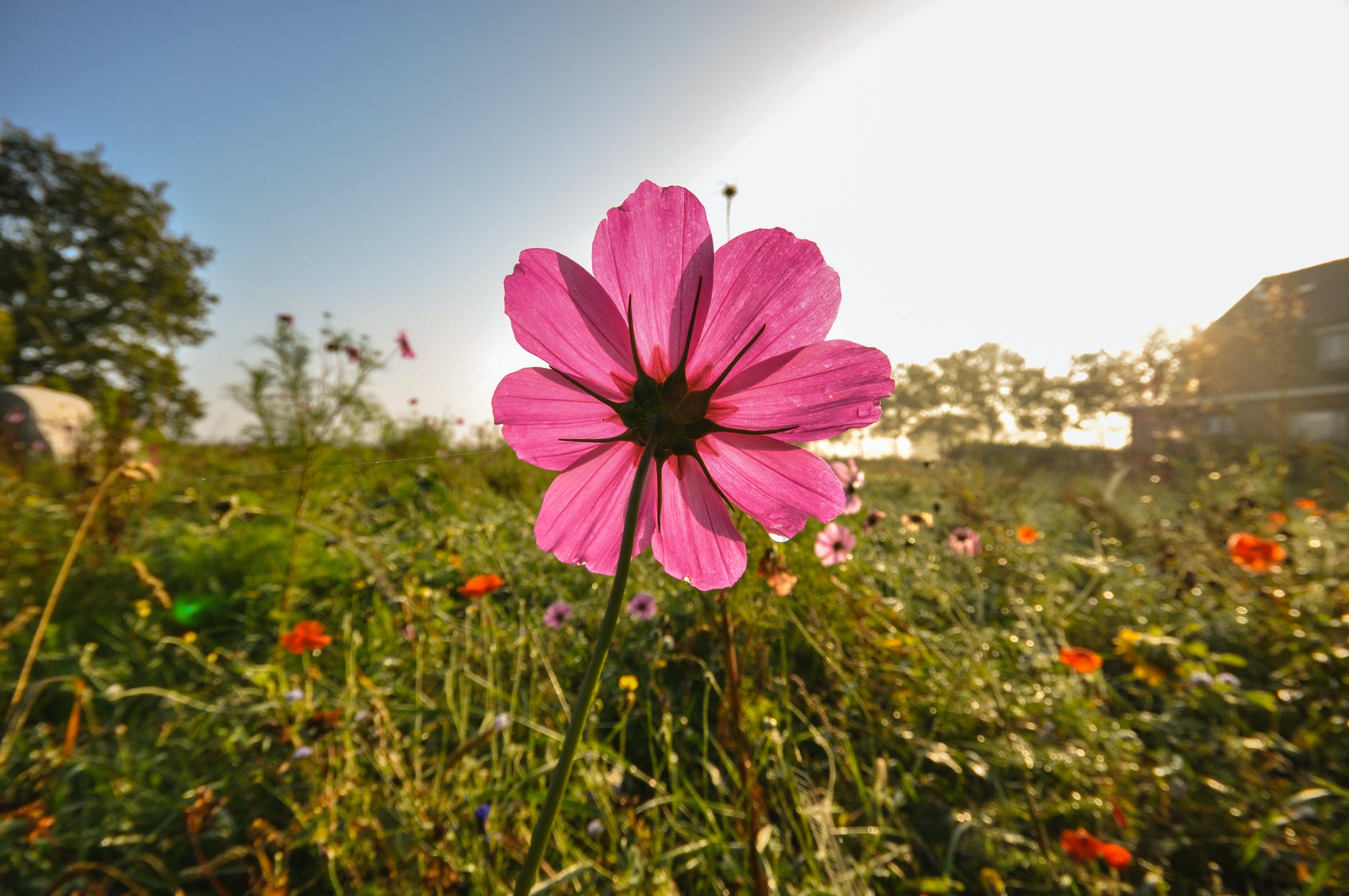
Or, for a more lively metaphor: Wouldn’t it be wonderful if we could thrive like wildflowers, decadently ourselves in whatever ways we have the capacity, instead of pruning ourselves back into neat little rows of acceptability and shame and control and the kind of goodness set by those trying to sell us our belovedness in numbers?
There are the numbers of control all around us, from our bodies to our bank accounts, from our square footage to our rank on the ladder, from follower count to test scores. No wonder we are so, so tired. Measuring tape at every turn, held up to determine the size of our lives, whether our shape fits the box’s hole, whether the dimensions we are growing in are acceptable.
You’re not crazy. It’s not just in your head. It’s not all your fault. And sometimes you may not have a choice. But together we can dream of the fields across the terrain where we can throw on our brightest colors, grow in abundance, thrive, and put our energies into being our full selves, fully alive and free.
Yes, as our friend, comforter, creator, divine parent, provider, protector, lover, healer, Lord, and shepherd… God cares about our sexuality and bodies.
Today, there is much discussion on embodiment, what it means to show up in a space as your full self, and to be present in your body wherever you are. The topic du jour, in particular, is church attendance. Can we experience the “real” church online?
This got me thinking about how if you’re going to talk about embodied presence, you need to be aware of what it means for someone to show up in their marginalized body, whether in a physical or online space. The risks it takes and the emotional cost it demands.
I’m primarily focusing my work on progressive Christianity and the queer church because that’s where I’m most needed and fit best, but others have blazed a trail before I got here and I’m not alone now.
Homesickness is a funny kind of illness. It sort of hurts all over. In your throat when someone asks the wrong question at the wrong time. In your lungs when a reminder of what you’ve lost takes your breath away. In your core when there’s the gut-punch of knowing what you long for may never come to pass. There’s a desperation to it, when hope and grief intertwine into an ache.
Someday, we know, someday, as our seasonal songs tell us: “The blind will see, the deaf will hear, the dead will live again.” Another tells us, “Chains shall he break, for the slave is our brother! And in his name all oppression shall cease!”
Luke 21:25-36 tells us to be on guard, for your redemption is drawing near. But we wait, we long for the time when all shall be made right, when there will be no more tears or death, no more oppression, or haves and have-nots, no more pandemics or natural disasters or injustice… when the upside-down Kingdom of God comes on earth as it is in heaven.
We wait. We hope. We long, with the deep groaning of the Spirit within us when words fail. It hurts, God. Life hurts so much.